Schools
Purchase Professor Takes Aim at Cleaner Drinking Water
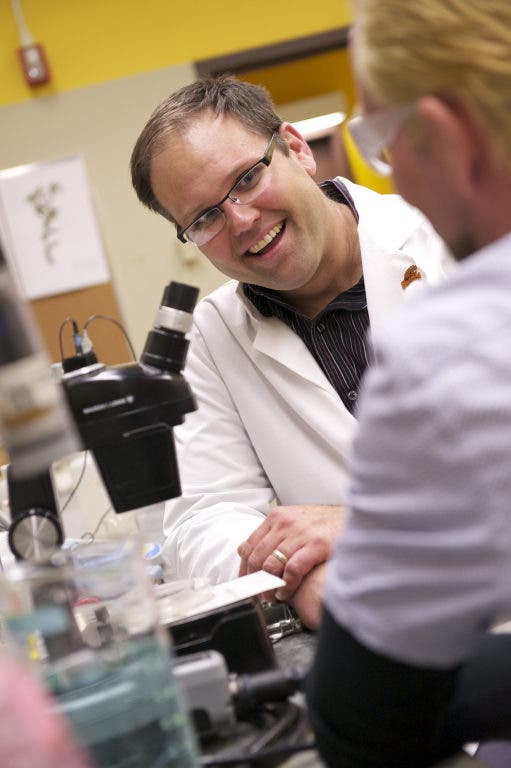
Purchase College Professor Ryan Taylor is researching the effect of beaver dams on phosphorous and nitrogen levels in the Croton Watershed.
At the turn of the 20th century, beavers in the mid-Hudson Valley were preyed upon by humans to fulfill a high demand for hats made of beaver pelt.
But during the last two decades, beaver populations made a comeback in the wetlands of the mid-Hudson Valley, and according to Purchase College Assistant Professor of Environmental Studies Ryan Taylor, their presence could be helping to filter nitrogen and phosphorous out of New York City's drinking water supply.
"In the 1800s, it was fairly fashionable to wear beaver hats, so they were trapped for their pelts," Taylor explained. "Once we shifted our fashion tastes away from beaver fur, the beavers slowly had a chance to regain their numbers. There's lots of interest in the scientific community now about how the beavers are coming back and redeveloping ecosystems."
Find out what's happening in Harrisonfor free with the latest updates from Patch.
As a part of Purchase College's BRIDGES program, which encourages underserved community college students to pursue four-year degrees in the sciences, this summer will be Taylor's second season taking a small team of students on canoe trips into the Great Swamp.
While the swamp spans 6,000 acres in Putnam and Dutchess counties, Taylor's research focuses on a four mile span of the Great Swamp near the East Branch Reservoir, which is a part of the Croton Watershed.
Find out what's happening in Harrisonfor free with the latest updates from Patch.
Last year, Taylor and students identified seven beaver families, measured ponds and assessed ways the beavers were modifying the ecosystem, including stress put on trees caused by beaver dams.
"This was an ecosystem defined by trees in standing water, and now the beavers are coming back and killing them. The area might become a marshland, or become more of an open ecosystem," said Taylor.
With this summer's student cohort, Taylor wants to assess how nitrogen and phosphorous levels change as water progresses through beaver ponds, an idea that was inspired by a SUNY Cortlandt professor's research. He said that the muck that beavers use to build their dams could have a filtering effect for certain chemicals.
While New York State last year made the sale of detergents and fertilizers that contain phosphorous illegal, it remains a common water pollutant, particularly in areas with high residential populations.
If Taylor's research backs his hypothesis that beaver dams are reducing phosphorous levels in their ponds, the results could have implications for the regulation of phosphorous put forth by the New York State Department of Environmental Conservation (DEC.)