Politics & Government
Keep an Eye on Latest Zoning Proposals
Many residents remain concerned over upzoning proposals.

The town is currently considering several requests for upzoning, and myself and several other residents and resident groups continue to stand against it.
“Upzoning” is the process of changing the zoning in a given area to allow greater density or increased commercial use on the land. It basically allows more people to live or work in a stated area than was allowed under the land’s previous zoning.
Upzoning can be achieved in three different ways: by changing the zone’s allowable use—such as from single-family to multi-family homes—by reducing the size of the lots or by increasing the allowable building heights. Occasionally upzoning may involve all three elements.
Find out what's happening in Harrisonfor free with the latest updates from Patch.
The problem I have with the practice is that it often benefits developers or landlords hoping to sell their properties, while costing the surrounding community green space and other perks of living in most of these neighborhoods.
Take a lovely, quiet, tree-lined street zoned single-family residential and upzone it to a multi-family use that allows town houses or cluster housing developments and you can create a flurry of new problems. Neighboring residents and the rest of the community could live with years of construction blasting and noise, water management issues, flooding, increased traffic problems, infrastructure overload, school overcrowding, urban sprawl and surrounding property value reduction.
Find out what's happening in Harrisonfor free with the latest updates from Patch.
Many communities have actually banned upzoning to protect community character and the existing residents’ standard of living. In fact, many municipalities are actively seeking to downzone commercially zoned or multi-family zoned areas to improve their community and increase property values.
Both the Harrison Residents’ Committee—an action group comprised of residents from every voting district of Harrison that was formed eight years ago—and the Purchase Environmental Protective Association (PEPA) have stood firm against upzoning, unless used in a strictly limited fashion in appropriate areas as part of a comprehensive updated Master Plan. As a founding member of the Harrison Residents' Committee, I stand by this stance and continue to believe it is best for the community.
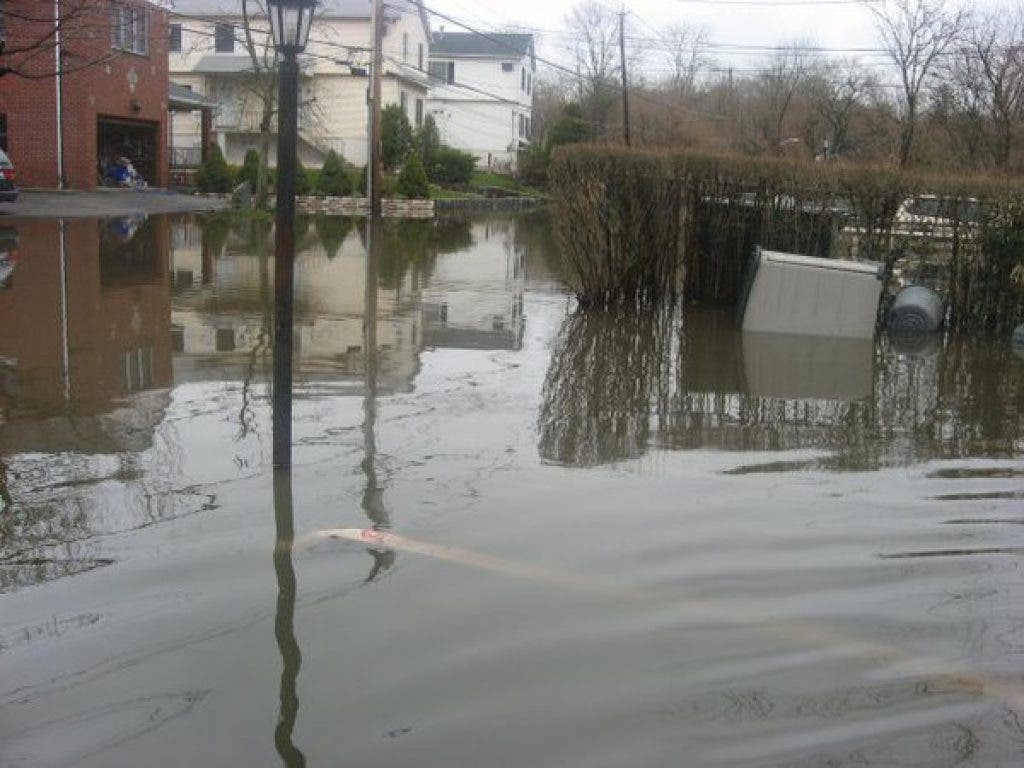
This month’s planning board agenda included another upzoning proposal for consideration. It aims to upzone by reducing the minimum square footage requirement for the two-family zone. Such a proposal would affect both Silver Lake and Brentwood disastrously—two areas where residents are already subject to severe parking problems, illegal apartments, serious water management issues and flooding of their homes and land.
Mary Malara, representing the Residents Committee, tabled a letter expressing the exacerbated problems the proposal would create and the dangerous precedent that spot upzoning sets for the entire town.
The good news is that individual planning board members acknowledged these problems and agreed that the decision to change zoning should be reviewed as part of a comprehensive plan update, not done piecemeal without a thorough review of the zone. The board subsequently requested an inventory of all properties the proposal could affect so they would have a clear scope of the potential problems the upzoning could create.
The Town Board heard a second upzoning proposal this month. This proposal seeks to change the zoning for the Grant Avenue area from its current B-2 zoning to a G-C zone. This is happening in a dangerous area, as it is proposed in a flood zone adjacent to the Beaver Swamp "Project Home Run" site that is still in litigation over flooding and fill issues from years ago.
Looking back, the site was zoned B-2 in the 1970s to discourage further development exactly because of the flooding volatility of the area. One can only hope that the Planning Board has a long memory and upholds zoning changes that were made to protect residents. If not, it means more flooding and more problems for surrounding residents.
But this second proposal also indicates the insidious scope of upzoning proposals.
If Grant Avenue is rezoned G-C without significant restrictions, landlords will have the option of applying to raise their roof lines and putting residences above their buildings as a second floor. This is allowable in the G-C zone with no maximum coverage limit. This creates an even greater increase in density, increased parking issues, water management issues, infrastructure overload and so on.
These hidden upzoning effects are exactly why evolved municipalities consider upzoning proposals only as part of a comprehensive master plan that researches all possible ramifications. Smart communities are aware that zoning changes do not apply in a vacuum and that they create standard of living changes that once created, cannot easily be undone.
Hopefully good news regarding upzoning in our community is in sight. In addition to the Planning Board’s concerns over the latest upzoning proposal before them and its ramifications, Mayor/Supervisor Ron Belmont has spent a significant amount of time investigating upzoning effects and the widespread concerns that they raise.
Harrison's building department has also expressed concern over the problems residents in Silver Lake and Brentwood face and acknowledged at a recent planning board meeting that these areas may even require proactive downzoning through increasing minimum lot size, rather than considering the upzoning proposal to do the opposite.
Let’s hope all this means that we will soon join the more evolved municipalities in our approach to town planning and that spot upzoning will become a thing of the past.