Schools
Something New in the Sound
Purchase Professor George Kraemer brings students out into the field to conduct research on how the invasive Asian Shore Crab effects the Long Island Sound's ecological balance.
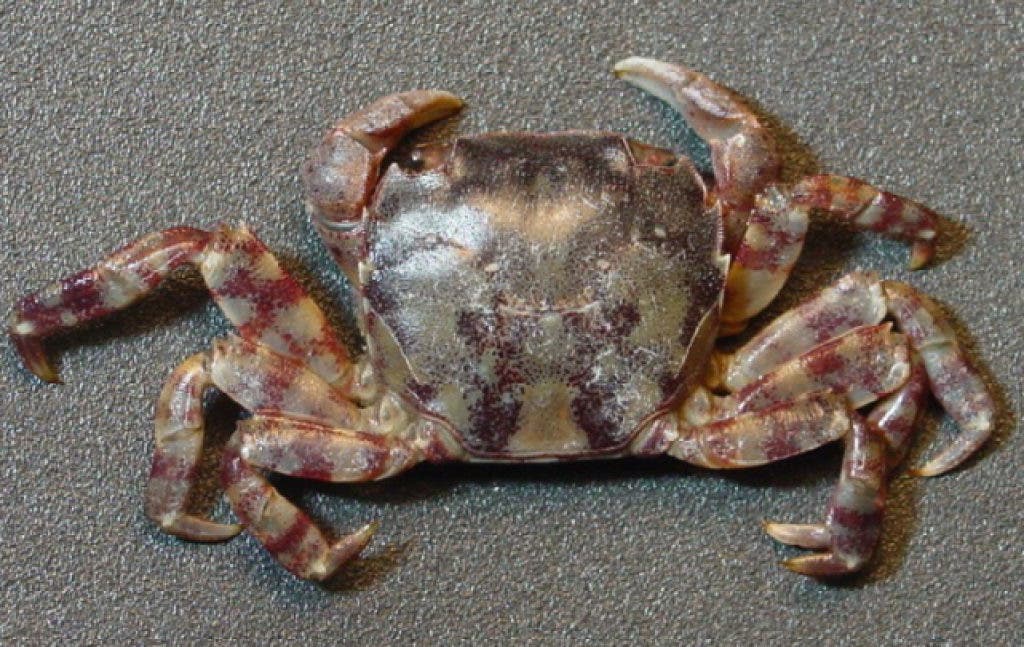


Invasive species can disrupt a healthy ecological balance both on land and in water, and one Purchase professor is studying the effects of a particular crab that's been taking over the Long Island Sound for the last two decades.
George Kraemer, Professor of Biology and Environmental Studies at Purchase College, started studying the Asian Shore Crab (Hemigrapsus sanguineus) in 1998, about eight years after the crab likely arrived here on commercial vessels from either Japan or China.
"Once these things arrive, they're for good," he explains. "There are two possibilities: Back in its home range it had a parasitic barnacle that grew into the crab and castrated them, which reduced the number of crabs reproducing, but we don'thave that here. In theory though, a barnacle could arrive."
"The other thing that could happen is a new invader could come along and be a better competitor and kick out the Asian Shore Crab. That's what it did to the Green Crab, which arrived [in the Sound] in the early 1800s. If another commercial vessel from Japan brings another crab, you can envision the Asian Shore Crab diminishing in abundance."
According to the United States Geological Survey, presence of the Asian Shore Crab was first recorded in 1988 in Cape May County, New Jersey. While rockfish and seagulls prey on the crab, the length of their mating season is double that of native crabs.
To get an idea of how the Asian Shore Crab has invaded the Sound, Kraemer says that if one were to catch 1,000 crabs at Edith Read Sanctuary in Rye between high and low tides on a given summer day, 999 of them would be the Asian Shore Crab. The crab's presence has also expanded from the shores of New York and Connecticut to North Carolina and up to Maine.
Students in Kraemer's marine ecology course spend the majority of their lab classes in the field at Edith Read or the Marshlands Conservancy studying crab communities and the effects of this invader on the Sound's ecological balance.
"We've noticed that [the Asian Shore Crab] has affected other things, such as seaweeds and barnacles, and it's reducing populations locally of intertidal snails," Kraemer said. "As crabs go, this isn't a large crab, but it's driven some significant changes in the Sound."
"The easy answer is that the crab itself is a sort of biological pollution. We'd like to know quantitatively what's the impact of this evader on the seaweed floor," he said, noting that it's possible that natural systems aren't recycling as many nutrients as they used to.
Kraemer also researches Integrated Multi-Trophic Aquaculture (IMTA,) a method of balancing ecosystems by introducing different organisms to an environment.
Find out what's happening in Harrisonfor free with the latest updates from Patch.
"The idea is to mimic nature to minimize pollution impacts on raising fish in enclosed systems," he said.
For about a decade, Kraemer has been conducting IMTA field work with a colleague at the University of Connecticut at Stamford. They just started researching the effects of growing seaweed and muscles suspended from rafts in Bridgeport, CT and in the East River at Hunt's Point in the Bronx.
"We've put lines attached with seaweed out there and measure them every two to four weeks," he explained. "We're interested in knowing whether or not the seaweed is removing significant nutrient pollutions from the water."
Seaweed helps to filter pollutants from water, and muscles that grow alongside the plant also help to create cleaner water by eating fecal particles from fish. Kraemer says there may also be a market for seaweed as a bio-fuel resource.