Seasonal & Holidays
NAACP Huntington Branch Celebrates Black History Through Music, Legacy And Liberation
Dr. Georgette Grier-Key traced a "century of sound" from spirituals to hip hop during the Feb. 19 celebration.


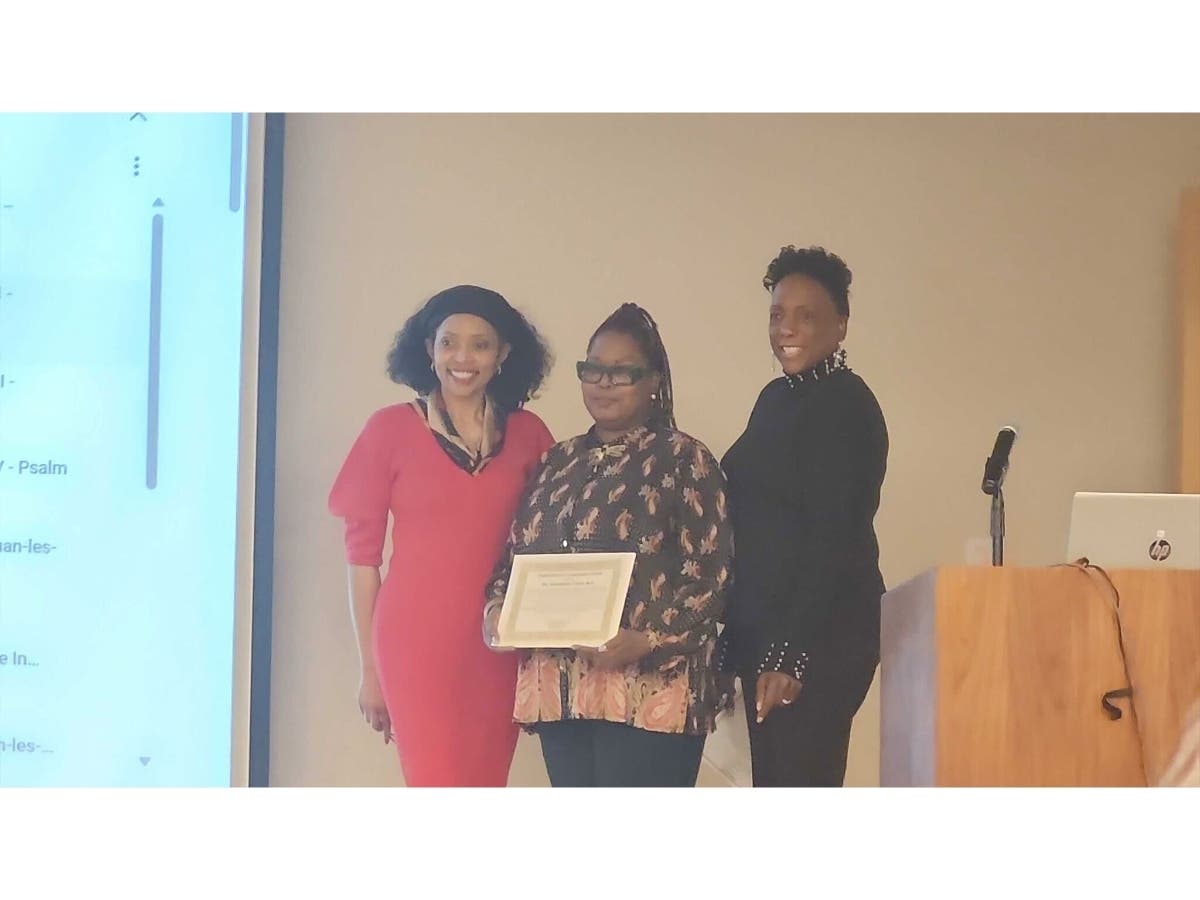

HUNTINGTON, NY — Music, memory, and movement converged at the South Huntington Public Library on February 19 as the NAACP Huntington Branch hosted “An Evening of Black History,” a program that honored the roots of African American culture through song, scholarship, and reflection.
The evening’s keynote speaker, Dr. Georgette Grier-Key — NAACP Long Island Regional Director, historian, and professor at Medgar Evers College — delivered a sweeping address tracing 100 years of Black musical influence. After her speech, Town of Huntington Receiver of Taxes Jillian Guthman presented Grier-Key with a certificate of recognition.
“Your brilliance, your knowledge, and your passion for preserving our history and sharing it are so appreciated,” Guthman said.
Find out what's happening in Huntingtonfor free with the latest updates from Patch.
Grier-Key centered her remarks on what she described as 'a century of sound,' saying Black music is foundational to American identity.
“When you think about music and where it comes from, and it’s no accident that we’re here today as we think about Dr. Carter G. Woodson, who launched Negro Week, which became Black History Month,” she said. “He understood that to capture a people, you had to document their soul. And it is the music. Black music is in the DNA of American identity."
Find out what's happening in Huntingtonfor free with the latest updates from Patch.
She spoke to the audience about how reclaim overlooked contributions, including the African origins of instruments like the banjo.
“The banjo is an African instrument,” she said. “When we think about the twang that we hear in country music, that was born in Black hands.”
Much of Grier-Key’s lecture focused on jazz legends John and Alice Coltrane, whom she described as “the high priest and high priestess of American music.”
“John turned his saxophone into a prayer pipe,” she said. “He didn’t want to just play songs. He wanted to create a vibrational frequency. He wanted to create these frequencies so that he could heal people who listened to his music. Alice Coltrane was no sidekick. She proved that our music could be meditative, cosmic, and divine.”
The intellectual rigor of Black music, she said, reshaped American culture. Grier-Key traced the influence of Black music from spirituals and blues to Motown, funk, hip hop, and Afrobeats.
“The most sophisticated and intellectual movement in American history — it didn’t happen in the boardroom,” she said. “It happened in the music room. From the spirituals that birthed the blues to the jazz that defined the era to the hip hop that now dominates every corner of the globe. Black music shaped the world.”
Grier-Key encouraged support for the Coltrane Home in Dix Hills and continued community engagement in preserving Black history.
“Our music has been that language that brings us together,” she said. “Their legacy did more than just play music. It sought to bring together humankind in the human spirit.”
Get more local news delivered straight to your inbox. Sign up for free Patch newsletters and alerts.