Schools
Walt Whitman HS Students Awarded Research Grants From New York Institute Of Technology
Five students from the school earned the 2025 Eighth Annual Mini-Research Grant Award for conducting promising research in STEM fields.


SOUTH HUNTINGTON, NY — Five Walt Whitman High School Science Research students have been selected as recipients of the 2025 Eighth Annual Mini-Research Grant Award presented by the New York Institute of Technology, the South Huntington School District announced.
The prize is awarded to outstanding high school students who are conducting promising research in the various STEM disciplines, such as science, technology, engineering, and math.
The mini-grant award of $300 is intended to offset the cost of materials and related expenses so students can continue their projects.
Find out what's happening in Huntingtonfor free with the latest updates from Patch.
Students were notified of their successful applications in February after the NYIT judging panel determined their research projects "have scientific merit and potential impact in the STEM fields."
"Congratulations to senior Kate Adams, juniors Shayaan Siddiqui and Ibrahim Farooq, and sophomores Omar Salazar and Richard Linares, along with their teachers Mr. Fred Feraco and Mr. John Karavias," the school district wrote.
Find out what's happening in Huntingtonfor free with the latest updates from Patch.
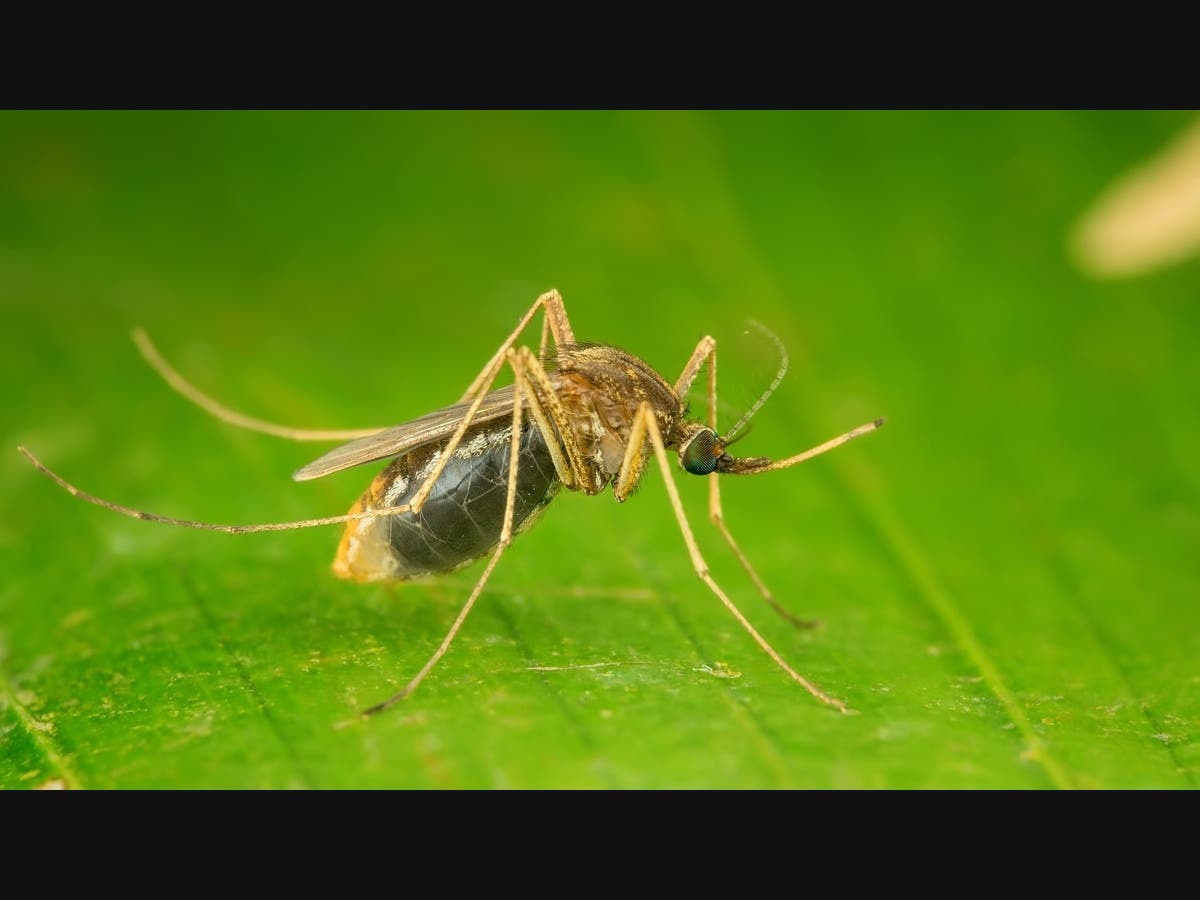
Adams is researching development of a low cost, easily produced trap for the spotted lanternfly. The insect has been designated an invasive species by the New York State Department of Environmental Conservation. According to Adams’ research, the problematic insect "feeds on more than 70 types of plants and trees, posing a major threat to agriculture and ecosystems across the U.S. The root issue is the lack of natural predators to control their population."
The spotted lanternfly originated in Asia and was first discovered in New York State in 2020. After analyzing existing traps, Adams is trying to eliminate "common drawbacks such as high costs, reliance on chemical lures, or the harming of non-target species."

Siddiqui and Farooq are working together as a team and also targeting the spotted lanternfly. The insects like to gather in large numbers when they feed, and one of their favorite places to hang out is the tree species known as tree of heaven. This fast-growing tree, which can reach a height of 80 feet, is also considered an invasive species and widespread across the East Coast, including Long Island. Because of the height and abundance of the tree of heaven on Long Island, it is sometimes difficult to detect a spotted lanternfly infestation.
The students' project uses drones and image color analysis to detect healthy versus infested trees. The team’s study subjects were trees on the Walt Whitman High School property. After compiling drone photos into a high quality map, they ran various plant health algorithms that use a range of colors - values of red, green, and blue light - to assess plant health.
The team’s research "concluded that the VARI (Visible Atmospherically Resistant Index) plant health algorithm was the most successful in identifying differences between trees that were and weren’t infested, which could be used to help ecologists find and control SLF populations over large areas of land where manual observation is impractical, using drones instead."
Salazar and Linares also teamed up. Their research project involves the future of air travel. It begins with the premise that engines, avionics, electronics, and materials have all improved since the 1950s yet the overall shape of jetliners has stayed the same — essentially a tube with wings. They’re looking into whether what’s known as a "blended wing body" aircraft (BWB) can help commercial airlines improve efficiency and lower costs when compared to the standard jetliners that are in widespread use today.
A blended wing body combines the wings and fuselage into a single, smooth aerodynamic shape with no distinct line between those components. After examining elements including drag, lift, fuel use, take off speed, runway length requirements, existing airport infrastructure, lighter production materials, and potential passenger cabin size, the team concluded "BWBs are more aerodynamically efficient than your standard jetliner, consume less fuel, can land and take off from shorter runways, have an increased range and they hold more passengers than jetliners of similar size and role" making it extremely attractive for airlines to develop BWBs for the future because less money will be spent on resources, such as fuel, and they’ll take in more money due to the increased capacity.
The Science Research elective courses offered in 9th through 12th grades at Walt Whitman High School allow students to experience all aspects of professional research in science, math and/or technology. They explore and choose their research topic and, through independent study, conduct the necessary testing and fieldwork by accessing scientific databases, conducting literature reviews, making presentations demonstrating their progress and contacting doctoral-level research scholars under the guidance of their instructor and/or outside mentors. They also participate in several science competitions.
Get more local news delivered straight to your inbox. Sign up for free Patch newsletters and alerts.