Community Corner
A Town With Two Beginnings
Local historian Paul Manton takes a deeper look into Levittown's origin.

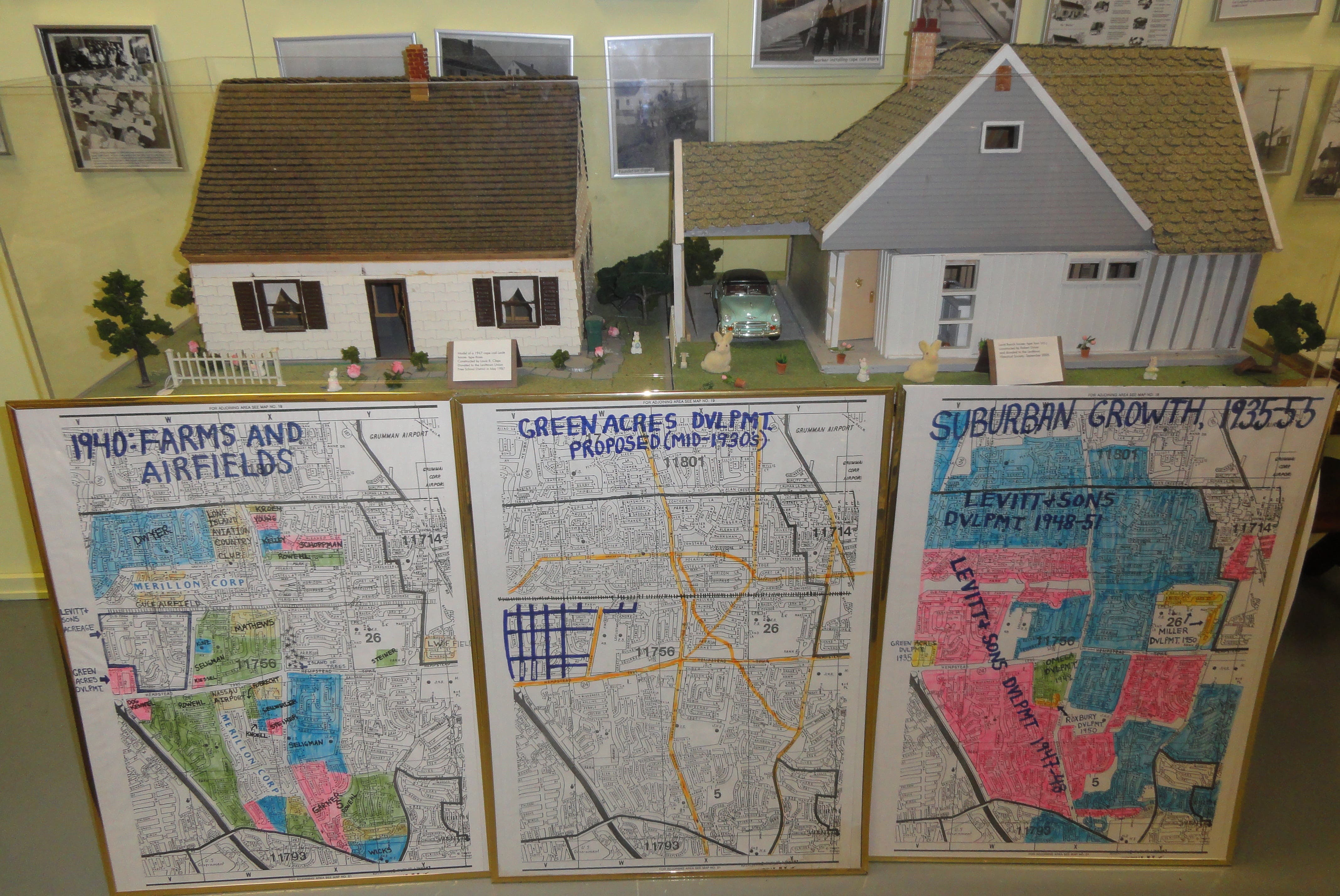
The origin of many Long Island suburban communities, of which Levittown proudly serves as both epitome and pioneer, is not unlike the birth of a kangaroo – an initial entry into the light of day, an extended interlude in obscurity, followed by an arrival whose conspicuousness and suddenness beguiles the evolutionary nature of the process.
Ostensively Levittown began on Oct. 1, 1947 when Mr. & Mrs. Theodore Bladykus became the first family to move into what became, by 1952, the largest housing development in history with 17,447 mass-produced Cape Cod and Ranch homes, roads, landscaping, and community facilities. The human tsunami was so relentless that a community with only a few hundred people in 1930 – and generally known as the Jerusalem/Island Trees area – became circuit-board suburbia overnight with citizens numbering in the tens of thousands. On Jan. 1, 1948, it officially became known as Levittown.
The post-WWII explosion onto the scene conceals the fact that the Levittown area's history actually dates back to the 17th Century. On Feb. 12, 1664 an English-born Quaker named Capt. John Seaman purchased a few thousand acres of open, wind-swept Hempstead Plain meadow from Takapausha and other representatives of the Massapequan Indians. He called this tract Jerusalem, established a farm called Cherrywood along an Indian path that's now Wantagh Avenue, and began to promote the settlement of other English Quaker families into the area.
Find out what's happening in Levittownfor free with the latest updates from Patch.
The Jerusalem Purchase, as it's formally known, encompassed most of current southern Levittown, Wantagh, and Seaford and that name was chosen not only in accord with the Quaker convention of bestowing Biblical place-names to their settlements in the New World (Jericho and Bethpage, for instance) but as deference to one of Seaman's ancestors, a knight who fought in the crusade in Jerusalem with King Richard the Lion-Hearted.
Corkey in his Hidden Ireland noted how the hills, glens, and roads of the Emerald Isle were rich in the tales of heroes and annals of tribes; all infused in the local place-names. From our first settlement in the 17th Century we get the "Jerusalem" in Jerusalem Avenue, the "Seaman" in Seaman's Neck Road, the "Carmen" in Carmen Avenue, and the "Hicks" in Hicksville. They are the bedrock upon which subsequent strata of history have been deposited.
Find out what's happening in Levittownfor free with the latest updates from Patch.
Want to learn more about the history of Levittown and the surrounding communities? Visit www.levittownhistoricalsociety.org