Community Corner
Mapping Ecological Gradients and Disturbance in Soil: A Guide To Restoration
Frank Piccininni Presents Findings to Long Island Invasive Species Organization
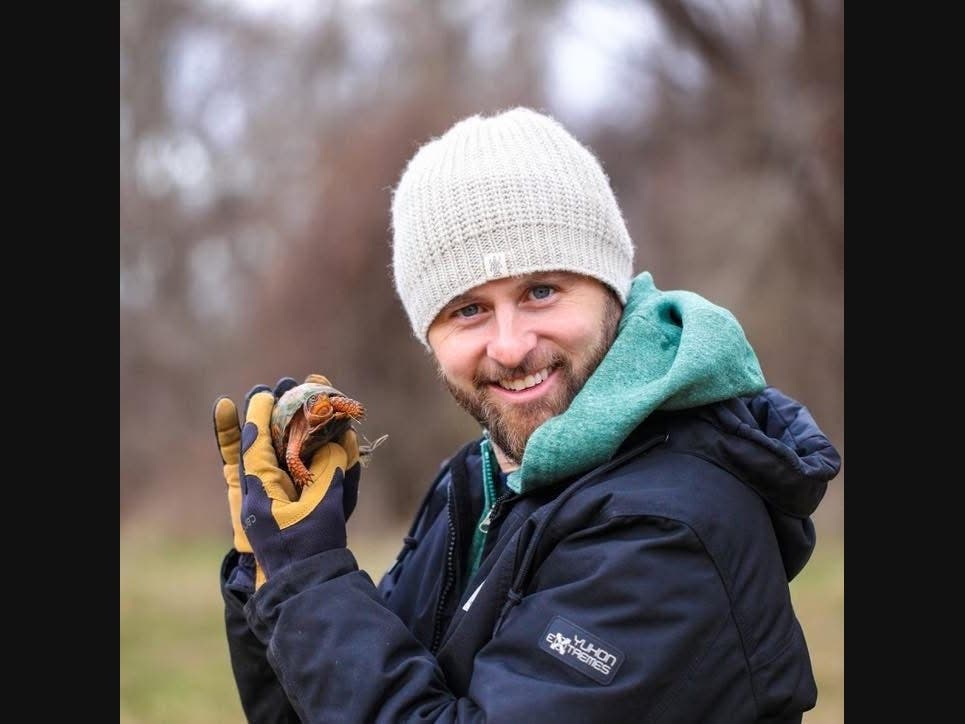
Frank Piccininni, President and CEO of Spadefoot Ecosystem Solutions, a Long Island-based ecological restoration firm, recently delivered a presentation about managing nature systems at a meeting of the Long Island Invasive Species Management Area (LIISMA). Drawing on nearly two decades of field research and applied ecological work, Piccininni introduced a systems-level framework that redefines how land managers, conservationists, and property owners should approach habitat restoration across Long Island and New York State.
“Nature is not made up of separate isolated parts but instead functions as a connected system shaped by gradual changes in moisture, soil, vegetation, and disturbance,” Frank Piccininni said. “When we begin to recognize and work with these natural patterns rather than trying to manage each piece on its own, we can design restoration efforts that are more effective, more resilient, and more aligned with how ecosystems truly function.”
The presentation focused on a framework that came out of early salamander research in the hills of West Virginia and now over a decade later at West Hills County Park. What began as a study of where salamanders live led to a broader finding: natural systems tend to organize into repeating patterns, no matter the scale. This has been shown to apply small forest plots to landscapes across New York State.
Find out what's happening in Long Islandfor free with the latest updates from Patch.
He explained that instead of viewing nature as separate, isolated parts, it’s more accurate to see it as connected gradients, gradual shifts in moisture, soil, vegetation, and disturbance, that shape how ecosystems function. Across multiple datasets and locations, his work identified a few consistent patterns, including stable upland forests, wetter and more dynamic areas like wetlands and valleys, edge zones heavily affected by disturbance and invasive species, and small-scale moisture differences that shape habitat conditions.
A major focus of the presentation was the role of invasive species. Invasives don’t just replace native plants—they simplify and destabilize ecosystems, weakening the underlying natural structure that supports native biodiversity. Removing invasives is “addition by subtraction” because it allows ecosystems to regain their natural complexity.
Find out what's happening in Long Islandfor free with the latest updates from Patch.
“What we often miss is that invasive species do not just change one plant community in isolation, they create ripple effects that move through the entire system,” Piccininni said. “They alter soil chemistry, disrupt native plant relationships, and ultimately flatten the ecological structure that everything else depends on. Once you see those cascading impacts, management stops being about individual removals and becomes about restoring balance to the whole system.”
Spadefoot Ecosystem Solutions is a Long Island-based ecological restoration and consulting firm Co-Founded by Frank Piccininni. The company specializes in invasive species management, native plant community restoration, stormwater management, and systems-level ecological assessment. Spadefoot works with residential customers, parks, municipalities, homeowners associations, land trusts, and museums across Long Island and New York State, and is dedicated to nature-based solutions. For more information, visit spadefoot.eco.