Neighbor News
Mount Sinai South Nassau’s $400M Expansion Could Transform Neonatal Care on Long Island
With completion on track, the Oceanside hospital's Level III NICU promises advanced care for the South Shore's smallest patients.

After years of construction and millions in investment, Mount Sinai South Nassau’s J-Wing expansion is approaching its final phase. By summer 2025, the Oceanside community will see the long-promised upgrades in cardiac care, surgical capacity, and infrastructure take shape—but not without lingering questions. When the project reaches its completion, how soon will it take for the community to get admitted into this part of the hospital? Has public sentiment softened since zoning debates? Does Mount Sinai have future business ventures in mind for the campus? As part of these endeavors, what does a Level III neonatal care upgrade mean for Long Islanders?
In the past, the public has not taken kindly to Mount Sinai's investments. Back in 2019, the LI Herald reported that residents near the former Long Beach Medical Center filed a lawsuit against Mount Sinai South Nassau and the city’s zoning board. The hospital had received approval to build a $40 million medical arts pavilion on land zoned residential, rather than redeveloping the original medical center site. Locals had argued this violated prior commitments and disrupted the neighborhood’s character. Moreover, Mount Sinai's Wantagh expansion, slated between 2022 and 2025, was a plan to renovate a former Verizon building into a $70 million ambulatory center; also drawing public concern (News 12 Long Island). Residents worried about traffic, safety, and the impact on children in nearby homes. The Town of Hempstead Zoning Board held hearings to weigh these concerns, though the project ultimately moved forward.
As for the J-Wing in Oceanside, there’s no direct evidence of zoning disputes in the recent updates.
Find out what's happening in Long Islandfor free with the latest updates from Patch.
Also known as the Feil Family Pavilion—is a $138 million inpatient hospital addition on the Oceanside campus. It’s part of a larger $400 million capital improvement program (Group PMX), and it will double the emergency department, add nine operating rooms, 40 critical care beds, and expanded ambulance bays (Mount Sinai South Nassau). It’s built for acute care, surgery, and high-risk treatment, including cardiac surgery and stroke intervention.
As of now, Mount Sinai South Nassau has not publicly confirmed an exact date for when patients will be admitted into the full Feil Family Pavilion. However, the first phase—the Fennessy Family Emergency Department—has already opened, and the hospital has stated that the rest of the pavilion will be open “in the coming months” (Mount Sinai South Nassau), following the projected schedule of completion down to the letter.
Find out what's happening in Long Islandfor free with the latest updates from Patch.
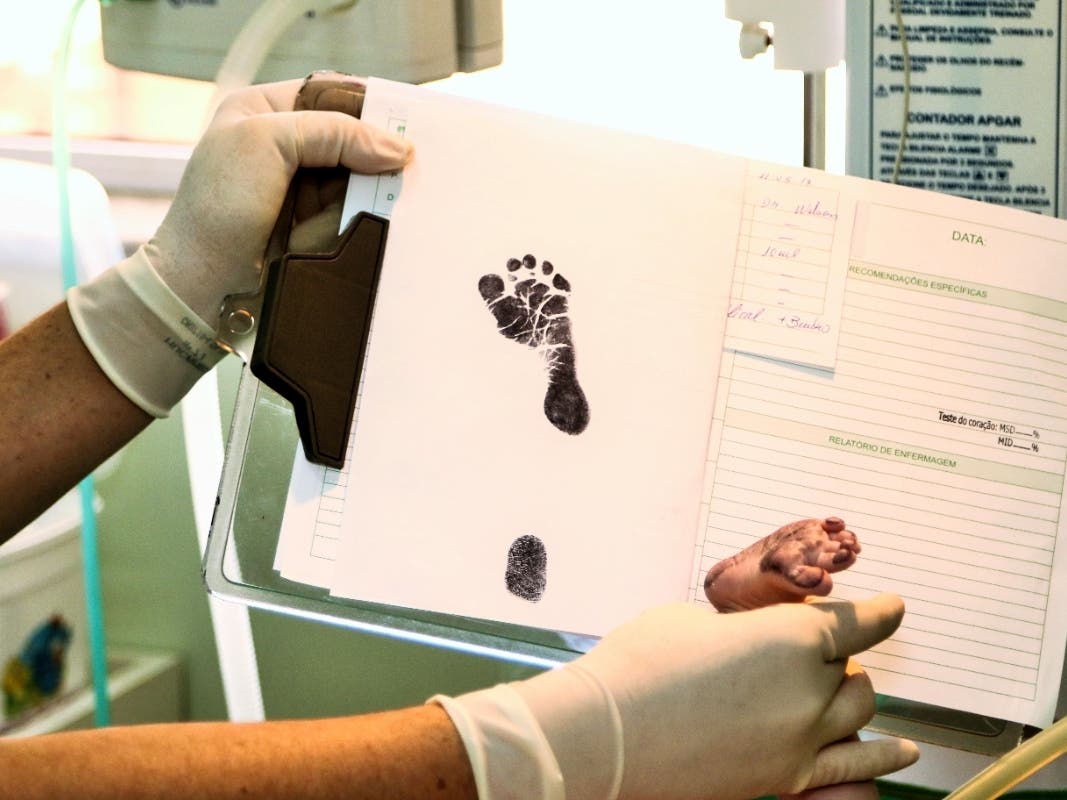
Future plans for the campus include a lofty ambition to establish a Level III Neonatal Intensive Care Unit (NICU) at the Oceanside campus, which is also part of the $400 million investment. This will enhance pediatric and high-risk obstetrical care for the South Shore, allowing more complex births and neonatal cases to be treated locally. A Level III NICU is designed to care for critically ill newborns, including those born extremely premature, with low birth weight, or with complex medical or surgical conditions. It’s one tier below the most advanced Level IV NICUs, but still offers a high degree of specialization.
The NICU will allow the hospital to care for premature and critically ill newborns locally, reducing the need for transfers to Manhattan or other tertiary centers. This move aligns with Mount Sinai’s goal of expanding specialty care access on Long Island—especially for high-risk obstetrics and pediatric cases.
According to the AAP and WHO-aligned guidelines, a Level III NICU must provide:
- Continuous life support and advanced respiratory care (e.g., mechanical ventilation, CPAP).
- Access to pediatric subspecialists, including neonatologists, pediatric surgeons, and anesthesiologists.
- Advanced imaging (MRI, CT, echocardiography) with interpretation available 24/7.
- Surgical capability for conditions like congenital malformations (excluding complex cardiac surgery, which is Level IV).
- Neonatal transport services for transferring infants to higher-level care if needed.
- Multidisciplinary care teams, including specialized nurses, nutritionists, and developmental therapists.
The scope of what this means for newborns on Long Island is enormous, which might be an understatement. The time and resources it takes to transfer a newborn from Mount Sinai South Nassau to a location in Manhattan is both medically and logistically taxing. While exact timestamps vary based on acuity and traffic, neonatal transfers from Mount Sinai South Nassau to Manhattan typically require 1.5 to 2.5 hours door-to-door, factoring in (Mount Sinai):
- Ambulance dispatch and prep: ~20–30 minutes.
- Transit time (Oceanside to Manhattan): ~60–90 minutes depending on traffic and weather (according to Google Maps).
- Receiving facility intake and stabilization: ~15–30 minutes .
Each transfer consumes multiple staff hours, advanced life-support equipment, and coordination between two hospitals. In high-acuity cases, delays—even by 15 minutes—can impact emergency outcomes. That’s why the planned Level III NICU at South Nassau is so consequential: it eliminates the need for these transfers in many cases, allowing for immediate intervention and continuity of care on Long Island.
This is, however, a plan. It has not been set in motion yet. For Mount Sinai South Nassau, despite the benefits that such an expansion can promise, neonatal care remains at a Level II at the moment.
The J-Wing is nearly ready. Summer 2025 brings its long-promised upgrades in cardiac care, surgical capacity, and modern infrastructure—but the question of neonatal access remains, so far, unresolved. Families receiving care for the newborns, in Oceanside, still face two-hour transfers for critical care, even as millions have flowed into bricks and systems. This investigation has surfaced the logistical gaps and institutional ambiguity that persist beyond ribbon-cuttings. It’s a reminder that physical expansion does not guarantee equitable access. As construction nears its end, the press must not withdraw with it. Local journalism holds a continuing duty: to interrogate outcomes, to track accountability, and to ensure that the community’s most vulnerable patients are not left in transit.