Neighbor News
Opinion: Why AI Actors May Save Hollywood From Itself
AI actress named Tilly Norwood pushes the debate

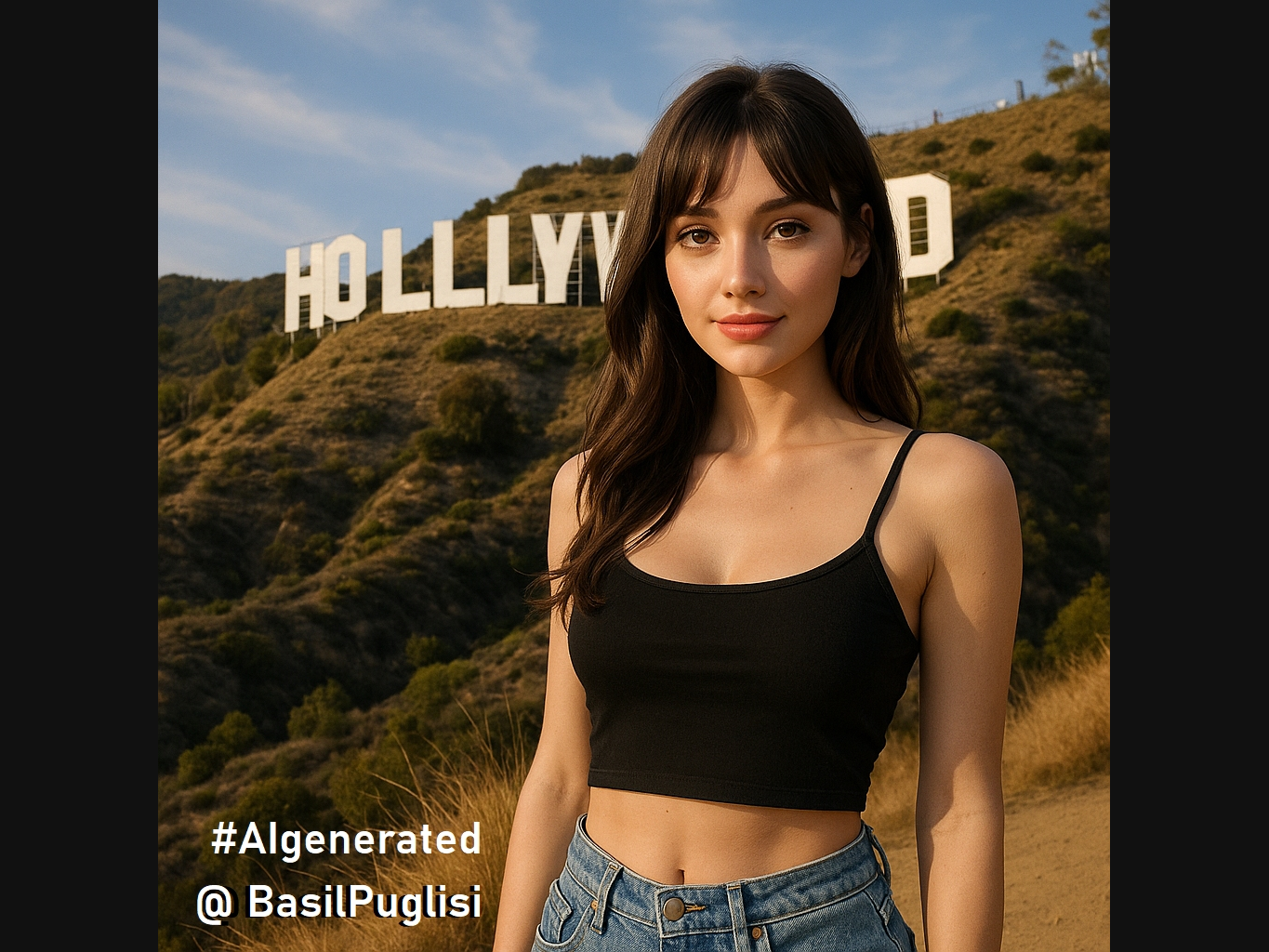


Hollywood is in uproar over an AI actress named Tilly Norwood. Created by a London studio called Xicoia, Tilly is being introduced as a rising star, complete with a British accent, a social media presence, and red-carpet clips that look every bit as polished as the real thing. For many in the industry, she is a threat to jobs and to the very idea of performance. For others, she is simply the next step in a business that has always been driven by change.
The truth is that AI actors may be exactly what Hollywood needs.
Unions and guilds argue that synthetic performers are dangerous, and they are right in one sense. AI will change acting. But the deeper issue is not whether audiences care too much about who an actor is. It is that audiences care almost entirely about the roles they play. Economist Tyler Cowen captured it well when he wrote that actors want to be loved for who they are rather than the characters they portray, but then get upset when an AI character does the influencer thing better than they do.
Find out what's happening in Long Islandfor free with the latest updates from Patch.
Consumers have never paid to see an actor’s politics or personal beliefs. They pay to be taken into a story. Yet more and more, actors use their fame to push causes or pick fights that divide audiences. Gina Carano’s removal from The Mandalorian is a clear example. Political tweets set off a firestorm, and Disney found itself managing petitions, merchandise backlash, and fan outrage. Viewers were reminded that one person’s politics could overshadow an entire franchise. This is not unique. It is the recurring risk of celebrity culture, where the story gets lost in the noise of personal agendas.
Here is the irony. People often worry that AI will do what it wants outside of human control. The uncomfortable truth is that human actors have been doing exactly that for decades. They step off script, they bring politics into the spotlight, and they make choices that leave audiences frustrated. In that sense, actors are also products that behave in ways many people do not want. By comparison, an AI actor stays in the role. It delivers the story. It does not hijack the screen to make a point about an election or a movement. That consistency may be exactly what audiences start to prefer.
Find out what's happening in Long Islandfor free with the latest updates from Patch.
The practical case for AI performers is just as compelling. Consider the economics. Robert Downey Jr. earned $75 million for his role in Avengers: Endgame. By contrast, Xicoia claims its AI actress Tilly Norwood can reduce production costs by as much as 90 percent. Even if the true number proves smaller, the gap shows why studios are paying attention. Netflix alone spends over $17 billion annually on content. If even a fraction of those costs can be trimmed without sacrificing quality, the pressure to experiment with AI talent is enormous. That efficiency is not just about profits. It translates into steadier pipelines of fresh content and subscription costs that do not climb as fast for consumers.
Critics will say this means replacing people. That is not the right way to see it. What AI actually does is remove the financial barrier that has locked out countless human storytellers. Writers and directors who never had the money to cast a star can now bring their stories to life. Musicians once fought record labels that distorted their work and controlled their image. AI offers creators the same liberation. It empowers the storyteller rather than the gatekeeper.
Actors are not disposable either. Their value is still very real. But their value has always depended on the system around them. If they bring life to a story, they remain indispensable. If they insist on treating their celebrity as a soapbox or demanding lifestyles far richer than the audiences who support them, then it is fair to show they are not untouchable. AI does not erase actors, it simply introduces checks and balances.
Transparency should not be feared either. An AI character can and should be disclosed openly, the same way we already accept that cartoons, comics, and illustrated books are not bound to human faces. Storytelling has never required real people. It has required imagination. The only difference today is that technology makes the imagination look more realistic, without putting people, animals, or environments at risk.
And finally, there is the question of who holds the creative authority. The answer has always been the storyteller. Directors, writers, and creators remain the true arbiters of the story. Actors, whether human or AI, are channels for that vision. When an actor adds depth to the role, it enriches the work. But when their personal choices overshadow the story, the balance is broken. AI actors do not replace collaboration, they safeguard the integrity of the story and keep the human artist’s vision intact.
Yes, an AI actress like Tilly Norwood unsettles us. She raises real questions about identity, consent, and artistry. But every major leap in entertainment technology has brought the same fear. The arrival of sound, the rise of CGI, even the use of digital editing all once sparked outrage. Each time, the industry adjusted. Each time, the story endured.
Hollywood now faces the same choice. It can cling to the idea that actors themselves are the product, or it can admit what audiences already know. Stories are what matter. Tools that make those stories more accessible, affordable, and scalable are not the enemy. They are the next evolution.
Tilly Norwood may not be human. But she represents a very human truth. We value the role more than the resume. The sooner Hollywood understands that, the sooner it can move past fear and step into reinvention.