Politics & Government
3 Critical Defects Found in Latest Round of Rail Track Inspections
More than 250 miles of track and 90 switches were examined.


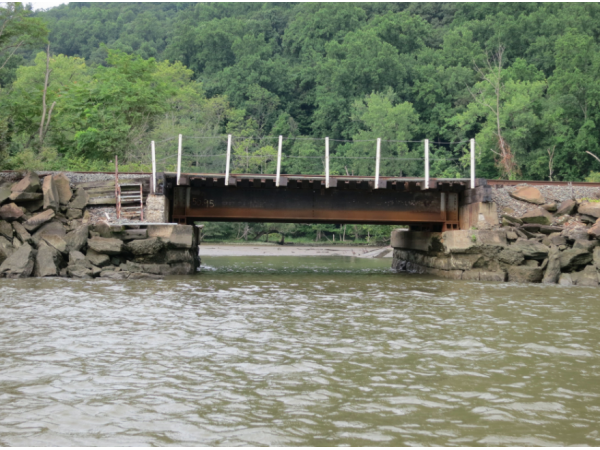
KINGSTON, NY — Another round of targeted rail inspections in New York have been completed.
Governor Andrew Cuomo said the inspection teams have examined 251 miles of track and 91 switches, according to a release.
Overall, state and federal teams uncovered and addressed three critical defects and 24 non-critical defects.
Find out what's happening in Mid Hudson Valleyfor free with the latest updates from Patch.
“Vigilant rail track inspections are critical to keeping our communities safe across New York,” Cuomo said. “Our rigorous inspection schedule enables us to detect and quickly address defects to protect the well-being of those who live and work near rail tracks.”
Following a series of out-of-state disasters involving transporting crude oil by rail, the state embarked on a series of aggressive actions to improve the safety and reliability of the practice.
Find out what's happening in Mid Hudson Valleyfor free with the latest updates from Patch.
The recent inspections, which focused on track and track hardware, included the CSX mainline track between Catskill in Greene County and Kingston in Ulster County.
On that line there were two critical defects, which must be immediately repaired, and three non-critical defects, which must be fixed within 30 days.
The critical defects included an improperly located fastener. Officials said it was repaired immediately.
RELATED:
- Rockland First Responders in Haz-Mat Train Drill
- Drill Will Simulate Crude Oil Train Accident
- Riverkeeper: Lawmakers Must Prevent Crude Oil Disasters on the Hudson River
Non-critical defects included loose bolts on a switch transition device, a loose adjustable rail brace at the switch and fouled ballast.
In March 2015, a round of targeted inspections of crude oil tank car and rails, found 93 defects, including seven critical safety defects. One was between Haverstraw and Newburgh.
In May, the state examined 108 crude oil tank cars, as well as about 163 miles of track and 55 switches.
Three critical defects and 33 non-critical defects were uncovered and addressed at that time.
In 2014, at the direction of the governor, the state departments of environmental conservation, transportation and health, along with the Division of Homeland Security and Emergency Services and the Energy Research and Development Authority, conducted a review of safety procedures and emergency response preparedness for crude oil shipments.
The agencies came up with 27 recommendations to reduce risks and increase public safety in transporting crude oil.
In addition, funding for staff and associated preparedness costs was increased and new staff was hired, including five new Department of Transportation rail safety inspectors.
Get more local news delivered straight to your inbox. Sign up for free Patch newsletters and alerts.