Arts & Entertainment
Still Searching for Bobby Fischer
Author Frank Brady gives an in-depth look at Bobby Fischer through new book.
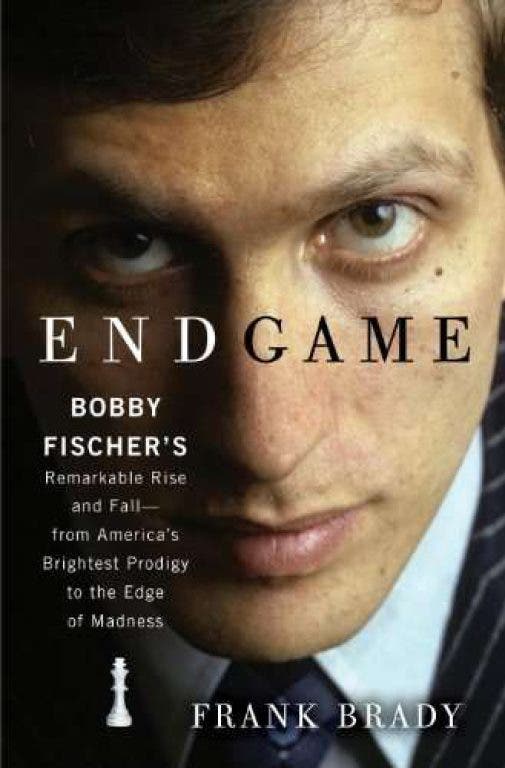


Can we truly appreciate a man’s genius despite his personal vices?
Author Frank Brady struggled with this concept when confronted with the idea of writing a biography on chess champion Bobby Fischer.
“I went through an existential confrontation on whether or not I would be able to write this book and finally, I came to terms with it,” Brady said during the presentation of his book “Endgame” at the last Saturday.
Find out what's happening in Mineolafor free with the latest updates from Patch.
Although he has been repeatedly asked throughout the years, Brady only decided to write Fischer’s biography after his death.
He has been collecting information about Fischer for over 50 years. “I’ve been studying his life all his life and basically all of my life,” Brady said. In addition to combing through archives, interviews with about 100 people Brady even flew to Iceland to collect information for the biography.
Find out what's happening in Mineolafor free with the latest updates from Patch.
While Brady and Fischer used to have a close relationship, the two had a falling out after Fischer began expressing his anti-Semitism, even though Fischer himself was Jewish.
During a radio interview shortly after the September 11 attacks Fischer’s comment “I applaud the act. The United States is getting what it deserves,” set the rift between Brady and Fischer even further apart.
“So when he made that statement that he applauded 9/11, I personally went ballistic and I voted to throw him out of the U.S. Chess Federation,” said Brady, who was on the board.
Even though Brady disagreed with many of Fischer’s beliefs, he still acknowledges Fischer as a genius chess champion. During the lecture, Brady recalled a match between Fischer and U.S. Open Champion, Donald Byrne, which exemplified Fischer’s skill as a child and named the “Game of the Century” by the tournament director.
“They played a game in which he made a move that was so deep, so profound and so brilliant that if you understood the game it would almost bring tears to your eyes,” Brady said. “How could this kid come up with this move, this concept? And he went on an checkmated Donald Byrne the U.S. Open Champion and won the game.”
Fischer was the youngest chess master in the history of the U.S. at the age of 13, his prowess increasing as he grew older. In 1972 Fischer played against Russian World Champion Boris Spassky. After he lost the first two matches, Fischer and Spassky played in a small room behind the stage. Guards were placed at the entrance of the room so no one could get in to distract the players.
Brady told the audience he was determined to see that match: “I got a chair and I boosted myself up into the air-conditioning duct and I wiggled my way through that air-conditioning duct so that I got right above the board and I could watch the game and I could watch their faces.” Fischer won the match in the room and skyrocketed to fame because of it.
“For that short period of time, he was probably the most famous person on earth. Everybody knew his name, everybody started playing chess,” Brady said.
While Fischer was on top of the world for a period of time, his story ultimately ended in tragedy. Because of his anti-American remarks and other mishaps with the government, Fischer sought refuge in Iceland, the only country that would grant him asylum, and died at the age of 64.
“There’s a certain irony there,” Brady said. “There are 64 squares on a chess board.”
Frank Brady is a full time teacher at St. Johns University in New York. He is also the president of the Marshall Chess Club and he is currently on tour promoting his newest biography, “Endgame.”