Community Corner
First Shark Pup Tagged Off Montauk Is Back For Season: NOAA
The shark was one of nine tagged off Montauk last summer — and the first of 2017 to make his way back home.


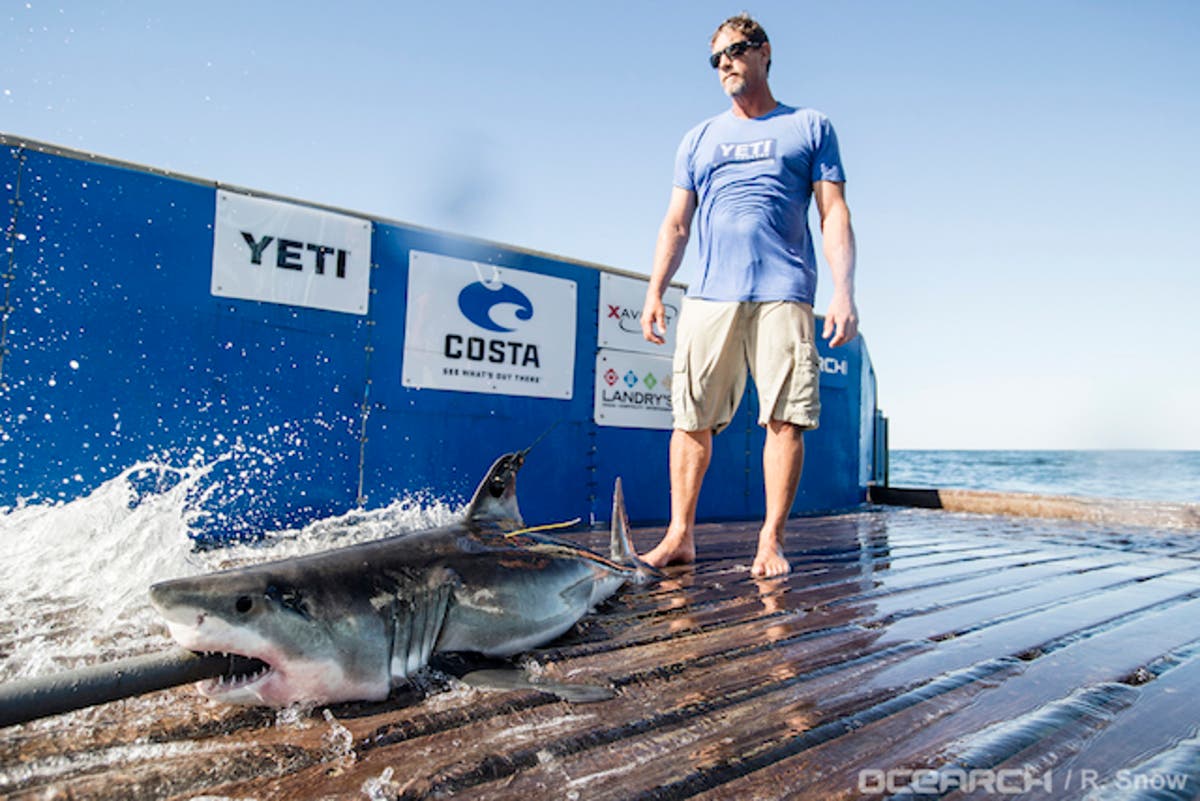
MONTAUK, NY — A 5-foot, 72-pound white shark pup tagged off Montauk last summer is the first to return to the waters off Montauk 9 months later, just in time for the summer season.
According to Tobey Curtis, shark researcher with the National Oceanic Atmospheric Fisheries Service, the pup, named "Manhattan," pinged at 6:30 am. off Montauk Wednesday morning, the first of the nine pups tagged in the great white shark nursery last summer to complete the first full loop of the migration cycle.
"It's just one shark so far" that's returned home, Curtis said, but the hope is that others will follow.
Find out what's happening in Montaukfor free with the latest updates from Patch.
Manhattan, he said, pinged south of Martha's Vineyard Tuesday then "hung a left" and headed back to Montauk.
Seeing the first pup return home is "exciting," Curtis said. "It confirms the first year migration pattern of these sharks."
Find out what's happening in Montaukfor free with the latest updates from Patch.
5ft 72lbs white shark pup @ManhattanWS returns to Montauk 9 months later! #DontFearTheFin pic.twitter.com/iR20GP1aFt
— OCEARCH (@OCEARCH) May 31, 2017
According to Curtis, nine baby white sharks were tagged off Montauk last year and through October, those sharks spent time a few miles off the beach between Montauk and Fire Island, "patrolling" the length, until they headed south, as far as South Carolina, where they are believed to have spent the winter.
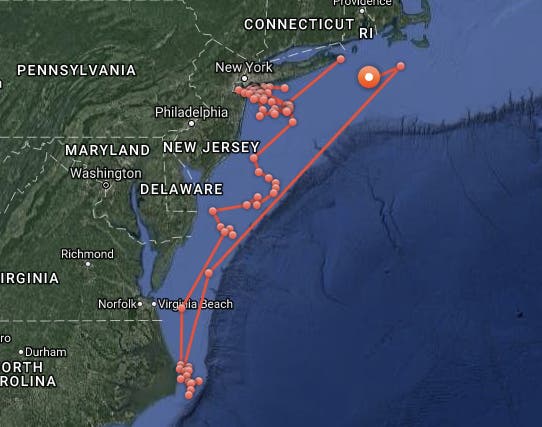
Manhattan was tagged August 23, 2016 off Montauk, Curtis said. He departed New York waters in early November, 2016, reached the Outer Banks of North Carolina in December, 2016, and began traveling north again in early May, 2017.
"This is the first documentation of the annual migration cycle of baby white sharks in the North Atlantic. It’s not unexpected, as seasonal north-south, or 'snowbird', migrations are common in many sharks — including the larger white sharks that have been tagged — but it’s nice to confirm the pattern and timing with satellite tagging," Curtis said.
As the water gets warmer, Curtis said, the great whites are heading back. "Over the next month the pups, who are going to be a year old, will be coming back into the Long Island area," he said.
It's still unclear, he said, how north they will travel, if they will head to Long Island or stay west of Montauk, or instead, if they will travel farther north to Rhode Island or Massachusetts. "We don't really know," Curtis said.
Lead scientist on the team tagging the baby sharks last year, Curtis said the historic process of monitoring the pups since birth has been invaluable.
"We're all kind of learning at the same pace. It's kind of cool," Curtis said. "The OCEARCH platform helped us to dial in to where the little guys were hanging out. Looking at the historical research and bringing it up to date, as well as doing something new, it's very rewarding," he said.
Shark fears, be gone
As for those who are fearful of the sharks' return, Curtis said they needn't worry. "I tell people the sharks are there, and they've always been there, whether you notice them or not. It's never been an issue. The fact that we have sharks is a sign of a healthy ocean and environment." And, he added, "There's nothing to worry about."
Not only are the sharks spending their time a mile or two off the beach, when the pups head north, they will still only be between 4 to 5 feet long. While they have teeth, and can bite, "they are not a serious threat," Curtis said.
In March, experts said that there's a baby boom of great white sharks expected to head to the area in the coming months — with the massive mama sharks are about to head to the nursery, located off the coast of Montauk, for the big event.
Last year, researchers tagged pups at the first North Atlantic nursery for the fearsome predator in the waters off Montauk, and this year, with the baby sharks tagged, more information than ever before is available to the public, who've taken to avidly following the sharks on social media.
This spring, according to The Virginian-Pilot, there was a "shark party" just off the southeastern coast, with 11 sharks tagged by Ocearch.org pinging and revealing their locations via satellite.
"You guys are sitting in a birthing area"
According to Chris Fischer, founder of OCEARCH, the great whites who were all "wintering" down south could be headed back north soon.
"You guys are sitting in a birthing area," he told Patch in an interview. "My best guess would be that the large mature females are going to be coming in during May and June and dropping off their pups in New York, New Jersey and on Long Island — out to Montauk."
The female sharks will drop off the pups and leave, he said.
When the 3,400 lb. great white shark Mary Lee made headlines last year, moving in the New York and New Jersey area and then, spending time near Southampton and then Montauk, the thought was that she may have given birth.
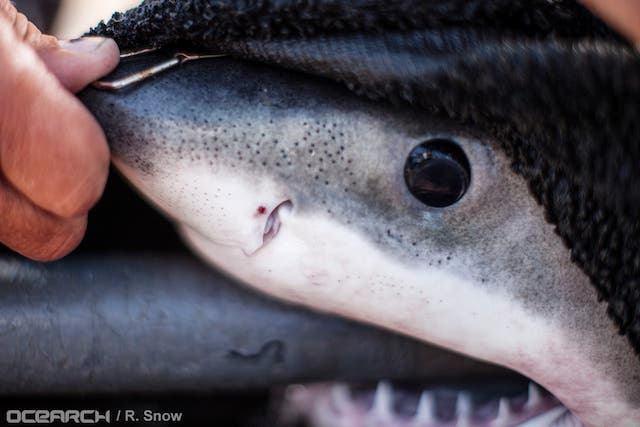
Then, after looking at a scientific paper authored by Jack Casey and Wes Pratt, and another by Curtis, the OCEARCH team caught nine pups, lifted them up onto the ship, and performed research projects including taking gas, blood and tissue samples.
New umbilical scars on the pups indicated that the area off Montauk was, indeed, a birthing site, Fischer said, with the pups one to three months old.
Now that the pups are being tracked, a whole new age of discovery has evolved, Fisher said. "Now we are watching the young of the year, watching them define the nursery of the great white shark."
That first year, he explained, is when the pups are most vulnerable. Once they're larger and older, they can avoid various types of gear and danger.
And if the researchers can help those pups succeed, it will be a win-win for future generations, Fischer said.
"They're the lions of the ocean, the balance keepers," he said.
Understanding how they move through the nursery helps ensure an abundance of the entire ecosystem and "an abundance of fish that our future children will eat," Fischer said.
Sharks, Fischer added, live to be more than 70 years old and are not even sexually mature until they are 20; they give birth every other year with an 18-month gestation period. They usually give birth to an average of eight babies that are four and a half feet long and 45 lbs.
The baby great whites off Montauk are balancing the in-shore system, chasing menhaden, mackerel and squid, "eating the weak, the dead and dying so the strong will survive. They're the balance keepers of the water here. When they grow up, they're the balance keepers of the whole North Atlantic."
To read that full prior Patch report on the shark pup tagging, click here.
Photos courtesy of OCEARCH.
Get more local news delivered straight to your inbox. Sign up for free Patch newsletters and alerts.