Arts & Entertainment
AI Forces A Reckoning Across NYC Film Industry
Inside Tribeca, filmmakers and technologists debate how AI is transforming access to the industry's gatekeepers.


NEW YORK, NY— For more than a century, New York City has served as the beating heart for aspiring writers, filmmakers and actors.
From Broadway to the independent soundstages of Brooklyn and Queens, the City’s cultural infrastructure has shaped both American storytelling and entertainment, accounting for roughly 12 percent of the nation’s creative economy employment, according to the New York City Comptroller’s 2024 report.
Now that ecosystem is confronting a new force: artificial intelligence.
Find out what's happening in New York Cityfor free with the latest updates from Patch.
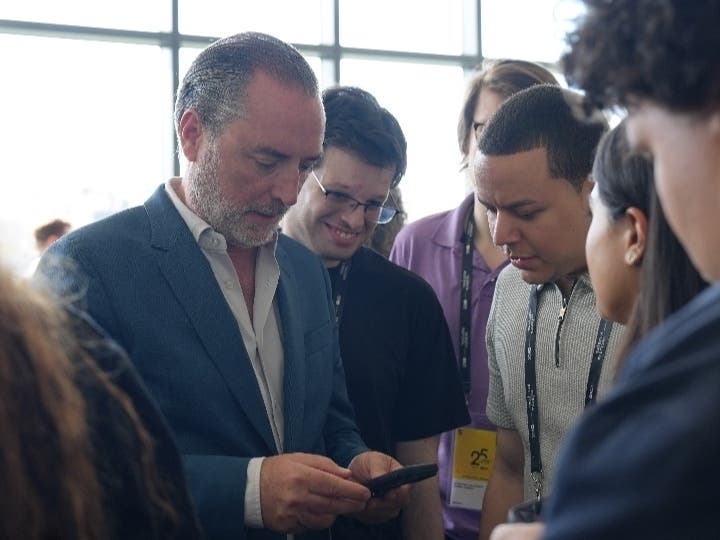
At the Tribeca Film Festival, which ran from June 4 to June 15, a panel on AI in filmmaking brought that tension into focus, as industry leaders and creators debated how machine learning tools are beginning to reshape script development, discovery and production.
"We tell filmmakers who come through the studio all the time, it's optional to use AI, but it's not optional to learn about it," Bryn Mooser, founder and CEO of Asteria Film Co., said during the panel on June 5.
Find out what's happening in New York Cityfor free with the latest updates from Patch.
Still, Mooser and others repeatedly returned to a structural concern: companies building these systems often lack an intuitive understanding of filmmaking itself.
The result, he suggested, is a disconnect between what the tools can do and what storytellers actually need them to do.
Simon Horsman, a producer and technology entrepreneur, said his focus hinges less on AI as a replacement for writers and more on building a system that improves networking between scripts and the people who can get them made.
His company, Quilty, is an AI-driven script analysis platform designed to evaluate screenplays, generate developmental feedback, and connect high-performing projects with industry buyers.
Writers upload their scripts to the system, where large language models analyze elements such as structure, pacing, genre alignment and market fit.
The platform then produces a performance score intended to reflect both creative quality and commercial viability.
Beyond scoring, Quilty generates suggested revisions aimed at strengthening narrative clarity, character development and overall market readiness.
Scripts that perform well in the system can be placed on a ranked leaderboard, where producers and development partners review top entries.
Buyers can filter by genre, score threshold and market interest, then request access to read or option selected projects.
“They’re ready to write checks if they like the material,” Horsman said in an interview with Patch. “It doesn’t matter where you’re from or where you live or your contacts in the industry. We’re going to measure what you have, and if it’s good enough, you have a chance to get it made.”
Still, Horsman acknowledged unresolved legal and ethical questions surrounding authorship and copyright within AI-generated materials.
“If something’s generated by AI, can you copyright that? The answer currently is no,” he said. “At some point you cross the threshold… this now actually becomes an original literary work.”
Horsman said Quilty does not take legal ownership of materials submitted through the platform.
Dominic Rizzi, of Brooklyn, described how artificial intelligence has already become embedded in his day-to-day creative workflow.
Rizzi, 28, said he uses AI tools to generate captions and produce short clips from his livestreamed podcast, TalkinTV, turning longer conversations into shareable segments for online audiences.
“Outside of the actual making of the content, it is a massive, massive help,” Rizzi said.
Rizzi also said he recently completed his first feature-length screenplay, a project he worked on over the course of roughly a year.
He began writing in January 2025, describing the process as slow, iterative and increasingly disciplined as the story moved from outline to fully formatted script.
But, Rizzi said AI cannot resolve the conflict every writer confronts when creating something original: actually writing.
“The filmmaking community has been split in half… Some people are saying AI is the future, others think it’s going to doom us all,” Rizzi said. “It’s too soon to tell, really. Nobody really knows right now.”
Get more local news delivered straight to your inbox. Sign up for free Patch newsletters and alerts.