Politics & Government
Tenant Groups Move To Defend NYC Rent Freeze
A new court filing lays out the evidence tenant groups say supports keeping rents frozen this fall.


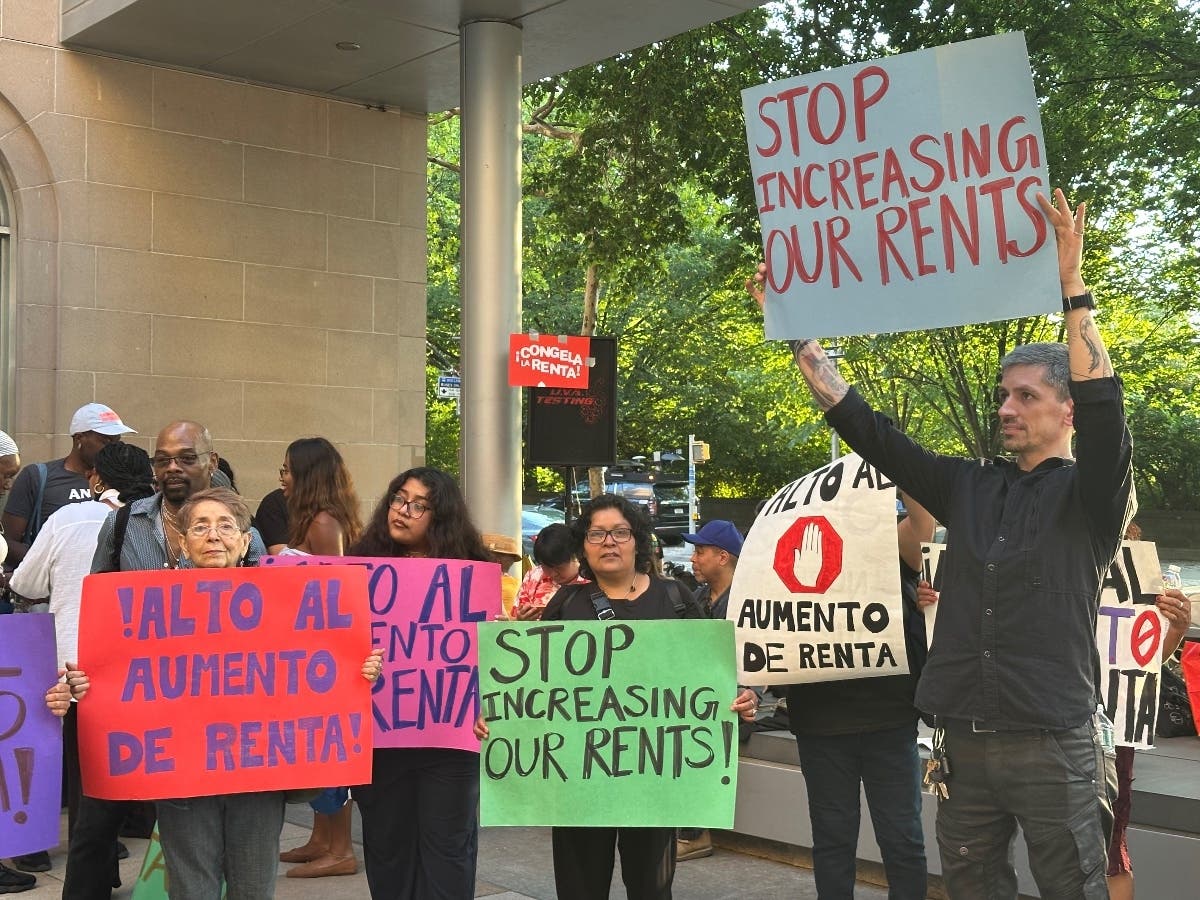
NEW YORK, NY— The Legal Aid Society and Legal Services NYC filed papers Thursday seeking to intervene in a landlord lawsuit challenging New York City’s rent freeze, arguing the Rent Guidelines Board had extensive evidence to support its decision and acted within its legal authority.
The landlords are asking the court to block the board’s June decision to set rent increases at zero percent for one- and two-year rent-stabilized lease renewals beginning Oct. 1, 2026, through Sept. 30, 2027.
The outcome could affect roughly 1 million rent-stabilized apartments housing more than 2 million New Yorkers.
Find out what's happening in New York Cityfor free with the latest updates from Patch.
What Are Tenant Groups Asking The Court To Do?
Tenants and Neighbors and the Met Council on Housing are asking to intervene in the lawsuit and defend the Rent Guidelines Board’s decision.
Their lawyers argue that the board followed the process required by law and considered extensive economic evidence before approving the freeze.
Find out what's happening in New York Cityfor free with the latest updates from Patch.
The filing states the board held seven public meetings and four public hearings and reviewed written, oral and video submissions from tenants, landlords, public officials, housing researchers and other experts.
The board received approximately 473 written submissions from tenants and tenant groups, 104 from owners and owner groups, six from public officials and 104 oral and video submissions, according to the filing.
The tenant groups argue that evidence gave the board a rational basis to conclude that the financial hardship facing tenants outweighed the need for a rent increase among most landlords.
Why Did The Board Freeze Rents?
More than 45 percent of rent-stabilized households were rent burdened, according to evidence cited in the filing. That means they spent more than 30 percent of their income on housing.
More than 27 percent were severely rent burdened, spending more than 50 percent.
The hardship was even greater among lower-income households.
Nearly 70 percent of rent-stabilized households earning less than $50,000 were severely rent burdened, according to the filing.
The board also heard testimony that rising living costs were forcing tenants to cut back elsewhere.
Sandra Jean-Bart, a Manhattan resident, told Patch the decision brought immediate relief to families struggling with rising costs.
“My son, who lives in a rent-stabilized apartment, he can buy food, he can entertain himself, he can buy clothes," Jean-Bart said.
Researchers from Columbia University’s Center on Poverty and Social Policy presented data showing that 81 percent of rent-stabilized tenants had cut spending because of rising costs, including more than 60 percent who had reduced their food budgets.
The filing says 38 percent of low-income rent-stabilized tenants had experienced severe material hardship during the previous year, including problems such as utility shutoffs, running out of food or being unable to afford medical care.
Are Landlords Also Facing Financial Hardship?
Yes.
The tenant groups acknowledge that some owners are struggling, but argue that the evidence showed the problem was concentrated among a relatively small share of properties.
The 2026 Income and Expense Study found that 9.2 percent of rent-stabilized buildings had negative net operating income, according to the filing.
Sharon Redhorn, who owns and manages a family-run building in East Flatbush, told Patch in February that rising property taxes, insurance premiums and utility costs were squeezing her finances as rents remained largely unchanged.
“You can’t run a building like this on good intentions alone,” Redhorn said. “Every dollar I spend on repairs, I’m losing somewhere else.”
The groups also cite testimony from the Fiscal Policy Institute that fewer than 10 percent of rent-stabilized buildings were in distress.
The filing states the board’s mortgage data provided another measure of financial stress: responding lenders reported that approximately 3.1 percent of their portfolios were non-performing, down from 4 percent the previous year.
What Are Landlords Arguing?
The lawsuit was brought by a group of landlords who argue that the Rent Guidelines Board failed to properly perform its legal role.
They contend that the board ignored evidence showing that owners faced rising expenses and instead reached a predetermined conclusion.
Small Property Owners of New York, whose members are among the plaintiffs, has criticized the board's decision.
SPONY Board President Ann Korchak said the board failed to independently evaluate its own research.
“The RGB failed to meet its legal mandate of setting rent adjustments based on its own data and research, which strongly justified a rent increase,” Korchak said. “The rent freeze was illegal. The process was illegal and stacked against small owners of rent-stabilized properties.”
The lawsuit also cites the resignation letter of former board member Christina Smyth, a landlord representative who left before the June vote.
Smyth wrote that the board had “become a body that starts with an answer and vibe codes its way backward to justify it.”
The landlords are seeking communications involving the board, City Hall, the Mayor’s Office to Protect Tenants and the administration’s tenant-engagement efforts as part of their case.
What Rent Was The Board Supposed To Set?
The Rent Guidelines Board voted June 25 to approve Order No. 58, which sets rent increases at zero percent for both one- and two-year renewals beginning during the 2026-27 guideline year.
The board has previously approved one-year freezes three times, all during Mayor Bill de Blasio’s administration.
During Mayor Eric Adams’ four years in office, the board approved a combined 12 percent increase.
The current decision is the first time the board has approved a freeze covering both one- and two-year renewals.
If the landlords prevail, the court could block the order or otherwise require the board to reconsider the rent adjustments.
If the tenant groups prevail, the freeze would remain in place for covered renewals beginning Oct. 1.
Get more local news delivered straight to your inbox. Sign up for free Patch newsletters and alerts.