Health & Fitness
Hard Hit NYC Neighborhoods Lag In COVID Vaccines, Despite Focus
The city put 77 percent of its COVID-19 vaccine sites in 33 hard-hit areas, yet vaccination rates are far lower than in wealthier areas.


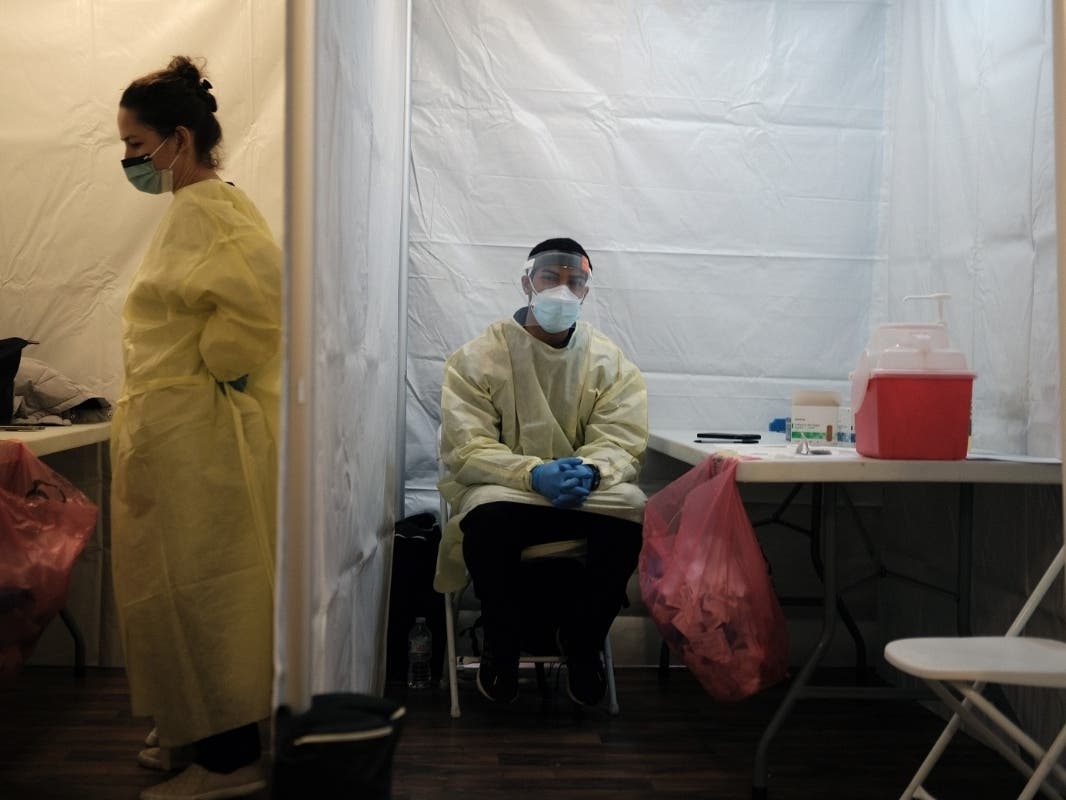
NEW YORK CITY — A much-touted effort to bring the coronavirus vaccine to New York City neighborhoods hardest hit by the pandemic consistently failed to bring their vaccination rates up to the high levels seen in whiter, wealthier areas, according to new data.
Roughly 5 percent of adults living in 33 city-designated "priority" areas have received at least one dose of COVID-19 vaccine compared to the nearly 7 percent rate for all other neighborhoods citywide, the data shows.
It's a tale of two cities that only grows more striking when Mayor Bill de Blasio's effort to ensure vaccine equity and access in those priority areas is taken into account.
Find out what's happening in New York Cityfor free with the latest updates from Patch.
The mayor himself has touted the fact that 77 percent of city-run vaccine distribution sites are within those 33 neighborhoods. Those sites doled out about 42 percent of the doses given to city dwellers so far, according to data.
De Blasio this week acknowledged significant disparities in the distribution, as revealed by newly-released ZIP Code-specific data.
Find out what's happening in New York Cityfor free with the latest updates from Patch.
"Folks who have more privilege are best able to navigate this process, folks who have more confidence in the vaccine are going to go to more effort to get it," he said. "The hesitancy, the distrust is exactly where we need to reach people the most and it's a painful kind of double jeopardy."
But de Blasio didn’t address the specific disparity between the city’s “priority” neighborhoods and the rest of the city.
A health department spokesperson told Patch that the very reason the city is tracking and publishing the data is to direct resources to where they’re most needed. They directed Patch to a previous statement by Torian Easterling, the department’s equity officer:
“The ZIP code data provides not only a map of where New Yorkers are being vaccinated, but also a roadmap to our COVID response.”
Falling behind
A Patch data analysis found that all priority neighborhoods on had partial — meaning one shot of two-dose coronavirus vaccine — vaccination rates of 5.27 percent on average. The rate is lower — 5.01 percent — in the median value, a measurement considered less susceptible to be skewed by extreme highs and lows.
Full, two-shot vaccinations stood at 4.02 percent of all adults in priority neighborhoods, according to the data. The median again was lower — 3.74 percent.
Non-priority neighborhoods had an overall partial vaccination average of 6.82 percent and full vaccination average of 6 percent, the data shows.
The median partial vaccination rate was 6.82 percent and 5.37 percent for full vaccinations in non-priority neighborhoods, according to data.
But the city-released ZIP code vaccination data might not show how deep disparities actually are as to who received doses.
The vaccination data doesn’t include racial or other demographic details on a ZIP Code level. Broad, citywide data shows that 5 percent of white city dwellers are at least partially vaccinated compared to 3 percent of Latinx people and 2 percent of Black residents.
A Patch reporter asked de Blasio why similar data wasn’t released for the local level.
“When we put out the broad data, a couple of weeks back for the city, we acknowledged that we're having a central problem of a lot of people are not indicating a race or ethnicity, and a lot of providers are not doing all they could do to ask race and ethnicity, and we are working hard to improve that,” de Blasio said. “So, one part of the problem here is there's a lot of folks who have been vaccinated we don't have accurate data for, to begin with. The second is just constantly trying to get more and more refined data, make sure it's accurate, get it out publicly.”
Easterling, the equity officer, also cautioned that neighborhood-level data can have “limitations” because of the small numbers involved.
Giant gaps
Corona, Queens earned the distinction of being the “epicenter of the epicenter” during when the coronavirus pandemic first hit the city.
It was an almost-unbelievable fact revealed April 1 when city officials finally released local coronavirus data but one that workers at Elmhurst Hospital already knew. They'd found themselves inundated and overwhelmed with COVID-19 patients.
COVID-19 positivity remains higher than the citywide average in the neighborhood — 8.9 percent as of Friday — and it’s one of de Blasio’s 33 “priority” areas.
But despite the history and focus, Corona’s vaccination rates remain among the lowest in the city. Its partial vaccination rate, in fact, is lowest in the city at 2.69 percent.
Other priority neighborhoods such as Brownville, Bed-Stuy and Jamaica have similarly low partial vaccination rates — in fact, the rates in 17 such hard hit areas were below 4 percent, according to data. Only four non-priority areas had partial vaccination rates below 4 percent.
Likewise, the priority area with the highest partial vaccination rate — Belle Harbor-Neponsit/Rockaway Park at 12.26 percent — fell far below Breezy Point's 26.88 percent, which was the highest among non-priority areas, according to data.
De Blasio recently unveiled efforts to go door-to-door and commit more outreach in hard hit neighborhoods.
He again said the city has to overcome significant barriers of trust in those communities.
"Folks who are actually most vulnerable are also the most distrustful of the vaccine — horrible Catch-22," he said Thursday. "The outreach efforts are focused to address that, the placement of the vaccine centers to make sure the folks in greatest danger have vaccine centers near them, the door-to-door effort we talked about today, literally going, for example, in a public housing building to a senior’s door, helping to convince them the vaccine makes sense for them, and then making the appointment for them right then and there. These are the kinds of things that go with that priority focus."
See the data for priority and non-priority neighborhoods here:
Priority Neighborhoods by Matt Troutman on Scribd
Non-Priority Neighborhoods by Matt Troutman on Scribd
Get more local news delivered straight to your inbox. Sign up for free Patch newsletters and alerts.