Business & Tech
The Forgotten Developer of Disneyland
New book spotlights C.V. Wood, who then built Freedomland U.S.A. in The Bronx.

“We fought.”
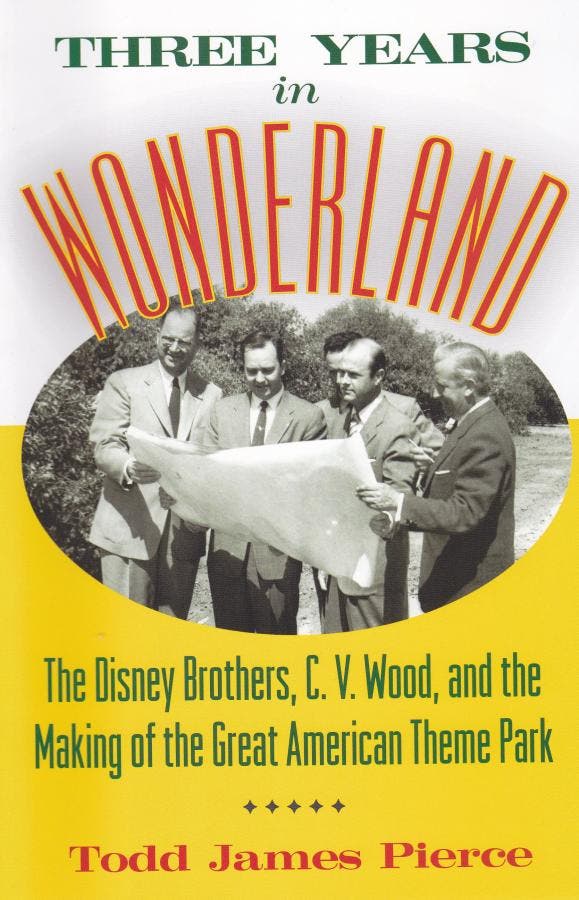
That is the succinct summary of the relationship between Walt Disney and C.V. Wood. The quote from Wood appears in the new book Three Years in Wonderland: The Disney Brothers, C.V. Wood, and the Making of the Great American Theme Park.
Walt and his brother, Roy Disney, receive most of the credit for the success of Disneyland. Wood is mostly forgotten, though he was the project manager who brought Walt’s vision to life. When he had one foot out the company door, Wood became persona non grata in the Disney hallways. Many of his contributions were purged from the Disney files.
In Three Years in Wonderland (University Press of Mississippi), Todd James Pierce presents the never before told story of “the happiest place on earth” that wasn’t very happy all of the time during the park’s development and construction. A considerable portion of the book focuses on the fast-talking Wood from Texas and his contributions to the opening and success of Disneyland.
Pierce’s story uses never-before-seen (or heard) information from more than one hundred unpublished interviews. He also consulted many published sources. The book is a wealth of information not just about the planning, construction and opening of Disneyland, but about Wood and that Disney-Wood dynamic and feud.
Woody And Walt
The Disney brothers, during the early 1950s, hired Wood and his team at Stanford Research Institute in California to develop a feasibility study for Walt’s concept of a theme park. Roy then hired “Woody” as Disneyland’s first official employee and its first general manager to manage the building of the park. Wood soon was appointed vice president of Disneyland, Inc., with his authority exceeded only by Walt.
Wood was a brilliant project manager, but some people, many of whom maintained long careers with the Disney company, have referred to him as a con man.
Wood had forged his university diploma. A smooth-talker, he valued money over art. As his relationship soured with Walt and Roy, Wood found creative ways to increase his income (including perks from park lessees) and leverage his position to gain personal notoriety. After Wood created a separate company to build additional theme parks, he reportedly misled people to believe that he continued to work for Disney.
The author interviewed dozens of people who enjoyed long and lucrative careers at the Walt Disney Company. He also spoke with many more people who, along with Wood, helped develop Disneyland but then left the company.
Wood’s Other Theme Parks
Soon after Disneyland opened, Walt and Wood parted company. Wood started Marco Engineering to design and build his theme parks and other attractions. He relied much on what he had developed and learned during his years at Disney. He brought along contacts and vendors that he had engaged along the way to turn Walt’s imagination into a reality. Wood also convinced a number of Disney employees to join him in his theme park venture.
Marco Engineering’s parks, in order, were Magic Mountain (Golden, Colorado) Pleasure Island (Wakefield, Massachusetts), Freedomland U.S.A. (New York City; now the location of Co-op City and adjacent shopping center) and Six Flags Over Texas (Arlington). Only the Six Flags park continues to operate today.
Pierce’s book provides an in-depth insight into Wood’s childhood, college days, professional career and character. Until the book’s publication, little had been known about Wood’s background, personality and the extent of his involvement with the creation of Disneyland. Only loose pieces from Wood’s past, including some falsehoods and rumors, had been in circulation.
Since Wood’s passing during 1992, and with the Disney company’s success to blur his record at Disneyland, Wood’s significant contributions to the American theme park concept were buried along with him. Only close friends and family, people deeply interested in the history of trolley parks, amusement parks and theme parks, and those who were engaged in preserving the history of Wood’s Marco Engineering parks, were aware of Wood’s role in this specific entertainment sector.
Freedomland fans (visit the Freedomland U.S.A. Facebook page) have long desired to meet and to know more about the creator of their beloved history theme park in The Bronx. Pierce has satisfied the void that lasted more than 50 years.
Some of the interesting Disney morsels included in the book:
- Wood’s name has been “scrubbed from almost all official Disney publications.”
- The first Disney and Wood disagreement developed when Wood, who was with Stanford Research Institute at the time, didn’t understand the financial limitations of WED (Walt Elias Disney) Enterprises.
- Walt had a vision for the park while Woody “possessed real-world experience in construction and manufacturing.” Wood also had business savvy “to create and save deals, even if some of his methods were unusual, unconventional, and perhaps even somewhat unethical.”
- Woody often would bring special VIP guests into the “backroom” of Disneyland to show them the function of the operation and the attractions. This angered Walt, who preferred that everyone needed to come through the front door and needed to wait in the lines to experience the attractions.
- Walt did not like people who felt, as Wood sometimes expressed, that his ideas could not or would not work. At times, Walt also thought Wood was not a team player and received too much of the attention for the park’s development.
For the Freedomland fans, here are a few items in the book that can be connected to that Bronx park’s story:
- Wood’s father had worked as a conductor and brakeman for the Santa Fé Railroad and Wood ensured that Freedomland’s railroad was sponsored by the company.
- Wood loved movie westerns as a child and that became one of the historical themes for Freedomland.
- Disneyland created frontier town, the World of Tomorrow and the concept for a circus area. Freedomland was developed with Fort Calvary and Satellite City themed sections, and it had circus acts on the marquee in its Hollywood Arena.
- Disneyland’s Mad Tea Party ride filled “cups” with park guests and Freedomland had its version, Spin-A-Top, in its New Orleans themed area.
This book is a must read for any Walt Disney and Disney parks fan interested in learning about the storylines associated with the creation and building of Disneyland. Of course, the book also offers detailed insights for the fans of C.V. Wood and his other parks.
The author indicated that a follow-up post-Disneyland book is in its early stages. It will take fans of the Marco Engineering parks on another great ride through the eyes of C.V. Wood and the book will include considerable details about the development of New York's Freedomland.