Arts & Entertainment
How Four NYC Artists Turned Ideas Into Full Productions
Experience the free performances debuting this week and running through July 25.


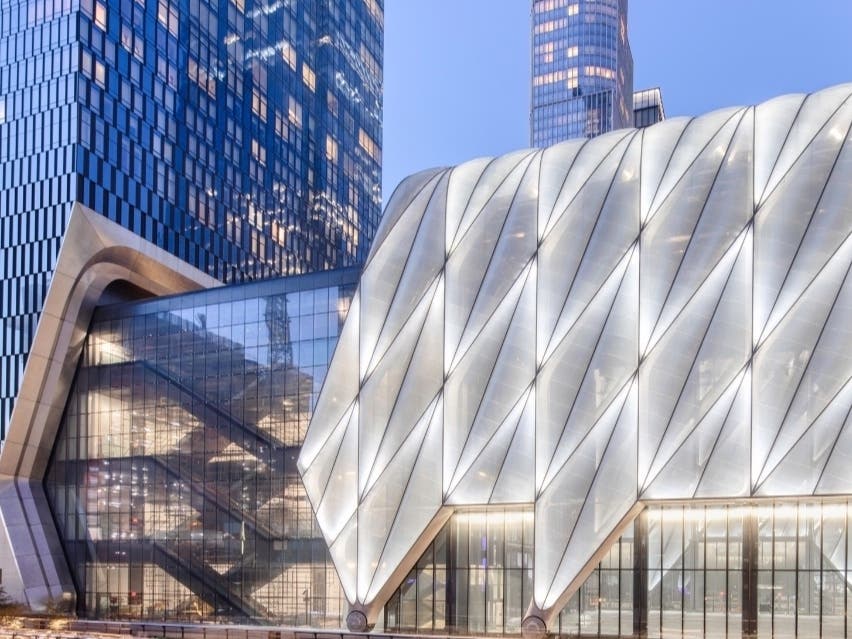
NEW YORK, NY— Inside a vast glass-and-steel performance center in Hudson Yards, artists rehearse in flexible spaces where sound, movement and design are tested while their works evolve in real time.
At the Shed, the Civic Programs department’s Open Call initiative brings early-career New York City artists into a two-year development and commissioning process.
Now, the theater will open its doors on Friday, presenting new works by four chosen residents. Admission is free.
Find out what's happening in New York Cityfor free with the latest updates from Patch.
“Art that is civic infrastructure creates both imagined possible futures and challenging questions, while also creating spaces for belonging, questioning, inquiry and participation,” Darren Biggart, director of civic programs at the Shed, said.
This year’s artists center their work on collective power, identity and civic life, he said, asking what it means to stay curious and recognize oneself in someone else’s story.
Find out what's happening in New York Cityfor free with the latest updates from Patch.
Open Call, now in its fourth performance cohort, commissions each artist with up to $15,000 in support, alongside production resources and a two-year development process.
The result transforms the Shed’s Griffin Theater into a cascade of music, theater, puppetry and immersive concert structures.
Each cycle begins with an open application window inviting early-career New York City artists working across disciplines.
The institution does not define a single required format for proposals.
Instead, the only prerequisite is a broad one: Is it art?
Applicants are not required to present fully finished works.
Applications typically include project proposals, samples of past work and a conceptual framing of what the artist intends to build over two years.
From there, the program recruits a broad network of reviewers drawn from across disciplines and communities in New York City.
Each application is read multiple times, and scores determine which projects move into successive rounds of evaluation.
This year, the organization received 1,400 applications, each reviewed by at least three people before advancing further in the process.
Approximately 100 projects advance into a second round. A smaller panel of about 15 people then evaluates the highest-ranked proposals.
Artists enter interviews and feasibility assessments that consider not only artistic merit, but production realities: scale, resources, space requirements and the technical demands of realization inside The Shed’s performance infrastructure.
The final selection becomes a cohort of four performing artists with access to production teams, designers and institutional staff.
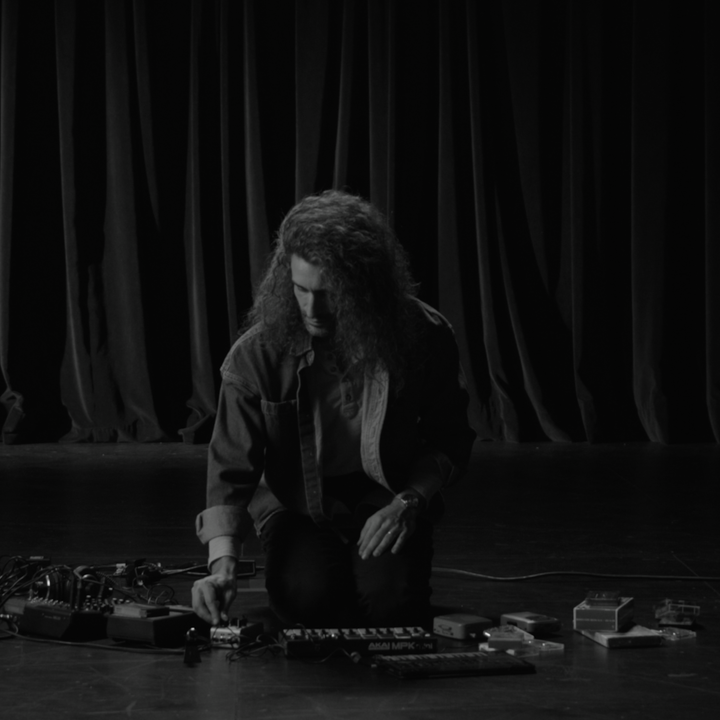
Avi Amon, one of the selected artists, describes his proposal as both accidental and kismet: rediscovering cassette tapes his parents carried when they immigrated from Istanbul to the United States.
He said the tapes, once part of his everyday childhood, were forgotten for decades before resurfacing after his father’s death.
“When we were very young, we would drive around the country in a Dodge Grand Caravan listening to these cassettes, trying to visit people,” Amon said.
Listening again, he said, the tapes were not just archival objects; they functioned as emotional triggers, reopening memory through sound and prompting him to reconsider time, inheritance and loss.
“I’ve been kind of rewriting a lot of this music for the last 20 years,” Amon said. “This music, these songs, these sounds had seeped into my blood unknowingly as a child, and they transported me back.”
Now, he will bring those tapes to The Shed’s stage July 17–18 with MOTHER/ROAD, a part concert, part memoir and part immersive sound installation.
Each artist receives at least three residencies at The Shed, structured less as traditional rehearsals than as staged checkpoints in a work’s development.
The first residency focuses on concept articulation, where artists introduce the world of the piece, its central questions and early materials.
Staff and collaborators respond with feedback, helping define what the work is trying to become.
“We’re doing script reviews, we’re looking at music together, we’re asking key questions around their process,” Daisy Peele, a producer in the civic programs department, said.
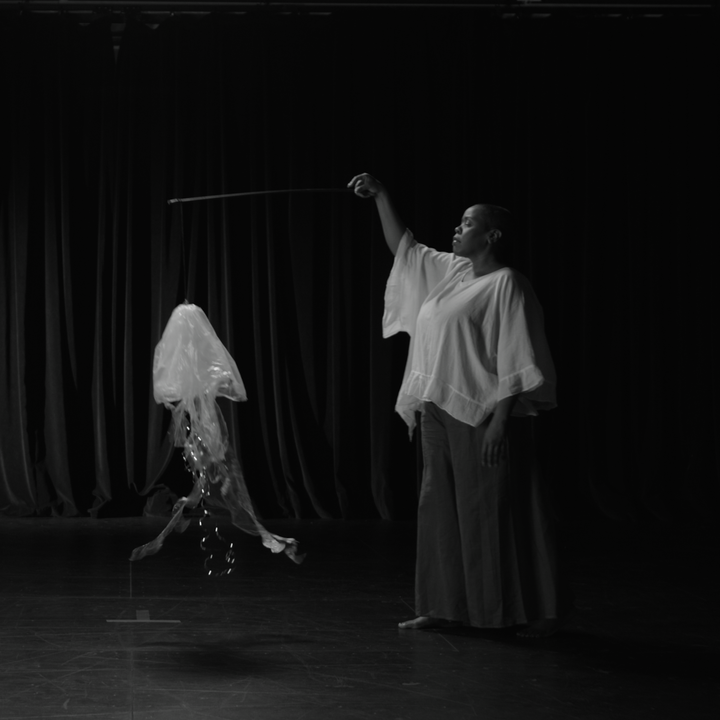
Brooklyn artist Nehprii Amenii said her proposal for HUMAN did not begin with a fixed script, but with the elements she knew would shape it: puppetry, pageantry and African diasporic storytelling traditions.
Amenii’s work centers on an Octopus deep in the ocean that carries the memory of humanity’s end and must decide whether humans deserve a second chance.
Rooted in blues, jazz and soul, Amenii said the music became a structuring force as the work developed.
“The music became a catalyst—it reshaped timing, emotional arc, even new stories,” she said. “I wrote a new song yesterday. I don’t know what the piece is until I’m in it.”
Each performance is preceded by a free, immersive puppet-making workshop using upcycled materials, drawing audiences into the world of the work before it formally begins.
Amenii’s project will debut July 10–11.
The second residency moves into material development, where artists share excerpts of their projects: scenes, compositions, movement studies or early prototypes of installation-based work.
At this stage, structure begins to surface, even as the piece remains in flux.
Then, the curtains begin to lift.
Works are tested in the performance space with design collaborators more fully integrated, allowing sound, projection, lighting and spatial systems to be evaluated in real conditions.
Production staff, marketing teams and designers also join these sessions to assess how the work functions at scale.
Within that ecosystem, designers play a central role in translating artistic vision into stage systems.
They shape sound, projection, lighting and spatial design in direct response to the artist’s work, and in some cases help bridge the gap between conceptual ambition and technical execution.
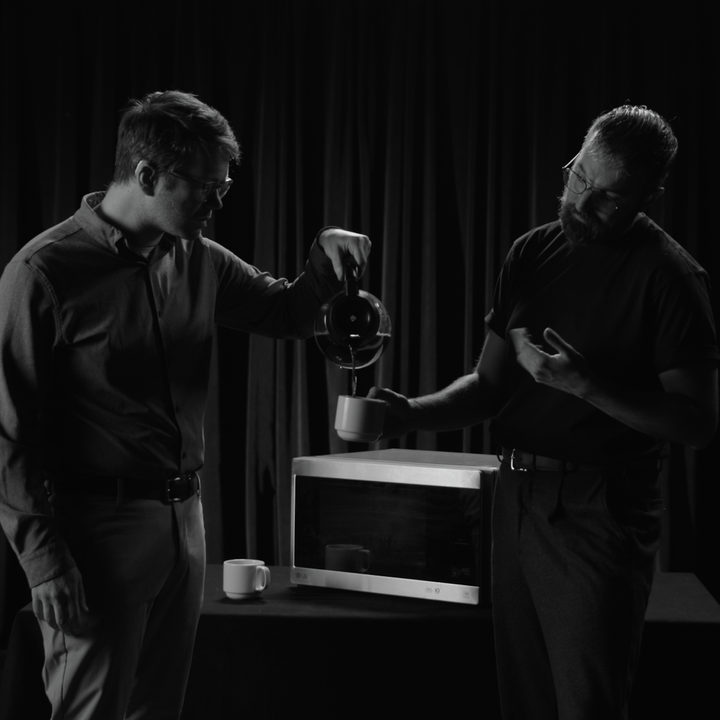
For Deaf playwrights and directors Andrew Morrill and James Caverly, of Manhattan, this embedded collaboration aligns with a broader approach to theater that centers Deaf identity and community rather than treating access as an add-on.
“We serve as each other’s sounding board,” they wrote. “Sometimes we write together; other times we bring separate interpretations back and shape the work in dialogue.”
The play moves between a Deaf-run coffee shop and the interior world of a writer’s imagination, as two competing narrators struggle over how a story should be told.
Framed as a Deaf-led, ASL-first production infused with absurd realism, the piece uses signed and spoken languages alongside projected captions, while stylized “microwave choreography” adds a physical, comedic layer to the storytelling.
“Collaboration with projection, captioning, sound and choreography revealed that accessibility is not technical—it is aesthetic,” they wrote.
By the time the program moves into the production phase, typically from January through June of the presentation year, the works have already undergone multiple revisions shaped by institutional feedback loops.
Monthly production meetings begin. Designers meet individually with artists. Production managers coordinate technical logistics.
In some cases, weekly meetings refine casting, music or staging decisions.
The process does not stabilize the work so much as expose its working structure.
Artists continue writing, composing and revising even as scheduling and staging are being finalized.
“One artist has a week-long tech rehearsal performance period, and then we load out that artist, load in the following artist,” Peele said of the final festival structure. “We’re doing that until the end of July.”
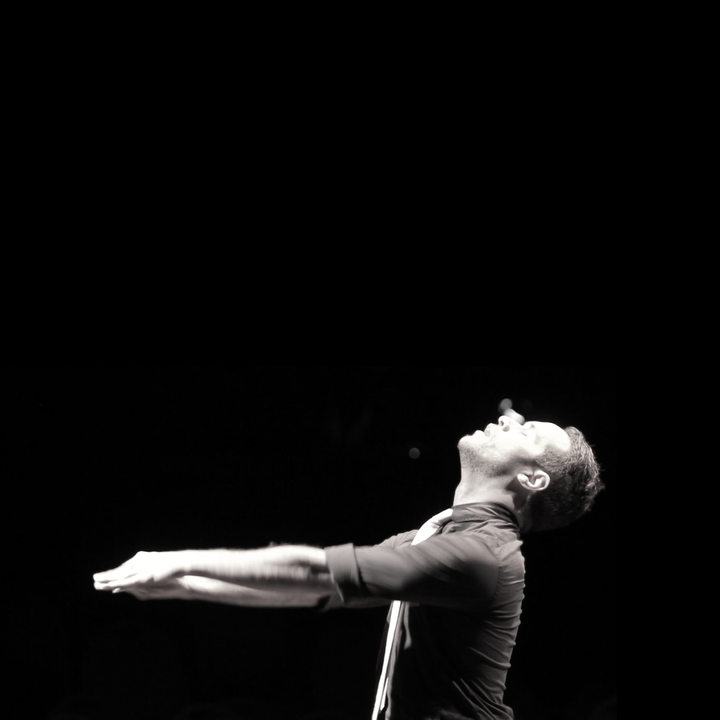
For Queens-based playwright and performer Rudi Goblen, the fixed production schedule unfolds within a flexible development process that allows the work to evolve well before technical demands set in.
“I write, I test, I listen and the structure emerges alongside those discoveries,” he said.
Goblen’s project unfolds over a single day: the moment its central character becomes a U.S. citizen after decades of living in the country.
He said he chose the naturalization ceremony because it appears to mark an ending, but for many immigrants it functions as a beginning. Citizenship, he said, intensifies questions of identity, belonging, memory and loss rather than resolving them.
The piece blends live music, storytelling, dance and spoken word, with Goblen shaping each emotional beat according to the form it best inhabits.
“Each medium has its own emotional language,” he said. “Some moments require the precision of storytelling, while others call for the immediacy of music, poetry or movement. When language reaches its limit, the body can continue the conversation.”
FITO will take the stage at The Shed July 24–25.
The Shed’s next Open Call application cycle is expected to launch again in early 2028, following the program’s two-year rhythm.
The process is free to apply, with outreach built into the application window to ensure broad access across the city’s arts communities.
The program defines “early career” not by age or education, but by access to institutional support in New York’s arts ecosystem.
Artists who have not yet had major institutional backing, or who are shifting disciplines or entering new phases of practice, are encouraged to apply.
Open Call Performances At The Shed
Griffin Theater, Hudson Yards
545 W. 30th St.
June 26 – July 25
Thank You Ryan for a Clean Microwave — James Caverly & Andrew Morrill
June 26–27
A play moving between a Deaf-run coffee shop and an interior imagination where competing narrators struggle over authorship, identity and truth.
Reserve tickets here.
HUMAN — Nehprii Amenii
July 10–11
A post-extinction ocean myth in which an Octopus holds the memory of humanity and must decide whether humans deserve a second chance.
Reserve tickets here.
MOTHER/ROAD — Avi Amon
July 17–18
Rediscovered cassette tapes carried by family after immigration from Istanbul, reshaped into a multi-decade meditation on memory, inheritance and sound.
Get more local news delivered straight to your inbox. Sign up for free Patch newsletters and alerts.