Business & Tech
How New Sober Bar Builds Community And Aids Pain Relief In NYC’s East Village
From chronic pain to sobriety, Village Supplements blends the healing traditions of kava and kratom with a vibrant community space.


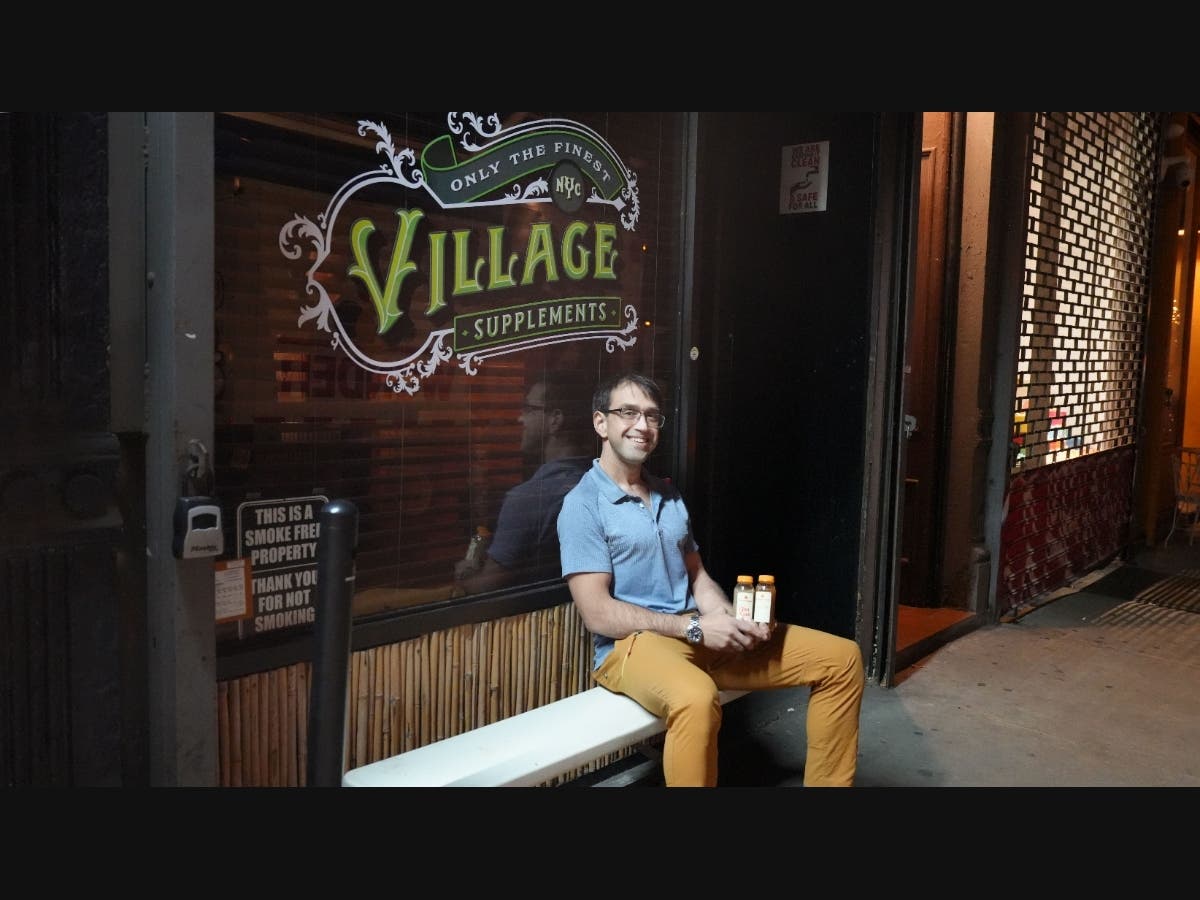
NEW YORK, NY — A pain woke him in the middle of the night, so sharp it made him doubt his senses, certain his leg must be on fire. By morning, doctors would ask whether he’d been in a car accident. He hadn’t. The damage — multiple herniated discs, a fused spine, and permanent nerve injury — was years old, the residue of a high school rugby career.
That moment would eventually lead Ashton Negron behind the counter of Village Supplements, one of the only legally operating kava and kratom retailers in New York City’s East Village.
“I didn’t want to take any type of opioid or pain medication,” Negron said.
Find out what's happening in New York Cityfor free with the latest updates from Patch.
A pain management doctor in Palm Beach County suggested kratom instead.
Kava and kratom, plant-based teas used traditionally for calming the nervous system and easing pain, offered an alternative to prescription pain medications.
Find out what's happening in New York Cityfor free with the latest updates from Patch.
Kratom’s complex mix of compounds interacts with multiple neural pathways beyond opioid receptors, which may help explain its calming and mood‑modulating effects, according to a 2021 study in the Journal of Medicinal Chemistry,
Peer‑reviewed evidence indicates that kava’s compounds interact with neurotransmitter systems linked to relaxation and anxiety reduction, and clinical trials have found anxiety score improvements over placebo.
Negron went home and searched for a place to buy it. What he found was not just tea, but a third space to gather with locals.
“It was something I didn’t know I needed in my life,” he said. “The communal aspect.”
The KavaSutra Kava Bar, first in Florida and later in New York, would shape the rest of his adult life.
It helped him manage chronic pain. It helped him stay sober. It eventually disappeared under the weight of a lawsuit, and then, improbably, returned in a new form, legally stripped down, but socially intact: as Village Supplements on East 10th Street.
Negron, 37, has not had a drink in nearly thirteen years.
“I’m not saying that every person in the community is sober, but it definitely helps a lot of people,” he said.
Long Drives, Lasting Bonds
For Kendall and Daniel Page, sobriety was the reason they noticed kava at all. Kendall first encountered it in Florida while visiting her niece.
“It was the best, just to kind of get you back out there,” she said. “To hang out with people your age, people that can relate to you.”
When Kendall returned home to Seymour, Connecticut, she told Daniel they needed to find one closer. The answer was New York. They began driving two to three hours each way, weekly, to the East Village.
“It really has helped me personally stay sober,” Daniel Page said.
Then came a motorcycle accident. Daniel took prescription pain medication for five days and stopped. While he was out of work, they went to the kava bar every few days.
“It really helped with my pain,” he said. “Getting my muscles moving again.”
By then, the trips were no longer about novelty. They were about people.
“They went down the street and got me a birthday cake,” Daniel said, recalling one year when the staff surprised him and sang. “It’s literally like a family.”
From Bar to Shop, Community Survives
That family was anchored by KavaSutra, a tiki-themed kava bar chain with multiple East Village locations. In July 2023, the company sued New York City, arguing its steeped kava was a safe, single-ingredient food. Two years later, in August 2025, a federal judge upheld the city’s ban on the sale of steeped kava beverages. KavaSutra closed. The doors locked. The rooms went dark.
“It was very disheartening,” Negron said. “I really grew up with the community.”
What survived was not the bar model, but the people who adapted to regulation without abandoning purpose. Village Supplements opened in the same neighborhood, in a space heavy with memory, under a different classification entirely: a retail supplement shop.
“That’s the biggest difference,” Negron said.
Under New York regulations, Village Supplements cannot serve kava in communal bowls or prepare drinks for on-site consumption. Everything sold must be pre-brewed, labeled, and approved. Recipes are submitted to the city. Nutrition facts are mandatory. Licenses are required.
Behind the counter, the conversation shifts easily from community to chemistry. Negron speaks carefully about kratom’s alkaloids, particularly seven-hydroxymitragynine, a compound naturally present in the plant but often isolated and intensified in commercial extracts.
“A lot of companies are trying to isolate that and make an extract out of it,” he said. “On a chemical level, they’re changing the compound.”
Village Supplements’ approach is intentionally conservative, Negron said. Their kratom products contain less than two percent seven-hydroxy. The tea is brewed from whole leaves and strained. Shelf life is short, and transparency is non-negotiable, he said.
“We’d much rather do that than mislead someone,” Negron said. “I just think that’s wrong.”
For customers like the Pages, the difference is physical as much as philosophical.
“If it wasn’t that good, we wouldn’t continue to go,” Dan said. “We would’ve found another place.”
No Seats, No Problem
The shop itself reflects its legal constraints. There is no seating for long, drifting nights. The refrigerator hums with canned kratom seltzers: zero-calorie, carbonated, flavored with pineapple and grapefruit, sweetened with stevia and sea salt. There are bottled kava drinks, turmeric and elderberry shots, coconut water and apple juice. It is unmistakably a store.
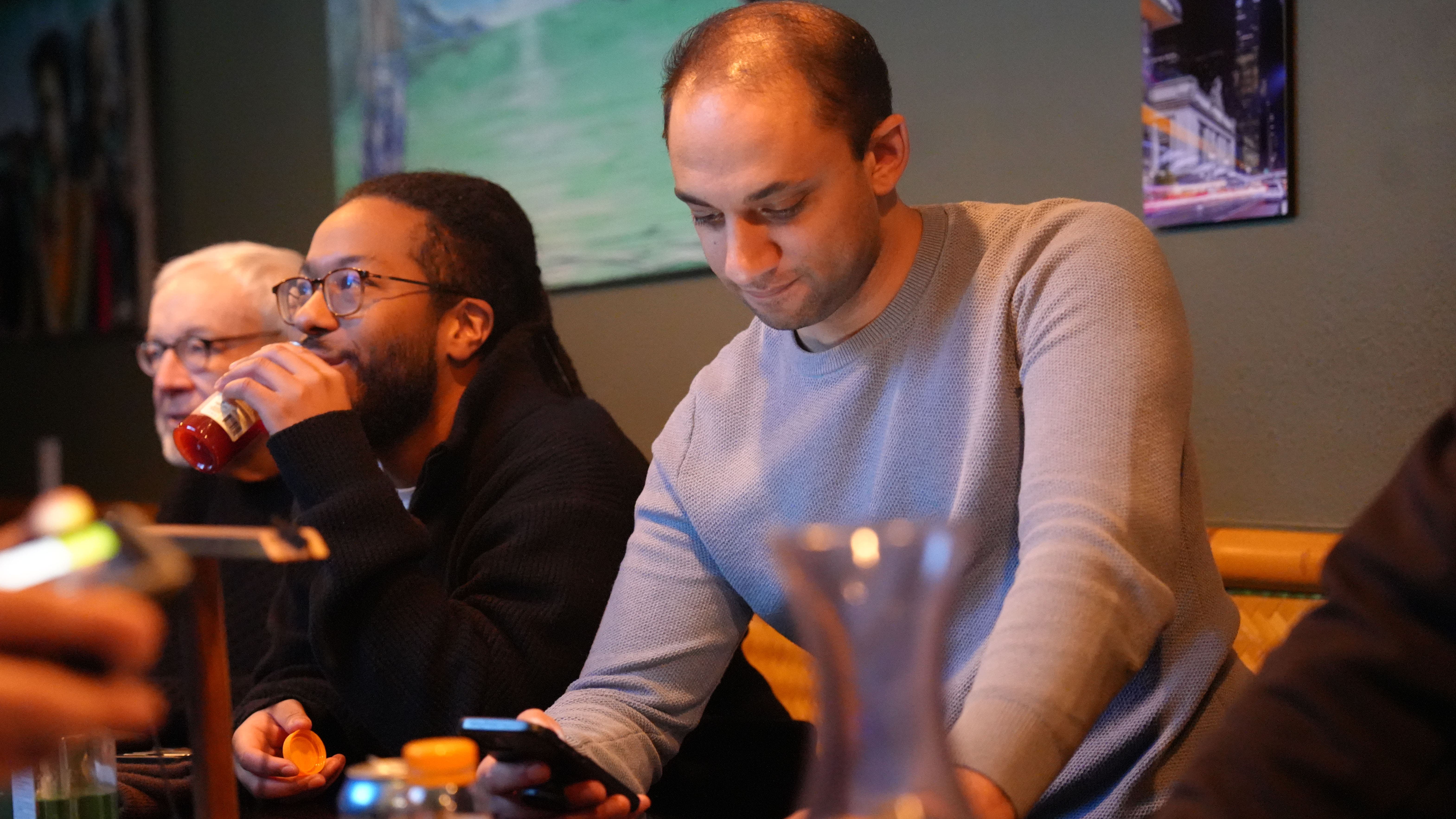
The East Village has always absorbed loss by turning it into something else. Clubs become condos. Bookstores become banks. Here, a bar became a shop, and the shop retained the memory of a bar without its permissions.
East 10th Street sits close to the L train and Tompkins Square Park, a corridor thick with institutional memory. Negron understands what it means to reopen something without pretending it hasn’t changed.
“There’s a cultural significance when it comes to kava,” he said. “It’s a very communal and ceremonial beverage.”
For him, respect does not mean replication. It means restraint.
Respecting The Roots Of Kava And Kratom
“The way we make it, everything that we do, we’re paying respect to the communities that have been consuming it for thousands of years,” he said. “I didn’t want to add anything to it.”
Negron said the kava is sourced from Vanuatu, where the root has been cultivated and consumed for generations.
On a weekday afternoon, that lineage materializes at the counter in the form of Odo Tevi—an accidental diplomat, he said, and a former banker who once dreamed of the United Nations before turning toward public service. Now, as Vanuatu’s diplomat, Tevi represents a place where kava is not a trend, but a fact of adolescence.
Tevi gestures toward the room, toward the quiet traffic of conversation.
Titles do not linger here, Negron said. Neither do confessions, though they are not unwelcome.
“Malō,” he said, lifting the kava bottle slightly. “It means cheers.”
The drink, earthy and unsweet, is an acquired language. He speaks it fluently.
Community Beyond The Counter
Village Supplements is quieter than its predecessor—by necessity. But Negron is already thinking beyond the walls: run clubs that include walkers and runners, free yoga classes pitched at beginners, health that isn’t performative.
“A lot of kava bars traditionally are really communal within the walls,” he said. “My stance is, if you’re going to have a strong community, it has to go beyond that.”
For Kendall and Dan, that community has already stretched across state lines and years.
“We’re so proud of them,” Kendall said. “They stuck it out.”
At 261 E 10th St., the door opens and closes steadily. In a city that regulates relentlessly and forgets easily, Village Supplements offers something narrower, harder to quantify and still intact: a way to gather without intoxication, to manage pain without surrender and to keep a room alive even after the law has taken the bowls away.
“I wouldn’t say it was easy,” Negron said. “But it wasn’t as hard as we anticipated.”
Get more local news delivered straight to your inbox. Sign up for free Patch newsletters and alerts.