Weather
'The New Normal': NYC Preps $2.7B For Climate Change Storms
New York City will open its own weather tracking and alert system, among other steps, to warn of sudden severe storms like Ida.


NEW YORK CITY — Remnants of Hurricane Ida dealt New York City a sudden, costly lesson in the effects of climate change — and city officials don't want to be caught unaware again.
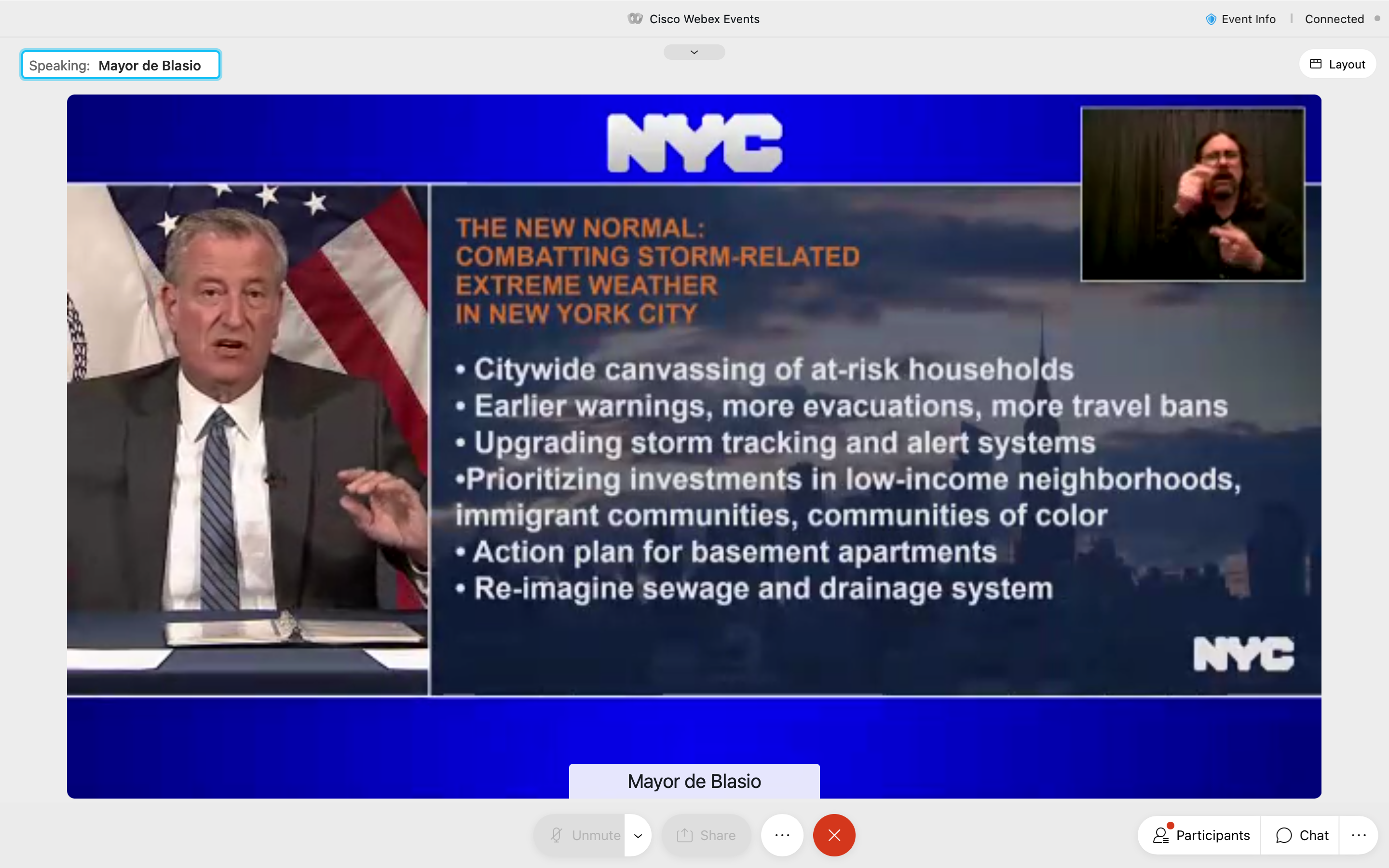
A city-penned new study — "The New Normal: Combatting Storm-Related Extreme Weather in New York City" — released Monday outlines $2.7 billion in steps to fight severe storms.
Mayor Bill de Blasio said many recommendations by the study's extreme weather task force, such as evacuation preparations and travel bans will go into effect, soon. Others, such as a $100 billion overhaul of the city's sewer system to accommodate previously unseen rainfall, will take longer and likely require federal help, he said.
Find out what's happening in New York Cityfor free with the latest updates from Patch.
"We know the climate crisis demands of us a lot of changes, a lot of new approaches," he said. "We also know it is manifesting as something that's shocking: more severe, more sudden. The type of weather that we've never seen before, literally in our lives — kind of stunning, brutal weather changes that have a horrible impact on our people."
Ida on Sept. 1 claimed 13 lives, broke a city record for the most rainfall in an hour and flooded streets, subways and basement apartments across the city.
Find out what's happening in New York Cityfor free with the latest updates from Patch.
City workers in the storm's aftermath knocked on nearly 16,000 doors, made hundreds of thousands of calls and texts, housed 750 people displaced by the storm and cleaned up 17,770 tons of debris, de Blasio said.
The devastation was largely unexpected from what were remnants of a hurricane that first hit Louisiana and traveled more than 1,000 miles overland.
De Blasio said the storm showed the need for the city to set up its own weather tracking and alert office. He said information currently provided by the National Weather Service, while appreciated, isn't specific enough for the city.
A new city-run weather system would be analogous to the NYPD's Counterterrorism Bureau set up after the Sept. 11 attacks — an added level of warning able to work more quickly for the city than federal agencies.
"So, my simple summary would be having a private forecasting capacity to just be that second set of eyes, just like you go to a second opinion with the doctor, to tell us if what we're seeing from the National Weather Service looks like the whole story, whether there's the possibility of things happening earlier, higher impact, what level of alert we should go to," he said. "Someone dedicated to thinking from the New York City perspective, not the whole nation perspective."
De Blasio said the city will also conduct a census of all basement apartments. Those types of dwelling flooded during Ida and accounted for most deaths.
Knowing where basement apartments are located can help police and firefighters carry out evacuation orders, he said.
Get more local news delivered straight to your inbox. Sign up for free Patch newsletters and alerts.