Politics & Government
NYC Rent Board Votes For First Rent Hike On Stabilized Housing In 3 Years
You may soon be paying more for your rent-stabilized apartment.


NEW YORK, NY — After two consecutive rent freezes, New York City's rent-stabilized tenants are looking at a likely rent hike. The New York City Rent Guidelines Board proposed raising the rents of rent-stabilized tenants during a preliminary rent guidelines vote on Tuesday night.
Five of the board's nine members voted in favor of the rent hike. The board proposed an increase of 1 to 3 percent for one-year leases and an increase of 2 to 4 percent on two-year leases.
As usual when it comes to the Rent Guidelines Board vote, neither tenants or landlords walked away happy.
Find out what's happening in New York Cityfor free with the latest updates from Patch.
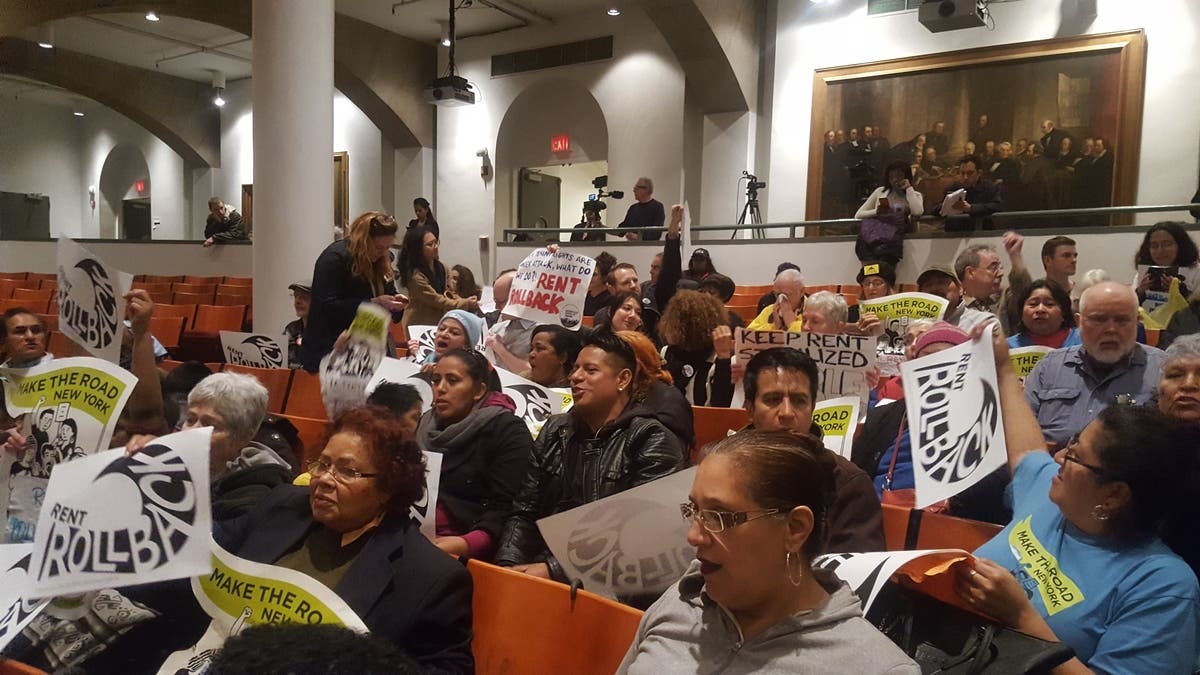
Despite the two prior rent freezes, tenant activists showed up in force on Tuesday to demand a rent rollback of up to 8 percent. On the other hand, the Rent Stabilization Association — an organization which represents 25,000 landlords owning about a million rent-stabilized units — had lobbied for rent hikes as high as 4 percent for one-year leases and 8 percent on two-year leases.
Studies commissioned by the RGB calculated that the price of operating rent-stabilized buildings increased by 6.2 percent in 2016 and is projected to increase another 4.4 percent in 2017. The increase in operating costs for landlords likely swayed the RGB to vote for a rent hike, but board members representing tenants said that the data doesn't reflect the realities of New York's rent-stabilized tenants or landlords.
Find out what's happening in New York Cityfor free with the latest updates from Patch.
"Tenants across the city are struggling while landlords are doing fine," RGB tenant member Sheila Garcia said Tuesday.
Garcia and fellow RGB tenant member Harvey Epstein cited data showing record incomes for landlords, and said that 43 percent of the 100,000 people expected to go through the city's homeless shelter system will come from rent-stabilized apartments.
Tenant members proposed rolling back rents as by as much as 4 percent for one-year leases and 2 percent for two-year leases in cases where landlords had raised rents through major capital improvements, individual apartment improvements or vacancy allowances. For landlords that had not taken advantage of those means to increase rent, the tenants proposed a rent freeze or a small rent hike. The proposal was shot down by a vote of seven to two.
Landlord members of the RGB painted quite a different picture. In order for the rent-stabilization system to work it has to "work for all involved," landlord member Mary Serafy said Tuesday night. Serafy argued that rent hikes, while unpopular, are necessary and that landlords cannot properly maintain their apartments without increased rents. The landlord proposal — to raise one-year rents by 4 percent and two-year rents by 6 percent — also failed by a vote of seven to two.
Five public hearings to discuss the RGB's proposed rent increase will be held before a final vote. Should the RGB's proposals pass the final vote, the rent increase will effect leases signed between October 1, 2017 and September 30, 2018. The final vote will be held on June .
Photo by Patch
Get more local news delivered straight to your inbox. Sign up for free Patch newsletters and alerts.