Arts & Entertainment
Inside Who Pays For NYPD Overtime In Taylor Swift’s NYC Wedding
Taylor Swift's Madison Square Garden wedding triggers NYPD deployments and street closures.


Editor’s Note: This column reflects the author’s analysis.
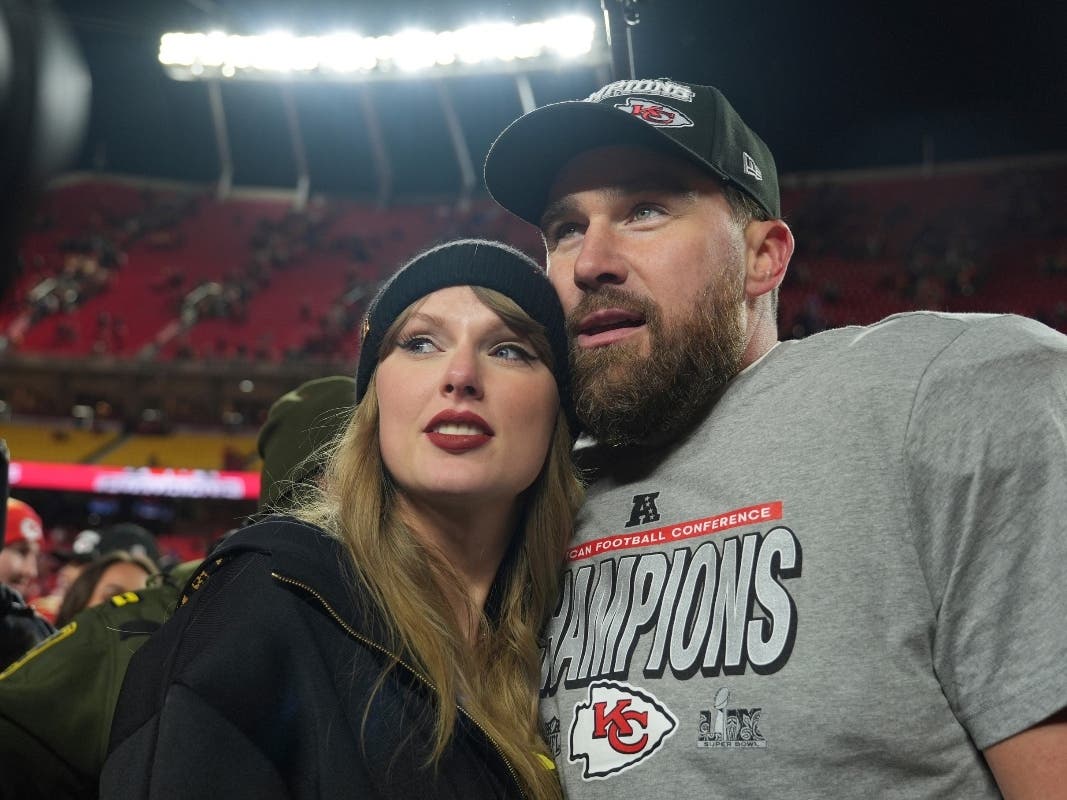
NEW YORK, NY— Last week, when permits for street closures tied to a Madison Square Garden wedding for Taylor Swift and Travis Kelce were released, I found myself circling a basic question that never seemed to come with a straight answer: Who pays for the police overtime?
Swift and Kelce themselves, through private security firms and reimbursable police service agreements?
Find out what's happening in New York Cityfor free with the latest updates from Patch.
Or taxpayers, through NYPD overtime absorbed into the city budget?
The search for answers led me through New York City’s bureaucracy.
Find out what's happening in New York Cityfor free with the latest updates from Patch.
Questions went to the New York Police Department, the Department of Citywide Administrative Services, the Office of Management and Budget, and the Office of the New York City Comptroller.
Only one agency responded.
Who Pays For NYPD Overtime?
A spokesperson for the Comptroller’s Office acknowledged the inquiry and asked whether the reporting was tied to “a particular event that may or may not be happening in midtown this week.”
The office pointed to a city law, Administrative Code § 14-150, which requires the NYPD to report overtime spending every quarter and publish it publicly.
In theory, that means taxpayers can see how much overtime is being spent, and where.
In practice, the office said those reports are often late, incomplete or inconsistently posted online, making it hard to track spending in real time.
On the key question—who pays: the answer split into two categories.
Most NYPD overtime is paid by taxpayers through the city budget.
Some overtime is reimbursed, but usually through state or federal programs like subway safety or port security, not cleanly tied to private events.
And even when reimbursement exists, the Comptroller’s Office made one point clear: it doesn’t change what actually happens on the ground.
Officers still get deployed. They still work the hours. The overtime still gets logged.
What it does not answer is the question at the center of this reporting: how a large private, celebrity-driven event like the one planned at Madison Square Garden fits into that system.
Whether any of those costs get reimbursed, who gets billed, and how much of it ultimately lands on taxpayers remains unclear.
In New York, most major deployments for concerts, sporting events, and large public gatherings are folded into general overtime totals or broader operational categories.
Oftentimes, individual gatherings disappear into the larger totals.
Even when reimbursement mechanisms exist, such as NYPD paid detail arrangements for private sites, federal funding for major security operations, or other government-to-government reimbursements tied to large events, the public record rarely shows a clear, event-by-event breakdown of who paid what.
Additionally, I filed an open records request with the NYPD, seeking documents that would show how staffing decisions are made, when overtime qualifies for reimbursement, how those reimbursements are tracked, and whether officials had prepared any overtime estimates for the July 2 through July 4 period around Madison Square Garden.
Quick Journalism Lesson: What FOIL Is
FOIL, the Freedom of Information Law, is New York State’s public records law.
It gives anyone the right to request records from state and city agencies, including emails, reports, contracts, staffing plans, invoices, and other documents created or maintained in the course of government work.
In practice, that means anyone can ask for things like:
- Emails between agencies and outside organizations (for example, event planners or venue operators)
- Police staffing plans and deployment documents
- Overtime projections and reimbursement agreements
- Permits, memos, and internal briefings tied to public operations
- Budget documents and billing records involving public funds
This is particularly useful for reporters, like yours truly.
Emails are especially useful in cases like this.
Formal documentation around reimbursements for large, celebrity-driven events is often finalized late in the process, meaning the real planning work shows up first in communications—emails, memos and messages exchanged between agencies and organizers as details are still being negotiated and shaped.
But FOIL is not a complete window into government. There are exemptions.
Even when records exist, they may not be released in full.
Agencies can redact portions, delay release, or deny requests entirely, often citing exemptions.
And timing matters: FOIL allows agencies to take weeks or months to respond, especially for complex or high-volume requests.
In my case, the timing unfolded alongside the event itself.
The NYPD department acknowledged my request, but estimated records would not be available until November.
What Else Do We Know?
A planning memo, obtained by the New York Times, described the operation in specific terms.
The title itself read, “Taylor Swift wedding at Madison Square Garden.”
It outlined a rehearsal dinner, a full arena ceremony, guest arrivals, street closures and an expected NYPD detail stretching across Midtown Manhattan.
Hundreds of officers. Multi-agency coordination. Closed streets along West 31st and West 33rd Streets. A deployment layered onto an already crowded holiday weekend.
A police spokeswoman said the plans had not been finalized.
That document, arriving in real time, stood in contrast to the slower public process meant to answer the same questions: resulting in an uneven information system.
Sometimes, with the right access or connections, internal planning documents surface, while formal public-records requests move on a slower track, often producing answers only after the operational moment has passed.
During a news conference on citywide Fourth of July preparations, Police Commissioner Jessica Tisch acknowledged the department was tracking the situation.
“There is an event that we are tracking at Madison Square Garden on Friday night,” she said. “The N.Y.P.D. will of course have a detail in place, but I’m not going to go into more specifics at this time.”
On Tuesday, during a news conference on the heat wave, Mayor Zohran Mamdani dodged questions about Swift's private event.
“My recommendation to all New Yorkers is to stay inside and stay cool,” he said. “And if you happen to be getting married at Madison Square Garden, you will be staying inside, and you will be staying cool.”
After the weekend, the street closures will be lifted and the guests will have left.
The deployment will be logged in hours and categories, not in a single accounting of who takes the tab.
But the question of who ultimately paid for the nights will still remain, like a check no one quite agreed to pick up.
Get more local news delivered straight to your inbox. Sign up for free Patch newsletters and alerts.