Crime & Safety
Beware Aggressive Tax Scams: Lowey, IRS Warn Hudson Valley Residents, Businesses
Now is the busiest time in tax season, which runs this year through April 18, and the IRS has seen a surge of scams.


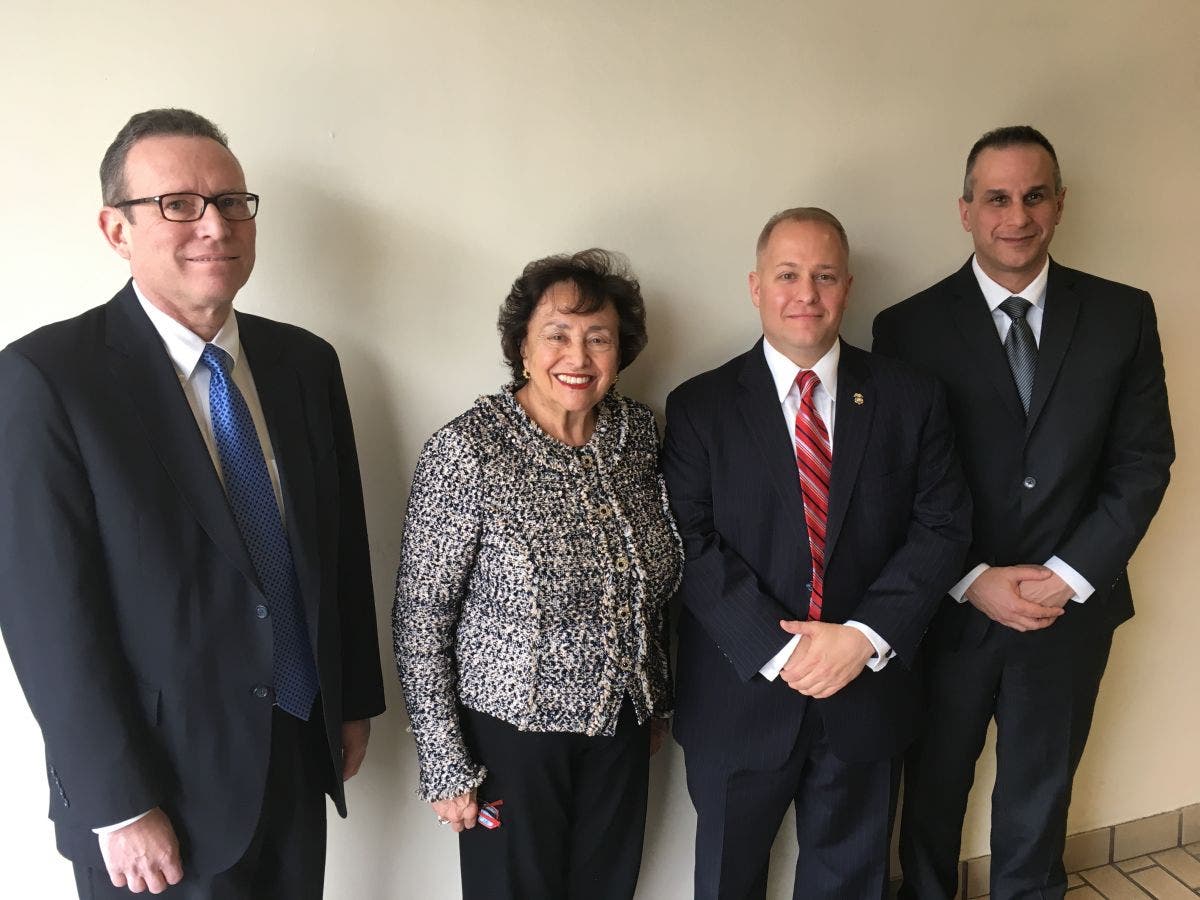
HUDSON VALLEY, NY — Aggressive tax-season scams are victimizing taxpayers across the nation, and with the last week for filing (always the busiest week of the year) coming up, Congresswoman Nita M. Lowey met with federal and state officials at the Internal Revenue Service’s White Plains office Friday to warn Hudson Valley residents.
“Taxpayers are being targeted by new and sophisticated methods of stealing millions of hard-earned dollars,” said Lowey (Westchester/Rockland), the Ranking Member on the House Appropriations Committee. “Americans across the country have received threatening calls demanding money, and cybercriminals have created increasingly aggressive email phishing schemes designed to steal personal and security information from individuals, businesses, and even schools and non-profits."
The IRS has seen a surge of scams, particularly during tax season, which runs this year from Jan. 23 through tax day on April 18. And the warning is still timely: Last year 21.5 million people filed their tax returns in the last week.
Find out what's happening in New Cityfor free with the latest updates from Patch.
“With only a little over a week left until the end of this year’s filing season, the IRS reminds taxpayers not to let their guard down and to remain vigilant for possible tax related scams,” said IRS New York Field Office Special Agent in Charge Thomas Fattorusso. “Whether it’s an IRS impersonation call, a scam targeting tax professionals or a phishing email, everyone needs to keep their guard up not just during the filing season but all throughout the year. While tax related scams tend to hit their peak during filing season, scam artists and criminals work year round.”
Lowey and Fattorusso were joined by William Kalb, Special Agent in Charge, New York Field Division, Treasury Inspector General for Tax Administration, and New York Assistant Attorney General in Charge Gary Brown.
Find out what's happening in New Cityfor free with the latest updates from Patch.
"We must ensure that federal, state, and local officials continue working together to raise awareness and protect Lower Hudson Valley taxpayers from these criminal acts," Lowey said.
Lowey outlined the most recent, prevalent, and effective phone and email phishing scams, where criminals impersonate IRS agents or other officials and threaten taxpayers with arrest, deportation and license revocation, among other things, to terrify unsuspecting taxpayers into making a payment.
The IRS saw a large spike in phishing and malware incidents during the 2016 tax season.
In what IRS Commissioner John Koskinen called “one of the most dangerous email phishing scams we’ve seen in a long time,” scammers send an email disguised as a message from an organization executive to the human resource or payroll departments requesting a list of all employees and their W-2 Forms. This W-2 Scam is a growing threat to businesses, school districts, and non-profits.
The IRS Treasury Inspector General for Tax Administration has received reports of roughly 1.9 million contacts since October 2013, and has been made aware of more than 10,000 victims who have collectively been scammed out of $55.5 million.
Phone and email scams are just two types on the IRS’s “Dirty Dozen” list of tax scams released each year. The full list includes identity theft, return preparer fraud, fake charities, inflated refund claims, excessive claims for business credits, falsely padding deductions on returns, falsifying income to claim credits, abusive tax shelters, frivolous tax arguments, and offshore tax avoidance.
In June 2014, Lowey warned area seniors about the basic “grandparent scam,” in which a scammer will impersonate a senior citizen’s grandchild, often describing a situation in which the child is in a foreign country, has gotten into trouble, and is asking for immediate cash payments to escape a bad situation.
RECOGNIZING A SCAM
- Residents should know that the IRS will never:
- Call and demand immediate payment (the IRS will never call without first having mailed you a bill);
- Initiate contact with taxpayers by email, text messages or social media channels to request personal or financial information;
- Demand you pay taxes without giving you the opportunity to appeal;
- Require specific types of payment for your taxes;
- Ask for your credit card number over the phone; or
- Threaten to bring in law enforcement to arrest you for lack of payment.
Businesses should be aware of some details that may be contained in W-2 phishing scams. The following are some of the details that may be contained in such emails, according to the IRS:
- ‘Kindly send me the individual 2016 W-2 (PDF) and earnings summary of all W-2 of our company staff for a quick review.’
- ‘Can you send me the updated list of employees with full details (Name, Social Security Number, Date of Birth, Home Address, Salary).’
- ‘I want you to send me the list of W-2 copy of employees wage and tax statement for 2016, I need them in PDF file type, you can send it as an attachment. Kindly prepare the lists and email them to me asap.’
REPORTING A SCAM
If residents think they are victims of a phone scam, or know they do not owe taxes or have no reason to think that they owe any taxes, they should not give callers any information. They should call and report the incident to the Treasury Inspector General for Tax Administration at 1-800-366-4484. Residents can also file a complaint using the Federal Trade Commission (FTC) Complaint Assistant.
If the complaint involves someone impersonating the IRS, include the words “IRS Telephone Scam” in the notes. New Yorkers can also see the Attorney General’s IRS Phone Scam brochure or call the New York State Attorney General’s Hotline at 1-800-771-7755.
Residents should report all unsolicited email claiming to be from the IRS or an IRS-related function to mailto:phishing@irs.gov. If you've experienced any monetary losses due to an IRS-related incident, please report it to the Treasury Inspector General Administration (TIGTA) and file a complaint with the Federal Trade Commission (FTC) through their Complaint Assistant to make the information available to investigators.
For assistance with any consumer problems, please contact the Congresswoman’s White Plains District Office (914-428-1707), New City District Office (845-639-3485), or through her website.
PHOTO From L-R,: Gary Brown, Assistant Attorney General In Charge, Westchester Regional Office, New York State Attorney General’s Office; NML; William Kalb Special Agent in Charge, New York Field Division, Treasury Inspector General for Tax Administration; and William Kalb, Special Agent in Charge, New York Field Division, Treasury Inspector General for Tax Administration/ contributed
Get more local news delivered straight to your inbox. Sign up for free Patch newsletters and alerts.