Crime & Safety
No Charges Against Officer in Feb. 8 Little Tor Shoot-out
Cordaro had repeatedly tried suicide and was drunk during the standoff, the Rockland District Attorney's Office found.


A Rockland County Grand Jury declined to hand down any charges against the Clarkstown officer who shot and killed Vincent Cordaro Feb. 8 during an hours-long armed confrontation with police.
Rockland District Attorney Thomas Zugibe issued a statement summarizing what his office learned while investigating the shooting. The investigation was conducted outside the grand jury and therefore not bound by law to be secret.
According to that report, Cordaro suffered from depression and alcohol abuse, had been convicted several times in Clarkstown Town Court of offenses from drunk driving to menacing. He had also interacted with Clarkstown police during domestic disputes and suicide attempts.
Find out what's happening in New Cityfor free with the latest updates from Patch.
“In assessing the evidence in this case it became clear that the unfortunate events that unfolded on the night of February 8, 2015 were undoubtedly triggered by the combined effect of Vincent Cordaro’s depression, his alcohol abuse and his desire to take his own life,” Zugibe said in the statement. “The loss of his life is tragic and highlights the continuing need to improve access to mental health services within our community.”
As the DA’s office reconstructed it, the evening of Feb. 8, Cordaro threatened family members with a shotgun and then barricaded himself inside his home on Little Tor Road, warning he would shoot any police officer who tried to enter.
Find out what's happening in New Cityfor free with the latest updates from Patch.
RELATED:
- Police Standoff on Little Tor Road
- UPDATE: Gunman in Little Tor Road Standoff Identified
- Clarkstown Officer Shot New City Gunman
- 11 Guns Found at Scene of Feb. 8 Standoff in New City
Clarkstown police threw up a perimeter around the house. After Cordaro scanned that perimeter with a flashlight from a second-story window and fired a shot from a high-powered rifle, the department’s Critical Incident Response Team was called in and neighbors were warned to stay inside.
Police attempted to negotiate for four hours, but Cordaro alternately threatened officers, fired shots and hung up.
One of Cordaro’s shots hit a neighbor’s house; a babysitter and children spent the rest of the evening in the basement. Two others smashed another neighbor’s truck window.
After police lobbed tear gas into the room in an attempt to force him out, he fired twice at two members of the CIRT team. One fired back. Later, police entered the house and found Cordaro dead.
An autopsy found Cordaro had a blood alcohol level of .265 percent.
Zugibe issued a report this morning. Here is the full text.
INTRODUCTION:
A comprehensive review of the facts and circumstances relating to the death of Vincent Cordaro was undertaken by the Rockland County District Attorney’s Office. The report that follows is a synopsis of the evidence uncovered by that investigation.
Although Grand Jury proceedings by law are secret, the investigation into the death of Vincent Cordaro, conducted and developed outside the Grand Jury process, is not bound by any such rule of secrecy. Therefore, this report is being made available to the public.
According to numerous sources Vincent Cordaro had been suffering from severe depression for many years. Notwithstanding attempts to get treatment his problems reportedly persisted. According to family members, as his depression grew so did his use of alcohol. The deadly mix culminated in Mr. Cordaro making a number of failed attempts to commit suicide. In assessing the evidence in this case it became clear that the unfortunate events that unfolded on the night of February 8, 2015 were undoubtedly triggered by the combined effect of Vincent Cordaro’s depression, his alcohol abuse and his desire to take his own life. The loss of his life is tragic and highlights the continuing need to improve access to mental health services within our community.
On February 8, 2015 at approximately 11:41 p.m., Vincent Cordaro, age 58, was fatally shot by a police officer from the Town of Clarkstown Police Department. At the time, the officer was one of the three marksman teams deployed by Clarkstown Police Department’s CIRT team (Critical Incident Response Team) surrounding Mr. Cordaro’s home in response to complaints of shots being fired from the house.
Earlier in the evening at approximately 7:16 p.m. several members of the Cordaro family walked into the Clarkstown Police Department to report that Vincent Cordaro was intoxicated and had become very agitated. They further reported that he had brandished a shotgun and had threatened them with it, causing them to flee the house. The family members informed the police that as they left the house Vincent Cordaro told them that he would shoot any police officer that came to get him.
In response to this information the Clarkstown Police Department set up a perimeter around the residence and called Mr. Cordaro on the phone in an effort to get him to come out of the house peacefully. Mr. Cordaro would not agree to come out of the home and instead periodically fired shots out a south facing upper window of the residence. Over the next four hours Clarkstown crisis negotiators periodically spoke to Mr. Cordaro. Sometimes he would answer the phone and some times he would not. Most calls included direct threats by Mr. Cordaro to shoot and kill any of the officers surrounding his home and would end with Mr. Cordaro hanging up on the negotiators.
After negotiations apparently broke down and Mr. Cordaro refused to answer the phone a decision was made to introduce tear gas into the home in an effort to encourage Mr. Cordaro to come out. Moments after the gas was shot into the upper floor room occupied by Mr. Cordaro, he appeared in the south facing window with a high caliber rifle, aimed and fired in the direction of two CIRT team police officers. When he fired a second shot one of the officers fired a single shot striking and killing Mr. Cordaro. Mr. Cordaro was pronounced dead at the scene at 3:42 a.m. on February 9, 2015.
Three investigations immediately commenced: the Town of Clarkstown Police Department, the Rockland County Medical Examiner’s Office and the Rockland County District Attorneys Office. The investigations were independent; the investigating officers had no involvement whatsoever with the events leading up to Vincent Cordaro’s death.
Following the investigation, evidence was presented in this matter to a Rockland County Grand Jury. The Grand Jury heard testimony from witnesses and examined exhibits over the course of three (3) days. The Grand Jury has finished its investigation and found that the officer was justified in using deadly physical force against Vincent Cordaro and finds no basis for criminal charges against the officer arising out of the death.
BACKGROUND:
VINCENT CORDARO:
Mr. Cordaro was born on April 9, 1963. He resided at 67 N. Little Tor Road, New City, New York with his ex-wife, two adult children and his grandchild. He was an unemployed auto mechanic, although he continued to do some work out the garage at his residence. Mr. Cordaro had reportedly suffered from depression since the loss of his mother. Mr. Cordaro was also known to consume alcohol regularly. In fact he was described as a chronic alcoholic.
The investigation revealed that Mr. Cordaro’s behavior had become irrational, illogical and extremely dangerous to himself and others. The family reported that he spent most of his time in his room by himself.
Members of the Town of Clarkstown Police Department were familiar with Mr. Cordaro. Mr. Cordaro was arrested and indicted for Criminal Possession of a Controlled Substance in the Fifth Degree (a felony), and Driving while Intoxicated and Operating a Motor Vehicle with more than .10 % BAC. He was convicted in Rockland County Court of the felony and sentenced to five (5) years probation. On another occasion he was also convicted of the crime of Menacing in the Clarkstown Justice Court and sentenced to three years on probation. In August of this year he was again arrested and charged with Driving while intoxicated.
In addition to his interaction with law enforcement involving his criminal cases, Mr. Cordaro also had numerous contacts with police officers concerning domestic disputes, excessive drinking and several documented attempts to commit suicide. The most recent suicide attempt occurred in August of 2014 when, in an effort to take his own life he attempted to throw himself in front of a train in the area of North Liberty Drive in Stony Point. When Stony Point Police Officers stopped him he reportedly became combative and told them that “it’s not illegal for me to kill myself”.
TOWN OF CLARKSTOWN POLICE DEPARTMENT:
The Town of Clarkstown Police Department is located at 20 Maple Avenue, New City, New York. The Town of Clarkstown Police Department is comprised of approximately one hundred seventy three (173) police officers that cover an area of approximately forty seven (47) square miles.
Every Clarkstown police officer must go through a Police Academy before becoming an officer. The Rockland County Police Academy, and other academies, teach new officers: how to handle a gun, how to fire it accurately, how to handle stressful situations, the fundamentals of shooting, diverging firearms scenarios, movements and defensive tactics, how to move and bring something to a conclusion as safe and quickly as possible. Every Clarkstown Police Officer re-certifies every year with respect to firearms.
In 1991 the Clarkstown Police Department formed the Critical Incident Response Team (CIRT). The unit was formed in response to a need for a highly trained tactical team to handle high risk warrants, barricaded felons and/or hostage situations. High standards were set for members of this unit. These standards include physical fitness, shooting skills, tactical movement, mental conditioning and their background with the department. The CIRT Team is a part time team and all members have regular duty assignments in the Police Department.
Training is conducted twice a month and one full week per year. Members have trained with the F.B.I., SWAT and the Naval Special Warfare Development Group. Some of the Senior members of the team have well over 3,000 hours of training. Some Team members are certified instructors in firearms, diversion devices, explosives and shotgun breaching, less lethal munitions, defensive tactics, ballistic shields, tactical movement, hostage negotiations, National Tactical Officers Association (NTOA) Certified Active Shooter Instructors, Multi-Assault Counter-Terrorism Action Capabilities (MACTAC) Instructors, and sniper-observer operations. Members serve as primary instructors for the Rockland County Police Academy recruit and in-service training program for active shooter and MACTAC classes.
POLICE WITNESSES:
LT. JEFFREY WANAMAKER:
Lt. Jeffrey Wanamaker has been a Clarkstown Police Officer for 28 years. It was his squad that was working the 3 to 11 shift on the evening of February 8, 2015.
At approximately 7:16 p.m., while at Clarkstown Police Headquarters he was advised that members of the Cordaro family had walked into the lobby of the police station to report that that they had been forced to flee their residence after Vincent Cordaro had threatened to shoot them. In their conversation with Lt. Wanamaker they reported that Vincent Cordaro was intoxicated, extremely agitated and was brandishing a loaded shotgun. They informed Lt. Wanamaker that as they left the house Vincent Cordaro told them that he would shoot any police officer who came to his house. They also informed him that there were numerous rifles in the residence in addition to the shotgun he was carrying.
Based upon the information provided by the family Lt. Wanamaker determined to set up a perimeter around the house at 67 N. Little Tor Road and to have a phone call be placed to Vincent Cordaro advising him to come out of the house. Detective Chris Kiernan, a crisis negotiator with the Clarkstown Police Department, was contacted to respond to police headquarters to establish this communication.
By approximately 7:55 p.m. a perimeter had been successfully set up around the residence. At that time, one of the perimeter officers, who was positioned on the corner of Victor Road and N. Little Tor. Road, observed Mr. Cordaro in a south side upper window using a flashlight to scan his immediate area. He reported that the lights in the room then went off and immediately following he heard a gun shot and saw a muzzle flash coming out the same south side window. The officer was close enough that he could smell the odor of burnt gunpowder and determined that the shot was a high caliber rifle and not a shotgun as had been originally reported. As a result Lt. Wanamaker conducted a roll call to determine whether any officers had been injured. He then advised all perimeter officers to pull back and to seek additional cover.
As it was determined that it was too dangerous to try and evacuate all the local residence, a reverse 911 call was placed advising them of the situation and requesting that they remain in their homes until further notice. (It was believed that people leaving their house would be exposed and a possible target for the shooter.) Telephone contact was eventually made with Vincent Cordaro and all officers were directed to maintain the perimeter as the negotiation process proceeded. It was further decided that the Clarkstown Police Department’s Critical Incident Response Team (CIRT) would be called out to the scene.
DET CHRISTOPHER KIERNAN:
On February 8, 2015 Det. Chris Kiernan, a Clarkstown Police Officer, was called out to work in his capacity as one of the crisis negotiators for Clarkstown’s CIRT Team.
Upon responding to the police station Det. Kiernan attempted to make contact with Vincent Cordaro. At approximately 7:58 p.m. the first phone contact was made with Mr. Cordaro. Over the next four hours Det. Kiernan attempted to talk him into surrendering and voluntarily walking out of the house with his hands up. Calls would be placed to the residence but typically ended with Mr. Cordaro hanging up. Of the numerous conversations Det. Kiernan had with Mr. Cordaro almost all contained a threat by Mr. Cordaro to shoot or kill the police officers surrounding his house. In one conversation he specifically told the officer that he had a sniper rifle and that he would pick off all of them one by one. He would, at times, also threaten to take his own life.
As the conversations continued additional shots were fired out the window including several shots that were fired while he was on the phone with the negotiator. In all, evidence suggests that a total of seven shots were fired by Mr. Cordaro through the course of the evening using a bolt action .308 caliber rifle. As the hours went by Mr. Cordaro’s mental state increasingly became erratic. Significantly he continued to refuse to In the final calls with Mr. Cordaro he became increasingly agitated by the presence of two CIRT team police officers hiding behind a tree line on the south side of his property. Mr. Cordaro demanded that they move or he would kill them. In fact, at times he would put the phone down and shout out the window to them to back off or he would kill them. The last conversation Mr. Cordaro had with the Clarkstown Police Negotiator was at approx. 11:20 p.m. After that call Mr. Cordaro refused and/or failed to answer the phone again.
LT GLENN DIETRICH:
Lt. Glenn Dietrich has been a Clarkstown Police Officer for 31 years. He is a Detective Lt. who was in charge of the CIRT Team on the evening of February 8, 2015.
At approximately 8:08 p.m., he, and the CIRT Team, were called out to respond to the ongoing incident at 67 N. Little Tor Road. At approx. 8:50 p.m. while the team was setting up at the temporary Command Center on Little Tor Road Mr. Cordaro fired an additional shot out his window. Lt. Dietrich then assembled three marksman/observer teams to surround the home. (The teams work in pairs to prevent the effects of fatigue during long standoffs.) The teams took positions on three sides of the residence including a team that positioned itself on the south side of the residence behind a tree line some 300 feet from the window that Mr. Cordaro had been firing out of. At approx. 11:32 p.m. all communication with Mr. Cordaro had stopped. He was refusing to come out of the house and apparently refusing to even answer the phone.
After assessing the danger involved in the continuing scenario a decision was made to have CS gas (tear gas) fired into the residence in the hope of getting Mr. Cordaro to come out of the house and to end the incident. At approx. 11:40 p.m. the gas team fired a round of CS gas into the upper floor bedroom in which Mr. Cordaro had been firing from.
THE MARKSMAN/OBSERVER TEAM
The two officer marksman team that was situated to the south side of the house had the clearest view of the window that Mr. Cordaro was firing out of. The team was positioned on a snow bank behind a tree lining on the south side of the residence. The distance between their position and the upper window that Mr. Cordaro was firing from was approximately 300 feet, well within the effective range of Mr. Cordaro’s .308 caliber rifle.
Through the course of the evening the team could see Mr. Cordaro at the upper window and hear him talking on the phone to the crisis negotiator. At times Mr. Cordaro would yell out the window at them. At one point they clearly heard him tell the negotiator that he could see the cops out there and that he was getting his rifle and would blow their helmets off.
At approx. 11:32 p.m. the team was advised that the several officers were being deployed to introduce CS gas into the house. The officers were aware that this meant the officers deploying the gas would be exposed when they approach the house. At approx. 11:39 p.m. gas was fired into the upper floor room that Mr. Cordaro was in. Almost immediately Mr. Cordaro appeared in the upper window and fired a single shot out the window in the apparent direction of the two officers. One of the officers reported hearing the bullet go through the trees near their position. Mr. Cordaro then began to scan the area where the two officers were positioned with a powerful flashlight (often used in boating) in an apparent attempt to locate their position. At approx. 11:41 p.m. Mr. Cordaro fired again and this time one of the officers fearing for his own life and that of others returned fire by shooting a single shot.
SCENE EVIDENCE:
Vincent Cordaro was found laying on the floor of an upstairs bedroom facing the south side of the residence at 67 N. Little Tor Road, New City, New York. Mr. Cordaro had a single apparent gunshot wound to his neck. Lying on the floor next to him was a Remington Model 788, .308 caliber bolt action rifle with an attached Weaver V7-IIW rifle scope. An empty shell casing was removed from the rifle when the bolt was opened.
In addition six other empty .308 shell casings were discovered scattered about the floor.
Additionally, a Mossberg 12 gauge shotgun and numerous rounds of live ammunition were found on the bed next to him. A half empty bottle of Vodka was found next to the bed.
CIVILIAN WITNESSES:
The names of the civilian witnesses in this case will remain confidential at this point.
WITNESS #1:
WITNESS #1 is neighbor who resided at home near 67 N. Little Tor Road, New City, New York. The homeowner had gone out for the evening and his adult sister was at the home babysitting three young children, including a two year old. While in the family room a loud noise was heard in an upstairs bedroom. At first she thought it was a picture frame that fell off the wall. When she went to see what had happened she found a large bullet hole through the bedroom window as well as various other broken items that the bullet had apparently impacted. The bullet was finally stopped upon hitting a solid wood interior door.
When she looked out the window she saw a police car blocking off the roadway in front of the house. She then walked outside to report to the officer what had occurred when the officer yelled at her to get back in the house as there was an active shooting going on. She remained in the basement of the house with the three children until she could be later evacuated from the residence.
WITNESS #2:
WITNESS #2 is also neighbor who resided at a home near 67 N Little Tor Road in New City. After working on that day he came home and parked his work truck in his driveway and went into his house. While he heard loud bangs sounding like fireworks throughout the night, he remained inside.
The next morning, after getting ready for work he got in his work truck which had been parked in the driveway all night when he noticed two bullet holes in the back of the truck. The bullets had apparently smashed out his back window. It was later discovered that the truck had been parked about 40 feet away from where the two CIRT officers had been stationed during the night.
MEDICAL EVIDENCE:
AUTOPSY:
The Medical Examiners Office of Rockland County conducted the autopsy on Vincent Cordaro. The Medical Examiners Office is charged with the duty of overseeing all of the death investigations that take place of individuals who die in the community suddenly, unexpectedly, suspiciously or due to violence; it performs autopsies, death scene investigations, writes reports and interacts with different agencies.
On February 9, 2015 an autopsy was performed on the body of Vincent Cordaro. After performing the autopsy the Medical Examiners Office prepared a report.
Based upon that Autopsy Report, Mr. Cordaro was described as a well-developed, well-nourished, slender man weighing 126 lbs, and measuring 66 inches in height, whose appearance was consistent with his reported age of 59 years.
The autopsy disclosed that there was a single perforating gunshot wound of the neck and torso. There was no stippling found on skin, which indicated that the shot had been fired from more than two feet away. The bullet penetrated the neck and passed through the torso front to back, exiting his right shoulder. The wound track was downward, front to back and slightly left to right. It was opined that since the officer fired upward from below Mr. Cordaro, the wound track meant that Mr. Cordaro had to be bent over out the window, perhaps in a firing position consistent with what the officer described, for the single bullet to have made that wound.
Based upon the autopsy report of Mr. Cordaro the formal cause of death was classified as “Homicide” – which indicates that he did not die of natural causes or by his own hand but rather another individual caused his death. The actual cause of death was listed as “perforating gunshot wound of the neck and chest with lacerations of organs, skeletal fractures and hemorrhage due to shot by police during standoff at residence”. A history of alcohol and substance abuse was also listed as a significant condition contributing to death but not related to cause given.
LABORATORY FINDINGS:
National Medical Services Laboratory in Willow Grove, Pennsylvania performed a toxicology screening on samples taken at the autopsy. Mr. Cordaro’s blood analysis indicated that Mr. Cordaro had a 0.265 percent alcohol level. Normal blood alcohol level for an individual who has not consumed alcohol is 0.00 percent. For the State of New York, to be Driving While Intoxicated, the legal standard to determine intoxication is 0.08 percent.
Based upon the amount of alcohol found in Mr. Cordaro’s system, it is likely that on February 8, 2015 his judgment and perception was severely impaired.
THE LAW:
Two provisions of New York law are applicable to the use of deadly physical force by a police officer in this scenario. The conduct can fall under one or both of those scenarios.
Firstly, Justification is defined in PL Section 35.15 as follows:
A person may use physical force upon another person in defense of himself when and to the extent he reasonably believes such to be necessary to defend himself from what he reasonably believes to be the use or imminent use of unlawful physical force by such other person. A person cannot use deadly physical force in defense of himself unless he reasonably believes that such other person is using or is about to use deadly physical force.
The law defines deadly physical force as physical force, which, under the circumstances in which it is used, attempted to be used or threatened to be used is readily capable of causing death or other serious physical injury, that is, substantial risk of death, serious and protracted disfigurement, protracted impairment of health or protracted loss or impairment of the function of any bodily organ. Only if physical force satisfies that definition is it deadly physical force.
The Grand Jury had to determine whether the officer reasonably believed that Mr. Cordaro was using deadly physical force. To decide whether the belief was reasonable, the Grand Jury had to decide whether a reasonable person in the circumstances that the officer found himself could have such a belief.
Secondly, under Penal Law Section 35.30, a police officer, in the course of effecting or attempting to effect an arrest or of preventing to prevent the escape from custody of a person whom he reasonably believes to have committed an offense, may use physical force when and to the extent he reasonably believes such to be necessary to effect the arrest, or to prevent the escape from custody or to defend himself or a third person from what he reasonably believes to be the use or imminent use of physical force, except that he may use deadly physical force for such purposes when he reasonably believes that the offense committed or attempted by such person was a felony or an attempt to commit a felony involving the use or attempted use or threatened imminent use of physical force against a person.
CONCLUSION:
Since the date of this incident, the Rockland County District Attorneys Office decided to present the evidence in this case to a Grand Jury. A Grand Jury is comprised of citizens from the community, specifically in this case Rockland County, New York.
The Grand Jury was charged with the responsibility of reviewing evidence and determining whether the Police Officer’s conduct was justified or should result in criminal charges. In this case, a Grand Jury was essential to address and consider the accounts of several witnesses to the incident and to determine the reasonableness of the officer’s actions.
The Grand Jury has concluded its investigation and returned a No True Bill against the officer. It determined that the officer had an honest and reasonable belief that Mr. Cordaro was about to use or was threatening to use deadly physical force against him when he shot Mr. Cordaro. The Grand Jury has found the officers actions in using deadly physical force against Vincent Cordaro to be justified.
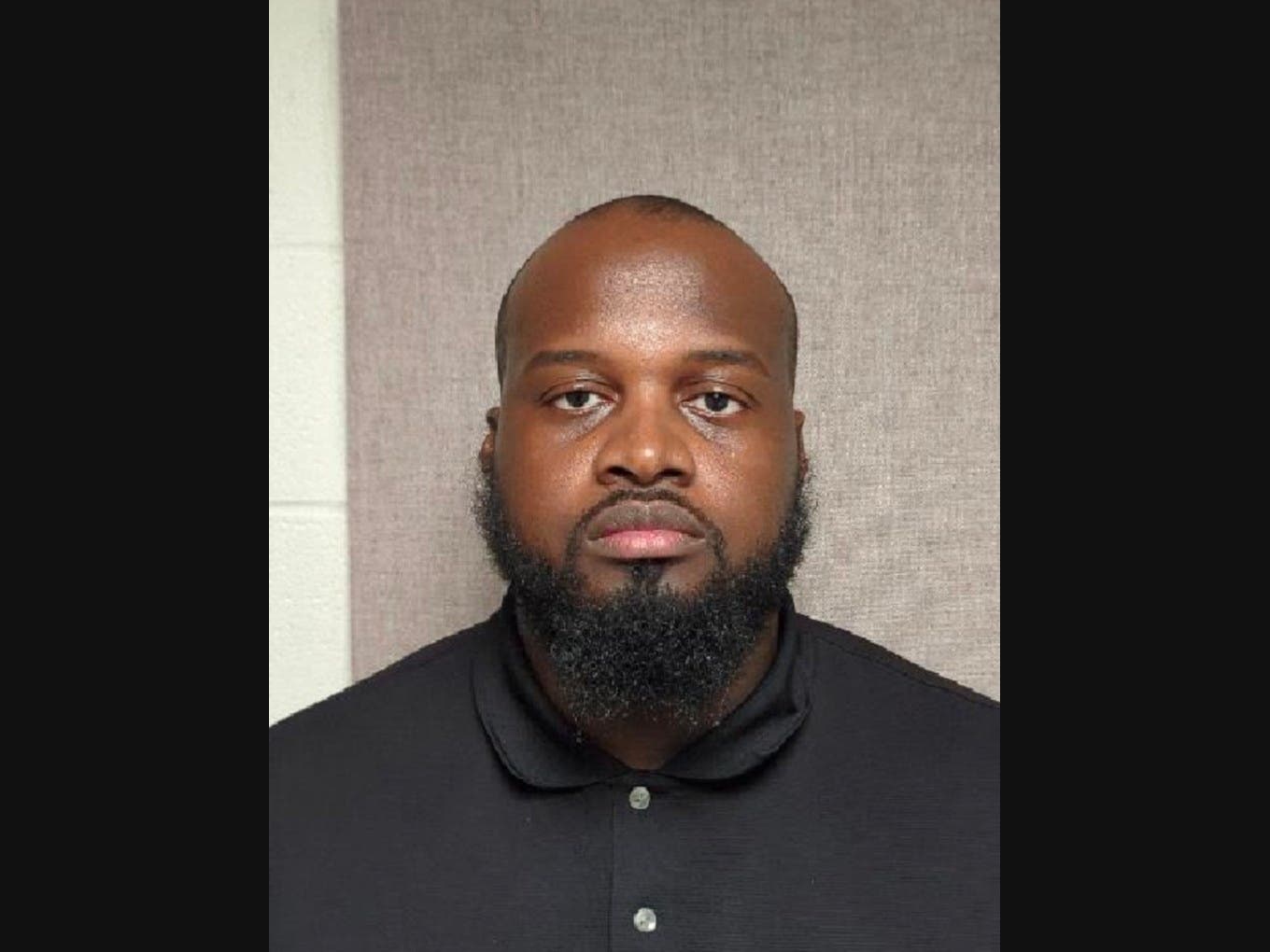
PHOTO: Vincent Cordaro/Clarkstown Police Department
Get more local news delivered straight to your inbox. Sign up for free Patch newsletters and alerts.