Health & Fitness
Rockland At High Risk In 2022 Tick Season: How To Prevent Illnesses
Adult ticks — which can transmit a variety of serious illnesses — and are already actively latching onto people and their pets.


NEW CITY, NY — Forecasters predict more precipitation than usual this spring and summer, leading to above-average tick populations, so Rockland County Executive Ed Day and County Health Commissioner Dr. Patricia Schnabel Ruppert remind residents to be sure to protect yourself from tick bites as you spend more time outside.
Adult ticks — which can transmit a variety of serious illnesses — and are already actively latching onto people and their pets — which is why May is Lyme Awareness Month.
"A bite from an infected tick can cause Lyme Disease and other tick-borne diseases such as Ehrlichiosis, Babesiosis, Anaplasmosis, and Powassan," Dr. Ruppert said. "If caught early, most cases of Lyme and other tick-borne diseases are treatable with antibiotics but are hard to diagnose, and it is difficult to know if the infection has been eradicated. This is why it is so important to protect yourself from ticks and their diseases."
Find out what's happening in New Cityfor free with the latest updates from Patch.
Lyme disease, which can be fatal in pets, is spreading due to the expansion of tick host habitat range, primarily deer and rodents, and migratory birds carrying ticks to new areas, according to the organization. Warmer weather and longer reproductive seasons also come into play.
SEE: 2022 Summer Forecast For NY: Wetter, Warmer, With More Severe Storms
Find out what's happening in New Cityfor free with the latest updates from Patch.
According to the annual pet parasite forecast from the Companion Animal Parasite Council, 2022's tick season is expected to pose higher-than-average risk for pets. High risks of Lyme disease persist in all portions of the Northeast, which includes New York for the parasite group's tracking.
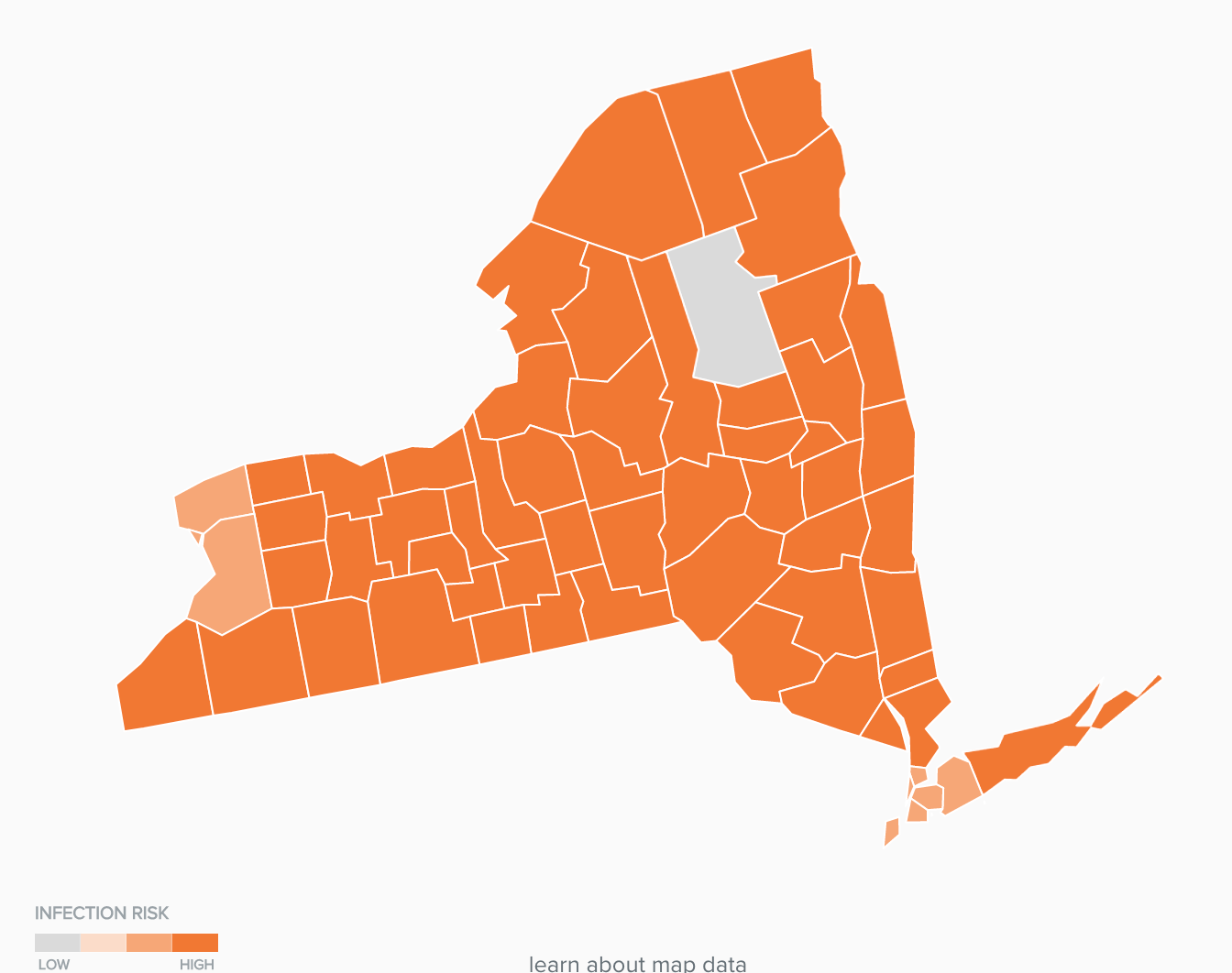
Pet owners should test pets for Lyme disease annually and use tick preventatives year-round.
Dr. Ruppert recommended these five simple steps to protect yourself and your family.
- Check your skin for ticks daily. When outside, check your skin and clothing for ticks. Know where to expect ticks. Ticks live in grassy and wooded areas and prefer a humid environment. Check often and brush any ticks off before they attach. Do a full check of your skin when you go back inside. It is easy to check when you bathe or shower. Be sure to check for ticks on your children and pets too!
- Remove ticks quickly and safely. Remove any attached ticks using this safe method: Using fine-tipped tweezers, grasp the tick near the mouthparts as close to the skin as possible. Do not twist, turn, or squeeze the tick's body. Instead, pull the tick in a steady, upward motion away from the skin until the tick lets go. To lessen your chance of infection, remove an attached tick as soon as possible. For tick identification, call the Cornell Cooperative Extension Horticultural Lab at 845-429-7085.
- Dress in clothes that protect. If you are heading outdoors, wear light-colored clothing, such as white or pastels. Wear a long-sleeved shirt, long pants, socks, and shoes. Tuck your shirt into your pants and pant legs into your socks. Wear sneakers or boots, not sandals. Tie back long hair or wear a hat.
- Consider the use of an insect repellent. Carefully read and follow the directions on the repellent label. Some products should be used only on clothing, never on the skin. Talk to your pediatrician about using repellents on your children. Never let children put repellents on themselves.
- Learn the symptoms of Lyme disease: After a tick bite, watch for symptoms for at least 30 days. Symptoms can include tiredness, headache, neck stiffness, slight fever, swollen glands, pain or stiffness of muscles or joints, and a red circular rash (called erythema migrans) that often appears at the site of the tick bite, usually within 3 to 14 days after the bite of an infected tick. The rash then grows larger. Sometimes many rashes appear, varying in shape and size. Common sites are the thighs, groin, trunk, and armpits. The center of the rash may clear as it enlarges, resulting in a "bull's-eye" appearance. If you have any of these symptoms or are feeling ill, see your doctor.
- Do I need antibiotics after a tick bite? Taking antibiotics within three days of a tick bite may benefit a person living in an area where deer ticks infected with Lyme disease are common, and there is evidence that the tick fed for more than one day. Rockland County is an area of concern for deer ticks and Lyme disease. Ticks have flattened, tear-shaped bodies at all stages of growth. If you are bitten by a tick, and its shape is not flat (i.e., engorged), it is a sign that it had a blood meal. This could put you at risk for common tick-borne disease transmission. If you experience a case like this, discuss the possibilities of antibiotics with your doctor.
"Taking steps to protect yourself, your children and your pets against ticks is the best way to protect yourself from ticks. As we all begin to get outside to enjoy our beautiful local parks, it is critically important that we remain vigilant against tick-borne diseases," Day said.
For more information, visit the New York State Department of Health website.
Get more local news delivered straight to your inbox. Sign up for free Patch newsletters and alerts.