Schools
Where Are They Now?: Shelun Tsai
Your weekly look into the lives of Clarkstown High School Graduates and what they are up to now. This week: Shelun Tsai

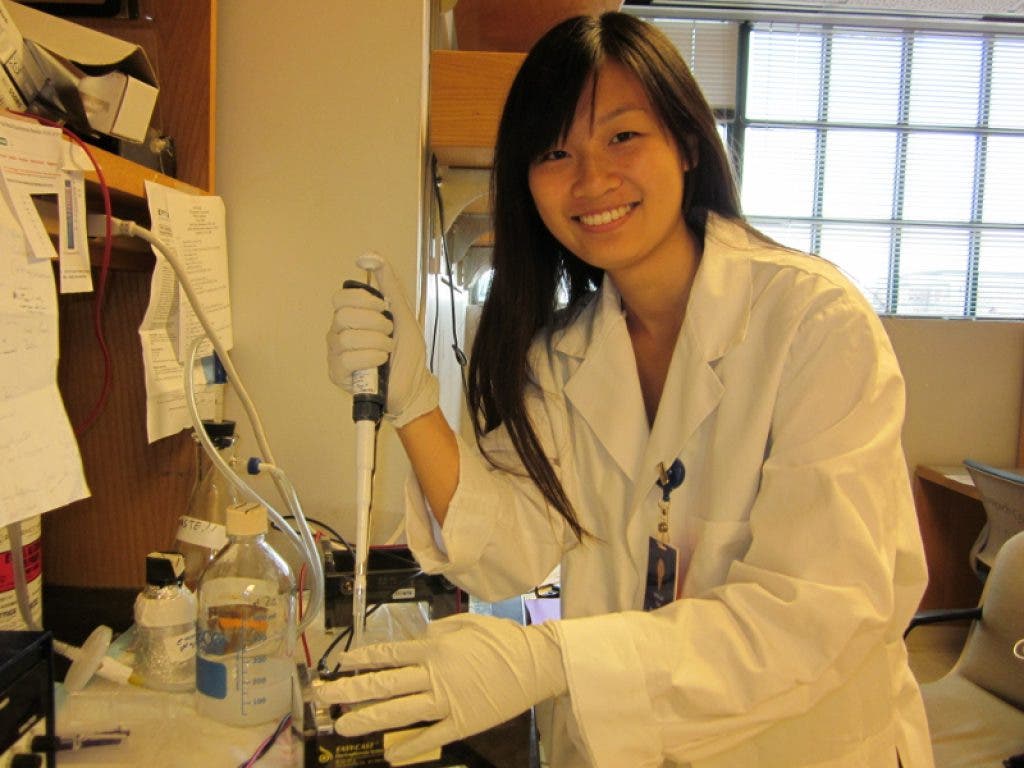
Graduated North: June, 2009
College: Harvard University, Class of 2013
Major: Neurobiology
Find out what's happening in New Cityfor free with the latest updates from Patch.
When Shelun Tsai left Clarkstown in August of 2009 to attend Harvard University, she, like other North graduates, was unsure of what was to come. Now, two years later, Shelun is spending the summer in a research lab at Massachusetts General Hospital and will teach a leadership conference to high school students in Taiwan.
While Shelun always had a knack for math and science, her interest in research took hold in Matthew Schuchman’s Science Research Class at North. “It taught me how to conduct labs and read journal articles,” she says.
Find out what's happening in New Cityfor free with the latest updates from Patch.
In January of her freshman year, Shelun began searching for labs online. “I was looking for a lab that combined my interests in both neurobiology and genetics.”
When she came upon Dr. Xandra O. Breakfield’s Dystonia lab and spoke to Dr. Breakfield herself, the driven freshman just knew that something had clicked.
“I really felt they had a lot of potential and were always thinking,” she says. “Xandra was kind enough to let me choose which project to work on, and I love my postdoc [Dr. Ioanna Armata]. She is always thinking, takes time to explain everything to me, and challenges me.”
After spending close to a year and a half in the lab, Shelun has gained an incredible amount of experience. She explains that Dystonia is a neurological movement disorder and that there are various types.
“The one we focus on is early-onset torsion dystonia (EOD) and is caused by a mutation in torinA.” She adds, “We are looking at how it interacts with dopamine receptors--important for dystonia--, a 1-antitrypsi--a secreted protein implemented in emphasema and liver disease--, and the W nt/b–catenin pathway--involved in cancer.”
Although some of these ideas may be foreign to many, Shelun has comfortably added them to her repertoire of knowledge. Her typical summer day? She usually gets into the lab around 10 a.m. and leaves around 6 p.m.. “I do a lot of pipetting, run gels, and work with cells.” She adds, “Some days I am trying to do 10 things at once, and other days I am sitting waiting around during incubation times. It really depends on the day.”
When she is not spending time in the lab, Shelun is taking part in both social and academic activities that Harvard’s PRISE program (Program for Research in Science and Engineering) provides. The program includes free housing and food on weekends. “It has a great community.” She laughs, “It’s also nice to have a group of scientists who understand the pains of a failed experiment.”
Shelun is constantly challenging herself and, in addition to research, she will be leaving for Taiwan in a few short weeks. And while a vacation might be in order after such hard work, her reason for traveling is to teach Harvard’s Taiwan Leadership Conference, started four years ago by a Harvard student. The program’s goal is to provide an all-English environment for Taiwanese high school students and to expose them to leadership skills.
Shelun explains, “The education system in Taiwan focuses a lot on memorization and doesn’t promote creativity as much as the American system does.”
The Harvard students involved collaborate with National Taipei University. The theme of the conference is Technology and Leadership and includes a final project at the culmination of the session. Shelun taught at last year’s conference and was on the developing board for this year’s program.
She says, “We have weekly meetings through spring semester. Teachers are required to arrive three days prior to the start of the conference to organize, practice presentations, and go over the curriculum.”
After Shelun returns from the conference, it’s back to Harvard where she will be entering her junior year.
“I really do miss North,” she says. She explains that it is hard to pinpoint how North has played a role in where she is now, but attributes part of her success to “the friends I made who help me through the rough times in college, the work habits I acquired through the help of the teachers, and the leadership skills I developed through extracurricular activities.”
Get more local news delivered straight to your inbox. Sign up for free Patch newsletters and alerts.