Health & Fitness
Ways to Beat SAD (Seasonal Affective Disorder)
Seasonal affective disorder (SAD) strikes a lot of people when the days get shorter and colder.

Have you noticed a recent, serious mood change? Perhaps it’s tough to focus on certain tasks or to get out of bed. Maybe you’re more tired or crave more sweets. If you can’t shake that feeling, you are not alone. Seasonal affective disorder (SAD) strikes a lot of people when the days get shorter and colder.
SAD, a type of depression, often correlates with changes in sunlight and your circadian rhythm. This can disrupt pathways for the neurotransmitters serotonin and norepinephrine, which are brain chemicals that aid concentration and feelings of well-being.
SAD symptoms can include feeling depressed or worthless, changes in sleep patterns or appetite or thoughts of death or suicide. Sometimes these indicators begin mildly but become more severe. Treatment usually starts when symptoms appear and continues daily throughout the winter.
Find out what's happening in New Hyde Parkfor free with the latest updates from Patch.
Shedding Light on Seasonal Affective Disorder Treatments
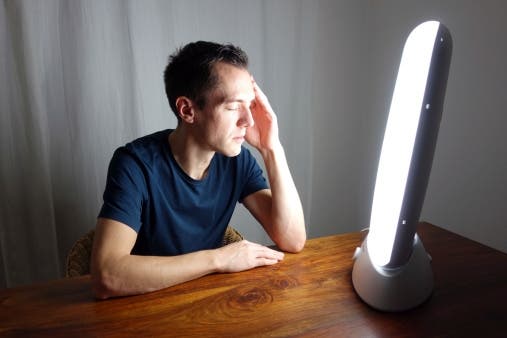
Light therapy can be an effective treatment for SAD, according to the National Institute of Mental Health. For those who are not severely depressed and are unable or unwilling to use antidepressant medications, it can be the best initial option, says the National Alliance on Mental Illness (NAMI). Light therapy consists of spending 30 minutes in front of a “light box,” a specialized lamp that simulates high-intensity sunlight. Having many lamps at home and spending extra time outside is not as effective as a light box, according to NAMI.
Find out what's happening in New Hyde Parkfor free with the latest updates from Patch.
Consult your physician to ensure you get an appropriate light box. NAMI recommends caution for people with a history of bipolar disorder who are considering light therapy. If light therapy doesn’t ease SAD symptoms, antidepressant medicines and talk therapy can help, too.
There are more immediate ways to lift your mood, as well. The companionship of a loving pet can be a great encouragement. And for a boost right now, try my Feel-Good Music playlist on Spotify.
This post was written by Scott Krakower, DO, child and adolescent psychiatrist at Zucker Hillside Hospital.
For more North Shore-LIJ Health Blog posts, go to http://blog.northshorelij.com/
Contents of the health blog are the property of North Shore-LIJ Health System and are provided as a health resource for consumers, health care professionals and members of the media. The medical content on the North Shore-LIJ Health Blog is for informational purposes only and should not be considered a substitute for consultation with your physician regarding diagnosis, treatment or any other form of specific medical advice. These materials may be reprinted for noncommercial personal use only. “North Shore-LIJ Health System,” “North Shore-LIJ,” “northshorelij.com,” “VivoHealth,” their related entities and logos are trademarks of the North Shore-LIJ Health System. Copyright © 2011 North Shore-LIJ Health System. All rights reserved.