Neighbor News
Be Prepared for Summer Safety - Learn CPR
National CPR & AED Awareness Week is June 1 - 7
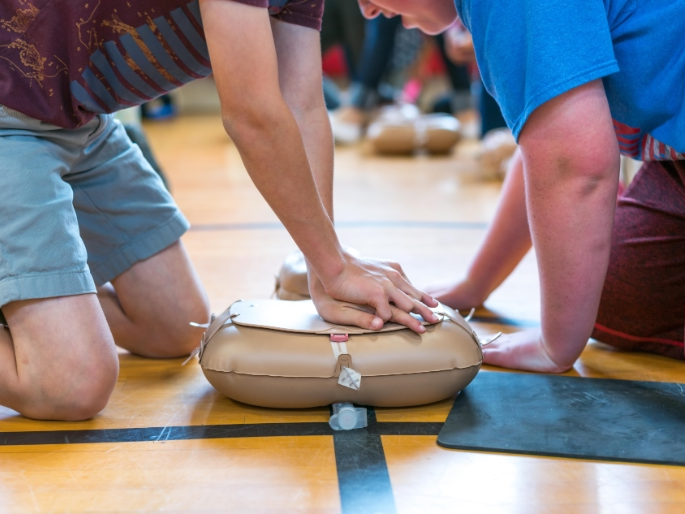
School is winding down and that means summer is almost here! If your summer safety plan consists of stocking bandages, anti-bacterial spray and sunscreen, you might be missing an important lifesaving tool—CPR. The American Heart Association encourages families to be prepared for cardiac emergencies and swimming season by learning cardiopulmonary resuscitation, or CPR. Get summer safe and register for a CPR class at www.cpr.heart.org.
Accidents, choking and drowning are leading causes of death in children. Every day, about ten people die from unintentional drowning, according to the Centers for Disease Control (CDC). Of these, two out of the ten are children aged 14 or younger. Drowning is the number one cause of unintentional death among children ages 1-4.
What can you do to prevent drowning tragedies?
The U.S. Consumer Product Safety Commission’s PoolSafely.gov campaign suggests closely monitor children near pools and bodies of water to prevent drowning. Children and beginner swimmers should take swimming lessons and never swim alone. Install pool safety devices like isolation fencing, self-locking gates, drain covers, and pool alarms—and use them all the time.
Find out what's happening in New Rochellefor free with the latest updates from Patch.
Watch infants and children who are swimming at all times. Drowning can occur in minutes even in shallow water--the ability to swim does not prevent drowning. The drowning child often sinks quietly without screaming for help or thrashing in the water.
The American Heart Association suggests wearing personal flotation devices (life jackets) while in, around, or on water. Don’t swim alone and avoid swimming or operating motorized watercraft while intoxicated to help prevent tragedies.
Find out what's happening in New Rochellefor free with the latest updates from Patch.
Learning CPR, compressions with breaths, can help save lives in cases of drowning. The Heart Association recommends that if you have a swimming pool, learn CPR.
CPR is also vital when sudden cardiac arrest - a leading cause of death in America – strikes without warning. Only about 46 percent of people who experience an out-of-hospital cardiac arrest receive the immediate help that they need before professional help arrives.
About 70 percent of out-of-hospital cardiac arrests happen in homes. If you are called on to give CPR in an emergency, you will most likely be trying to save the life of someone you love: a child, a spouse, a parent or a friend. CPR, especially if performed immediately, can triple a cardiac arrest victim’s chance of survival.
In 2009, the American Heart Association launched a nationwide Hands-Only CPR campaign to raise awareness about this life-saving skill. The campaign is supported nationally by an educational grant from the Anthem Foundation. Since 2012, nearly 10.1 million people have been trained in Hands-Only CPR via events, training kiosks and video education with the Anthem Foundation’s support.
Hands-Only CPR--CPR without breaths-- teaches two basic steps: First, call 9-1-1, and then push hard and fast on the center of the chest until professional help or an AED arrives. The AHA encourages everyone to view a Hands-Only CPR instructional video at www.heart.org/handsonlycpr.
In certain emergencies, like drowning, conventional CPR that includes mouth-to-mouth breathing may provide more benefit than Hands-Only CPR. The American Heart Association recommends CPR with a combination of breaths and compressions for all infants (up to age 1); children (up to puberty); anyone found already unconscious and not breathing normally; any victims of drowning, drug overdose, collapse due to breathing problems; or prolonged cardiac arrest. Sign up for a course at www.cpr.heart.org.
National CPR & AED Awareness Week is June 1–7. Learn more at www.heart.org/cprweek.