Community Corner
College Student with Measles Rode Amtrak up the Hudson River
Health officials warn anyone with symptoms of the highly contagious disease to call, not go, to the doctor.


A student at Bard College may have exposed others to the measles earlier this week, New York state health officials said.
The student boarded an Amtrak train at Penn Station on Jan. 25 and rode the train up the Hudson River, getting off in Rhinecliff. Warning that members of the public beyond the college campus may have been exposed, the New York State Department of Health issued a statement Friday.
The Dutchess County Department of Health held a measles vaccination clinic at Bard on Friday.
Find out what's happening in New Rochellefor free with the latest updates from Patch.
Anyone believing they might have the measles should call their doctor or hospital emergency room instead of going in, according to state health officials.
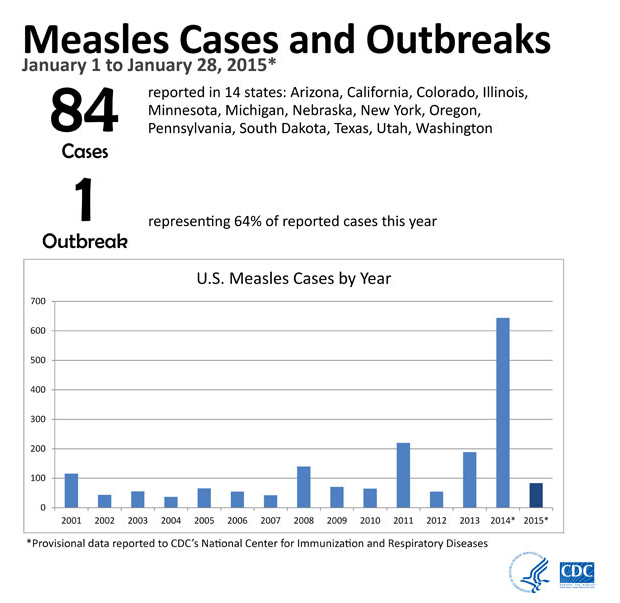
According to the Centers for Disease Control and Prevention, since Jan. 1 84 people from 14 states were reported to have measles. in 2014, the U.S. experienced the highest number of measles cases reported in 20 years, over 600. The CDC is seeing more adults than in a typical outbreak.
Find out what's happening in New Rochellefor free with the latest updates from Patch.
“This is not a problem with the measles vaccine not working. This is a problem of the measles vaccine not being used. Measles can be a very serious disease and people do need to be protected. Measles spreads quickly among unvaccinated people and can spread quickly from state to state or around the world,” said Dr. Anne Schuchat, the assistant surgeon general, United States Public Health Service and director of CDC’s National Center for Immunization and Respiratory Diseases, at a CDC briefing Jan. 29 on “Measles in the United States, 2015.”
Here’s the health department’s full statement:
(January 30, 2015) - The New York State Department of Health (DOH) today has been notified of a laboratory-confirmed case of measles at Bard College in Dutchess County. DOH has also been informed that the patient traveled on an Amtrak train so exposures to the public may have occurred beyond the college campus.
Anyone traveling on Amtrak train #283, which left Penn Station in NYC at 1:20 p.m. and traveled to Albany and then on to Niagara Falls on January 25, 2015, and who is not immune to measles or not sure of their measles immunity, should contact their primary care physician if they become ill with fever. In order to prevent the spread of illness, DOH is advising individuals who may have been exposed and who have symptoms consistent with measles to call their health care providers or a local emergency room BEFORE going for care. This will help to prevent others at these facilities from being exposed to the illness.
Bard College has notified the campus community of the measles case and on Friday, the Dutchess County Department of Health held a measles vaccination clinic for any students, faculty, or staff who has not been vaccinated against measles.
New York State has had three cases of measles this year. One in Dutchess County and two in New York City.
Measles is a highly contagious respiratory disease caused by a virus and is spread by contact with nasal or throat secretions of infected people. Measles can lead to serious side effects and, in rare cases, death. Measles symptoms usually appear in 10 to 12 days, but can occur as late as 18 days after exposure. Symptoms generally appear in two stages.
Individuals are not at risk of contracting measles if they are immune. A person is considered immune if they have received two doses of Measles, Mumps, and Rubella (MMR) vaccine OR if they were born before January 1, 1957, OR have a history of laboratory-confirmed measles, OR have a blood test confirming immunity.
In the first stage, which lasts two to four days, the individual may have a runny nose, cough and a slight fever. Eyes may become reddened and sensitive to light while the fever gradually rises each day, often peaking as high as 103° to 105° F. Small bluish white spots surrounded by a reddish area may also appear on the gums and inside of the cheeks.
The second stage begins on the third to seventh day and consists of a red blotchy rash lasting five to six days. The rash usually begins on the face and then spreads downward and outward, reaching the hands and feet. The rash fades in the same order that it appeared, from head to extremities. Although measles is usually considered a childhood disease, it can be contracted at any age.
The single best way to prevent measles is to be vaccinated. Most New Yorkers have been vaccinated but if unsure, they should check with their physician. Individuals should receive 2 doses of MMR vaccine to be protected. The first dose should be given at 12-15 months of age and the second dose is routinely given at 4 to 6 years of age, but may be given as soon as 28 days after the first dose. Anyone who is not immune to measles should receive 2 doses of MMR vaccine at least 28 days apart.
More information about measles can be found at:
http://www.health.ny.gov/diseases/communicable/measles/fact_sheet.htm
CHART: Centers for Disease Control
» News Alerts: Subscribe to a free email newsletter:
BEDFORD-KATONAH • BRONXVILLE-EASTCHESTER-TUCKAHOE • CHAPPAQUA-MOUNT KISCO • HARRISON • LARCHMONT-MAMARONECK • NANUET • NEW CITY • NEW ROCHELLE • NYACK-PIERMONT • OSSINING-CROTON-ON-HUDSON • PEARL RIVER • PEEKSKILL-CORTLANDT • PELHAM • PORT CHESTER • PLEASANTVILLE-BRIARCLIFF MANOR • RIVERTOWNS • RYE • SCARSDALE • SOUTHEAST-BREWSTER • TARRYTOWN-SLEEPY HOLLOW • WHITE PLAINS • YORKTOWN-SOMERS
Get more local news delivered straight to your inbox. Sign up for free Patch newsletters and alerts.