Politics & Government
Davids Island Study Outlines Possible Development Scenarios
The 78-acre island has been the subject of much development speculation.



Greenhouses? Environment-friendly energy production? Open parkland? Housing?
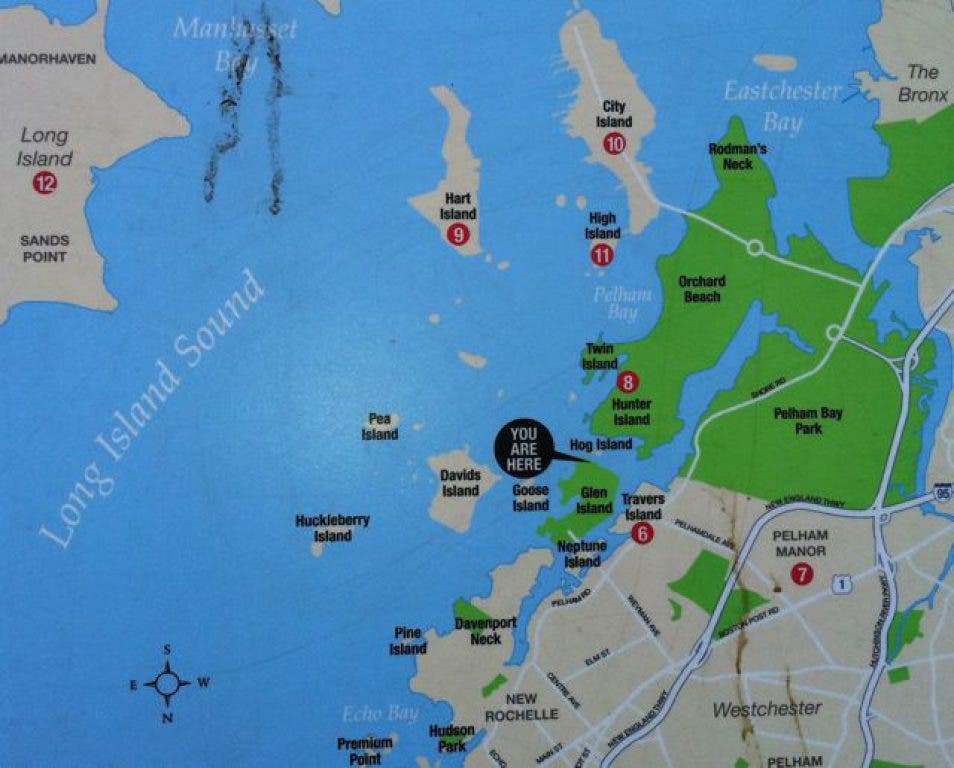
What, if anything, would be appropriate for the 78-acre island situated off the coast of New Rochelle?
A task force asked to come up with development scenarios released its findings at a recent City Council meeting.
Doug Hocking, who is also chairman of the planning board, said it was important to understand the island's history in order to understand what is possible.
"I think anything we do in the future will prove out several scenarios," he said.
The island is located about 3,000 feet from the mainland. It was farmland until the U.S. Army established a post there in 1862. Since being decommissioned in the 1960s as the Fort Slocum army base, there have been several redevelopment proposals, none of which came to fruition.
The proposals included a 175-unit luxury development by Xanadu Property Associates in the 1980s and two proposals by the Trump Organization in the 1990s.
The city bought the island in 1967 with the idea of redeveloping it. Con Edison purchased the site for $3 million in 1968 with the idea of building a nuclear power plant. The public objected, and Con Ed withdrew its proposal and sold the island back to the city for $1.
Hocking said the island has just over 45 acres of land that could be developed, after factoring in setbacks, high tides and city zoning regulations.
On major hurdle is physically getting to the island, he said. A 3,000-foot, two lane bridge would cost in excess of $200 million.
"There is no easy way to get to the island," he said. Tying New Rochelle's existing transit systems to get people from the city to the island is "a huge issue."
To judge the viability of various scenarios, the task force came up with a five-point scale, where 1 is the most negative, 3 is neutral and 5 is the most positive. Each scenario was rated for its social, economic and environmental attributes.
For example, Hocking said leaving the island as open parkland had an average 2.67 viability, with economic at 1, social at 4 and environmental at 3.
"You have a public benefit, but you have no economic benefit," he said.
Other scenarios included installation of photovoltaic cells or wind turbines, greenhouses, a hotel and conference center and various densities of housing. The higher the population on the island, the more necessary building a bridge would be.
Mayor Noam Bramson said the scenarios shouldn't be thought of as all or nothing, but rather development would likely include a combination of uses.
Development Commissioner Michael Freimuth said the next step should be exploring the various components and how development on the island would interface with southern neighborhoods and the city's downtown.
"I do think this will eliminate the Xanadus of the world," he said, "and get us down to science and the economics.
The task force presentation, available on the city's Web site, was produced by the architectural and planning consulting firm Kohn Pedersen Fox Associates PC, where Hocking is an architect.
Get more local news delivered straight to your inbox. Sign up for free Patch newsletters and alerts.