Health & Fitness
Kindergarten Readiness: More than ABCs
Even if your child doesn't know his colors, he may be more ready for kindergarten than you think! Relax and read on!
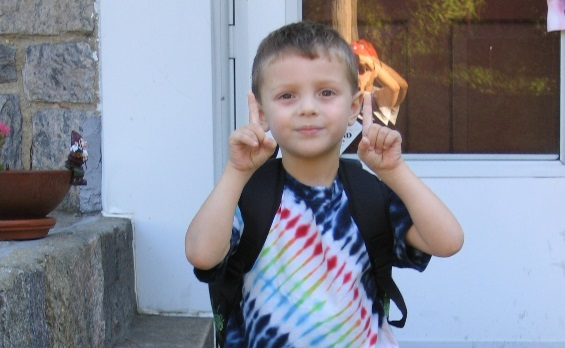
It’s that time of year…preschoolers are getting ready to enter “real” school. Parents are buying backpacks, pencils and markers. Here at The Guidance Center of Westchester, we have also been preparing the children in our programs to go to kindergarten.
What do kindergarten teachers think are the most important skills for a child to have before starting school? Is it:
- A). Knowing the alphabet.
- B). Colors and shapes.
- C). Counting.
- D). None of the Above.
A study of 3,000 kindergarten teachers revealed that the answer is D). None of the Above. These teachers listed the most important skills as:
Find out what's happening in New Rochellefor free with the latest updates from Patch.
- a child’s ability to verbalize his/her needs and thoughts;
- follow directions;
- take turns;
- show sensitivity to others;
- be non-disruptive in class. *
In other words, what we call social-emotional learning skills are just as important, if not more, than academic skills according to kindergarten teachers themselves. A child’s ability to pay attention, control his/her behavior, follow directions and get along with peers are the key to kindergarten adjustment and success.
What can parents do to promote these skills? The answer is: a lot! It all starts with nurturing interactions between babies and caregiving adults. Warm and trusting relationships are the foundation a child needs in order to be ready to learn. Children’s earliest relationships have a strong effect on how they adjust to school.** This does not require expensive “educational” toys and programs! It requires a secure, child-friendly environment with opportunities for play and exploration.
Find out what's happening in New Rochellefor free with the latest updates from Patch.
As toddlers become preschoolers, they increasingly come into contact with the larger world. One of the primary tasks of this period is learning to regulate behavior and emotions. Parents can help children develop these skills by setting up routines and having manageable expectations a child can learn to master. Reading books with children is pleasurable for parent and child; it also helps develop not just language, but attention and self-control, as the child helps turn the pages and sits to the end of the story.
Children learn to understand and manage their emotions through observing the adults around them. Modeling is key! Parents can label their own feelings in simple words and label their children’s feelings (“Your tears tell me you’re sad.” or “Your sister is angry because you grabbed her toy.”). By the time they enter kindergarten, children will be able to label their own feelings and those of others, which is the cornerstone of empathy and emotional self-regulation.
Guest blogger: Iva Jenkins, LCSW, Early Childhood Social Work Supervisor at The Guidance Center of Westchester.
*Linn, Lawrence and Gorrell(2003). Kindergarten teachers views of children’s readiness for school. Early Childhood Research Quarterly,18, 225-237.
**La Paro and Pianta (2000). Predicting children’s competence in the early school years: A meta-analytic review. Review of Educational Research, 70(4) 443-484.