Politics & Government
A Year After Ida, Hochul's $41.2M Storm Recovery Plan Unveiled
The governor said the initiatives will help New Yorkers to deal with the increasingly calamitous effects of climate change.


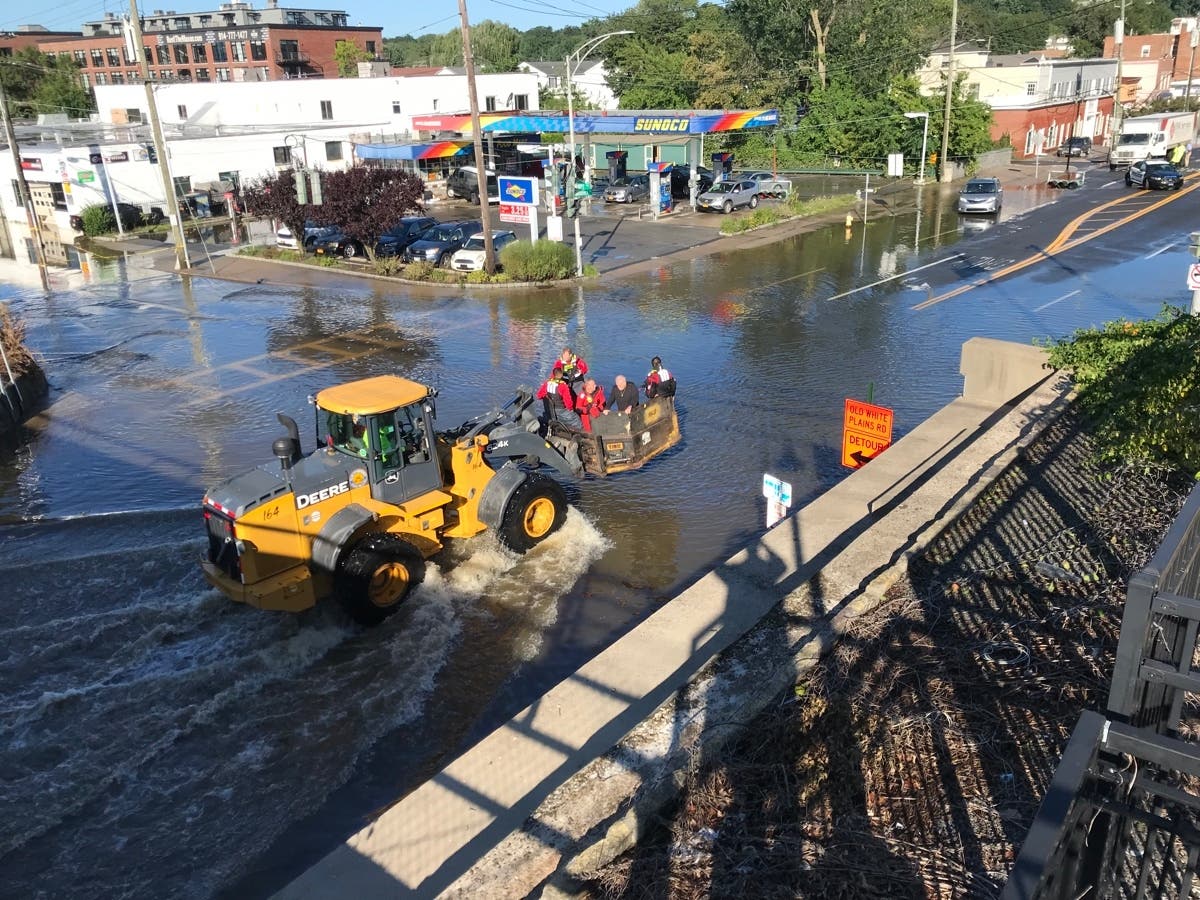
NEW YORK — New York Governor Kathy Hochul marked the upcoming one-year anniversary of the Ida disaster by unveiling plans to help mitigate the death and destruction of future storms.
On Monday, Hochul announced the release of the proposed action plan by the Governor's Office of Storm Recovery (GOSR) to recover from Hurricane Ida and to strengthen the resiliency of communities in future storm events. The proposed plan includes $41.2 million in federal funding to support initiatives that will help residents adapt to the effects of climate change while prioritizing historically underserved communities, according to the governor's office.
"As New Yorkers continue to recover from the aftermath of Hurricane Ida, we remain fully committed to rebuilding our infrastructure, especially in our most vulnerable communities," Hochul said unveiling the ambitious plans. "Our Action Plan will prioritize funding for housing, businesses, and other key programs in the most impacted and distressed areas - helping ensure all New Yorkers are lifted up as we recover. As we deal with the effects of climate change, we will continue to do everything we can to help New Yorkers and their communities recover following extreme weather events."
Find out what's happening in New Rochellefor free with the latest updates from Patch.
The governor also announced the state will begin collecting public input on proposed programs that will remediate Ida-related damage to residential homes, improve resiliency to reduce risk of future flood damage and to focus on recovery in low-to-moderate-income communities.
New Yorkers are invited to provide feedback on the plan here by Sep. 28, by attending the in-person public hearing on Sep. 8, at 6:30 p.m. at New Rochelle City Hall, or the virtual hearing on Sep. 13, at 6:30 p.m.
Find out what's happening in New Rochellefor free with the latest updates from Patch.
SEE ALSO:
- S. Westchester Flood Crisis Stretches First Responders: Photos
- 'Significant Damage' As Mamaroneck Flooded By Ida
- 'Some Didn't Have Much More Than Socks;" 125 at Shelter Overnight
- Fatality From Ida Flooding Confirmed By Harrison Police
- Rabbi Killed In Ida Flooding Recalled As 'A Very Good Man'
- Westchester County's Flood Disclosure Law Now In Effect
- Mamaroneck Chamber Of Commerce Congratulated For 'Miraculous' Recovery
- Village of Mamaroneck Passes $1.36M Resolution For Emergency Dredging
- 'Enough Is Enough,' Lawmakers Demand Flood Mitigation Project
- Community Resource Center Raises Nearly $800K For Ida Recovery
- NY-Based Chobani Helps To Feed Ida Flood Victims In Mamaroneck
- Fuller Center Races To Help Ida Families Before Cold Weather
- Deadline Looming To Apply For Ida Disaster Assistance
On Sep. 1, 2021, Hurricane Ida flooded homes and roads, causing $7.5 billion in damages and killing 17 New Yorkers. FEMA identified flood damage to 11,000 homes. Earlier this year, the U.S. Department of Housing and Urban Development (HUD) announced an allocation of $3 billion in CDBG-DR funds to help communities equitably recover from disasters, including Hurricane Ida, and build resilience to climate change. The GOSR was given $41.2 million to support the proposed programs.
"Hurricane Ida was a stark reminder that the next weather emergency is not a matter of if, but when," GOSR Executive Katie Brennan said. "Our Action Plan will help New Yorkers rebuild and take measures to keep themselves safe in the future."
The proposed plan reflects months of outreach to local officials, community leaders, non-profits, public housing authorities and other government agencies. The GOSR determined that housing recovery represented the largest unmet need in the communities affected by Ida. The agency then prepared a risk assessment to identify the greatest mitigation needs in the disaster area. They concluded that water and flooding posed the most significant risks and therefore reducing flood impacts would have the greatest impact to security and resiliency.
The GOSR used the Social Vulnerability Index to measure vulnerability to the impacts of climate change and natural disasters. This index showed that the communities that sustained the most damage were those that could least afford to recover and had historically been underprioritized during disaster recovery efforts in the past, such as low-to-moderate-income residents and individuals with limited English proficiency.
"Hurricane Ida devastated communities across New York causing millions in damage to roads, businesses, and hundreds of homes," Sen. Chuck Schumer said. "I fought tooth and nail to deliver millions in federal funding to provide families and communities from New York City and the Hudson Valley the support they need to recover and rebuild stronger. I applaud Governor Hochul for putting those dollars to work to help make our communities more resilient and get people on the road to recovery."
Proposed grant programs include:
Renters Resilient Housing
- encourage renters to relocate from storm-damaged homes while remaining in their existing communities with financial support for tenants to secure new safe and stable housing.
- provide assistance to improve homes' resiliency to mitigate future flood risk.
Housing Recovery and Reimbursement
- invest in storm damage repairs to residential homes and/or reimbursement for completed repairs.
- implement resiliency measures, including elevating mechanicals, electrical and plumbing mitigation, flood vents and backflow valves.
Affordable Housing Resiliency
- invest in flood mitigation measures and resiliency improvements in multi-family public and affordable housing complexes, and expand affordable housing where feasible.
- include floodproofing buildings, emergency generators, water retention systems and drainage improvements.
Resilient Investments
- invest in local governments to better leverage additional funding opportunities for mitigation and infrastructure resiliency improvements.
- support the creation of emergency plans and studies to help communities be better equipped to withstand future events.
"Climate change is real and in Westchester County it is here and now," Westchester County Executive George Latimer said. "I applaud Governor Kathy Hochul for her leadership in helping New York recover from Hurricane Ida, and for taking steps to improve infrastructure, specifically prioritizing historically underserved communities and focusing on renters as well as homeowners. Here in Westchester County our residents know all too well the painful and damaging impact of storms, and so it is imperative that we improve resiliency to reduce future risks."
About the Governor's Office of Storm Recovery
Established in June 2013, the GOSR coordinates statewide recovery efforts for Superstorm Sandy, Hurricane Irene and Tropical Storm Lee. The GOSR is more recently also coordinating recovery and resiliency efforts for Hurricane Ida. Through Housing Recovery, Small Business, Community Reconstruction, Infrastructure, National Disaster Resilience, and Rebuild by Design programs, GOSR invests $4.5 billion in federal Community Development Block Grant-Disaster Recovery funding to better prepare New York for extreme weather events. GOSR is also leveraging Community Development Block Grant-Coronavirus (CDBG-CV) funds to implement resiliency initiatives including its Mount Vernon Healthy Homes pilot program to repair homes impacted by the city's sewer crisis. More information about GOSR and its programs is available here.
Get more local news delivered straight to your inbox. Sign up for free Patch newsletters and alerts.