Community Corner
Dance Teacher, Former Rockette's Cancer Journey: 'I Want People To Know There's Hope'
'My whole goal, since the day I was diagnosed, was to keep business as usual." — Lucille Naar-Saladino.


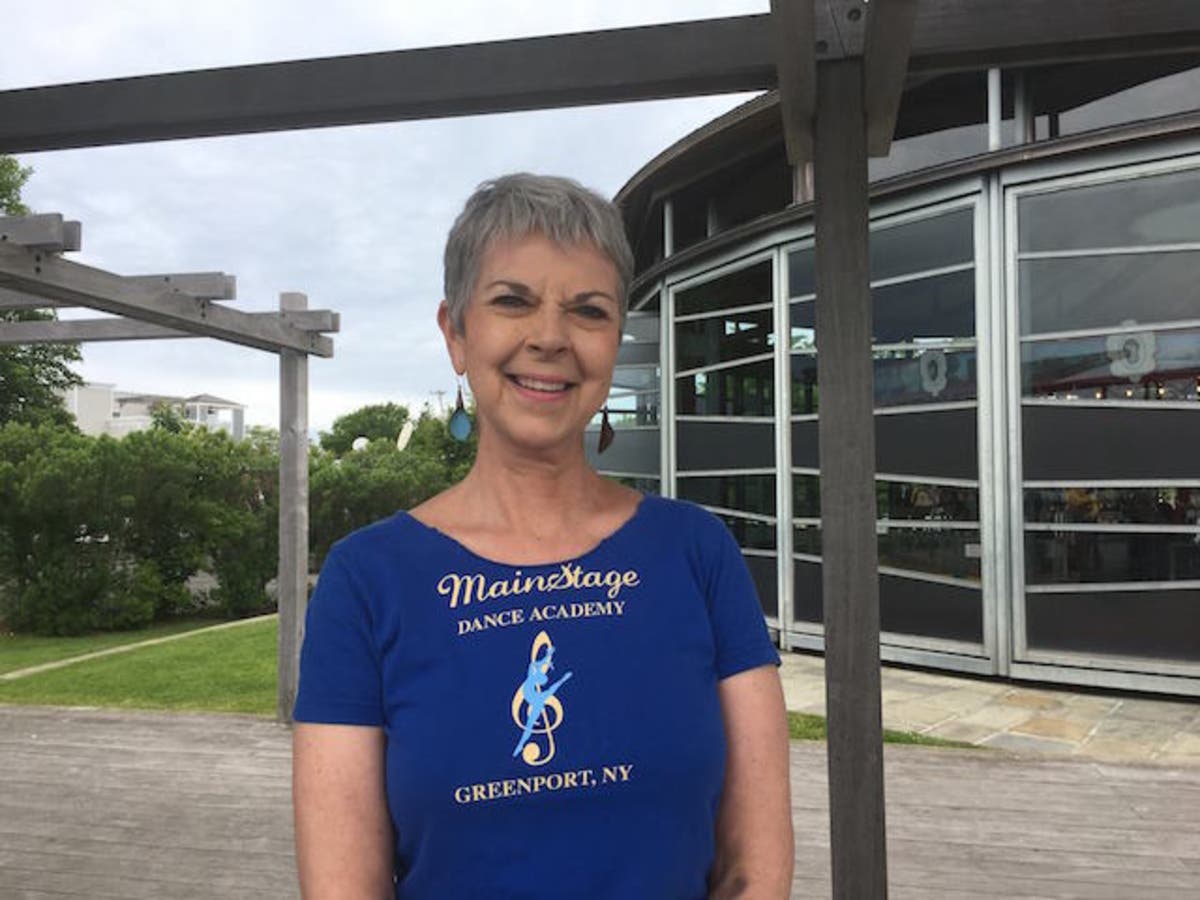
GREENPORT, NY — Lucille Naar-Saladino comes from a long line of survivors. Her father, said Naar-Saladino, 62, was a Holocaust survivor who was imprisoned in the Nazi concentration camps for three years. Her mother lived in Munich during Hitler's reign.
And so, when she was faced with a cancer diagnosis last year that came as an utter shock, Naar-Saladino found the inner fortitude to battle her own fierce opponent.
"I cried the first day I found out," Naar-Saladino said. "And then I got into machine mode, the whole time."
Find out what's happening in North Forkfor free with the latest updates from Patch.
She added, "I come from a family of intense survivors. The two of them, my mother and father, are quintessential survivors. So I think it's innate. I think that's where it came from."
Naar-Saladino, executive and artistic director of MainStage Dance Academy in Greenport, and a former Rockette, had no symptoms at all last year when she went for an annual gynecological exam in May, 2016 and the doctor found a large lump in her right breast.
Find out what's happening in North Forkfor free with the latest updates from Patch.
The lump was biopsied, and Naar-Saladino was diagnosed with diffuse large B-cell lymphoma, a form of non-Hodgkin lymphoma that develops from the B-cells in the lymphatic system. The cancer, she said, was found in her lymph nodes, and had spread to her abdomen, esophagus, and to the area right of outside her kidneys.
"It was Stage 3 already and I had no symptoms whatsoever," she said.
Fear came first: Her father had passed away from non-Hodgkin lymphoma 45 years ago.
The first thought that ran through her mind was, "'I'm going to die.' That I would die, because he had it and he died," she said.
But in the many years since, much research and time has meant great strides in treatment, Naar-Saladino said.
She saw a leukemia and lymphoma oncologist and specialist from the Memorial Sloan Kettering Cancer Center in New York City, and began treatment the day after her MainStage Dance Academy dance recital, on June 13 last year.
"I had a very, very aggressive treatment, very aggressive chemo that knocked me out," she said. She also qualified for, and embarked upon, a clinical study with a trial drug, venetoclax, that has been used for treating leukemia in the United States and has been found to have success in treatment of lymphoma, Naar-Saladino said.
"There's hope"
Then she went to the hospital for a week in December and January for preventative chemotherapy so that if the cancer does return, the prayer is that it does not develop in her brain or spine.
Her cancer, Naar-Saladino said, was "very rare," in that the lymphoma had started in her breast; when she was first diagnosed locally, doctors had not seen a similar case before. But at Sloan Kettering, physicians had experience with similar cases and knew how to commence treatment, she said. She was also told at Sloan Kettering that the cancer was not found in her heart, as was initially thought.
Naar-Saladino was in treatment until February of 2017 but now, she said, "I feel great. I have a tremendous amount of energy. They told me it would be at least six months to a year until I felt better. February was a total wash, terrible, but I went back to the studio to teach in March, still a bit nauseated. By April, I felt great. It only took me two months."
In remission for six months, Naar-Saladino said her body is very strong. "I jump back," she said. "I feel like I was never even sick. My appetite is back; I don't have any problems at all."
Although taking a steroid impacted her muscles briefly, her weakened muscles are now gaining strength again, too, she said.
But Naar-Saladino is honest and open about the full range of emotions she's experienced over the past year.
"I feel really, really great — but I'm still scared. It's with you, 24 hours a day. Your life has changed. It's on my mind all day long," she said. "I think I'll feel better about it if I can get past two years with a clean bill of health."
Aggressive cancers such as the one she's battled "tend to come back in a year or two. It's scary. You have to go on, which I do — but it's scary."
Looking to the positive, Naar-Saladino said there's been a tremendous amount of lymphoma research with amazing strides in the cure for blood cancers.
"There's hope," she said. "It's just that it's in the beginning for me, so it's just on my mind all day long."
When first diagnosed, Naar-Saladino said she had her parents' strength as an example of how to survive the unthinkable.
But the reality was that there were difficult days, she said.
"I can't say I woke up saying, 'It's going to be okay.' I didn't. Some days, I didn't feel like I had the strength. When you feel so sick it's hard to stay positive."
Today, however, Naar-Saladino said she's happy, and strong, teaching full classes.
When she first got back to her students, she said, "It felt terrific. They were so great."
She was concerned, at first, to how the kids would react to her wearing a hat upon her return to teaching after treatment. "My husband said, 'So what?'" she said. "Kids are resilient. It was like, 'Whatever. We're dancing.' There was a sense of peace, of joy, of 'Hi, Miss Lucille!' No questions, nothing. We just started to dance. And that's how I wanted it to be. What I was praying it would be."
And when she was first diagnosed, Naar-Saladino said it was a month before the recital and she had to tell her students' parents.
But her own indomitable spirit helped shape her journey.
"My whole goal since the day I was diagnosed was to keep business as usual — in my business and in my life," Naar-Saladino said. While she was undergoing treatment, her business ran flawlessly under the direction of manager Dottie Stevens, she said.
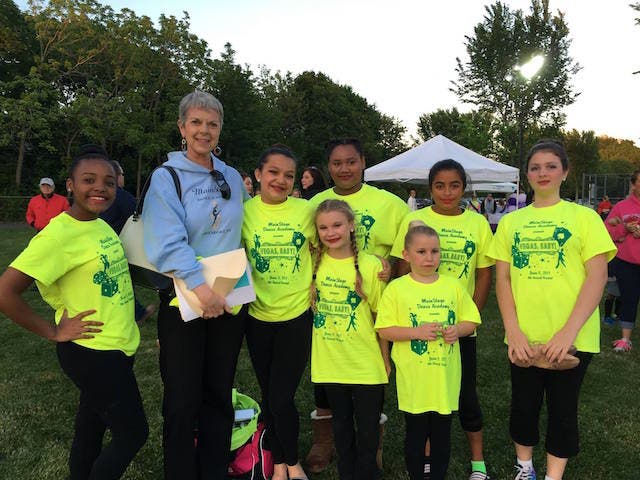
And at last week's North Fork Relay for Life event in Peconic, her students choreographed a dance and dedicated to her, to Rachel Platten's "Fight Song," a dance they first performed for her in the studio in March.
"It was beautiful, a lyrical dance, and they wore lime green sashes, the color for non-Hodgkin lymphoma awareness," she said.
While at first, Naar-Saladino said she was reluctant to talk about her experience, she decided to share her thoughts. "I'm talking about it more now. I want people to know that there's hope," she said.
Relay for Life, which she and her dancers have participated in during past years, held special meaning this year for Naar-Saladino; this year, she did the survivors' lap.
"Relay for Life was different for me this year. I felt like I was participating more personally, and then, they dedicated the dance to me. I came home and I felt great," she said. "It was really nice."
A bright luminaria was also created for her, she said.
"That's love. That's loyalty"
Looking back on the past year, Naar-Saladino, said she can't say cancer has changed her completely. "I'm really happy to say that, because that's what I wanted, business as usual. I wanted to go back to being me, and who I was."
There are smaller changes, such as eating less red meat and drinking less wine, but her core essence, the vibrancy and soul of her personality remains the same, strong and vibrant.
"I feel more grateful, sure. I'm grateful I'm alive, and I pray every night." But, she said, "I feel the same as I did before, and I'm going to admit that. I didn't see the light." She laughs. "I'm kind of the same — me. You've got to take the good with the bad."
And, she said, while she said a part of her wishes she'd been transformed into
Physically, she said, she's more relaxed, with an inner certainty: "It will all work out."
To those who have stood by her side throughout the past year, Naar-Saladino has a message of love and thanks.
"The people in the community, I can't say enough," she said. "The parents from MainStage Dance Academy, they were unbelievable. When I told them last year, they said, 'Anything we can do, we will do. We'll come over, clean your house.' They were amazing."
Naar-Saladino was moved by the outpouring of cards, flowers, letters. "They would always text me and ask how I was doing and when I came back, some said, 'Oh, my God, we're so glad you're back.' It's like family. Very, very touching to me, and really great."
To those hearing the words for the first time that cancer is the foe they have to face, Naar-Saladino had words of advice: "I would say to take it in front of you, take it one step at a time. Make your appointment."
After crying, she then took a methodical approach and went into her "machine mode" facing tasks and appointments one at a time. "You don't have the time to think and feel bad," she said. "That's how I work. When there are crises in my life, I’ll cry and be upset and then it's machine mode. Because what are you going to do? You have to do it."
For Naar-Saladino, who has no family other than her husband John, he and her friends became a lifeline of love.
"There are extremely close friends of mine who stayed out of work the entire time I was receiving treatment, going with me. And my husband was always there," she said.
When she came home, ill after chemo, other friends took the time off from work, coming to help her husband cook and clean for a week, taking turns all summer long.
"One friend came, and she cooked for me, and then she lay down with me in the bed. I was so, so sick and I could barely talk, and she just laid in the bed with me and said, 'I'm here. I'm next to you.' It was unbelievable."
Another time when she felt so sick that she felt unable to have visitors, her friends said, "'We don't care. If you throw up, you throw up.' That's love. That's loyalty."
Her husband, she said, was "great. He was terrific," by her side for every step and helping at home, her bastion of strength.
Events such as Relay for Life, Naar-Saladino said, are critical to raising awareness — a beacon of hope to those battling cancers, survivors, and those remembering loved ones lost.
"It has to be talked about, absolutely. We need to find a cure. I think there is a cure that's going to happen for cancer I really do," she said.
One friend, a scientist, she said, believes a cure is coming within the next 5 to 10 years. "He said he doesn't want to retire because he wants to be in on it."
"We have to talk about it, and do fundraising, and be supportive to people who have it, if they want to talk about it - or they don't," she said.
A community coming together, bringing their unique gifts, whether cheering, dancing, walking, making food or organizing raffles, is a force for change, Naar-Saladino said. "It's an important event. It's great," she said.
Get more local news delivered straight to your inbox. Sign up for free Patch newsletters and alerts.