Community Corner
Domestic Violence Victims Speak: 'Daddy's Trying To Kill Me!'
"She can be your sister, your best friend, your cousin — and they're screaming in silence." Empowered domestic abuse survivors speak out.


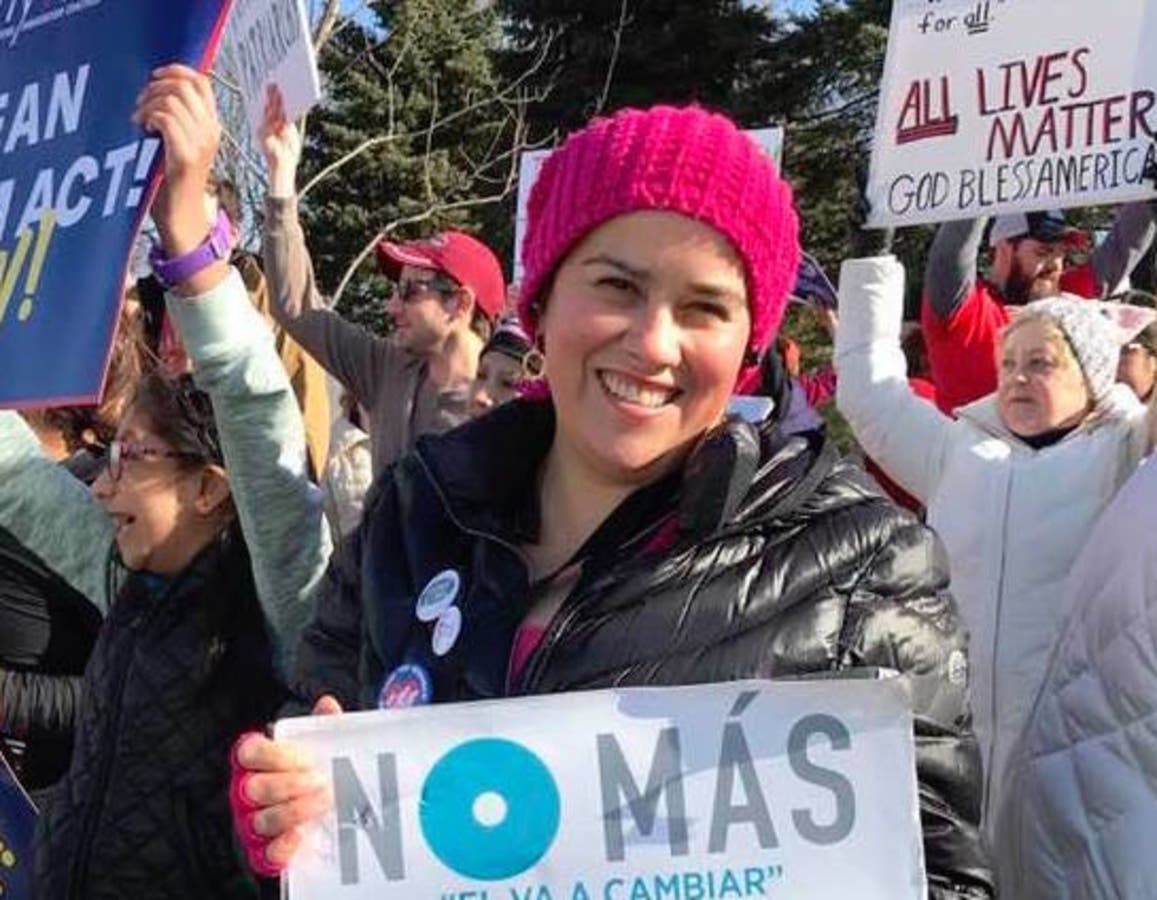
The horror of the night that changed her life and the lives of her children is always just a heartbeat away for East Hampton resident Noemi Sanchez, who was beaten, stabbed and then shot in the head with an air rifle by her estranged boyfriend in 2011.
Six years later, Sanchez shares her story with Patch, speaking out to help other women hiding in the shadows of their homes, where, behind closed doors, horrifying domestic abuse is an epidemic in even the most upscale communities of the tony Hamptons.
Sanchez, 47, was Sabas Martinez's former girlfriend and is the mother of their three daughters, two of whom witnessed the violent assault; she was hospitalized, had surgery, and recovered from her wounds, the DA said — but the emotional scars linger.
Find out what's happening in North Forkfor free with the latest updates from Patch.
Martinez, of Springs, was convicted in 2016 of attempted murder after the attack against his estranged girlfriend.
This week, a task force report was unveiled to offer concrete solutions on how to crack down on domestic violence.
Find out what's happening in North Forkfor free with the latest updates from Patch.
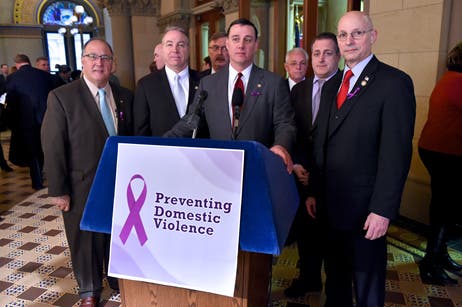
New York State Assemb. Anthony Palumbo joined colleagues in the fight — the report is a result of five regional forums held around the state where law enforcement, victims, advocates and legislators came together to present ideas and solutions in an attempt to combat domestic violence in New York State.
“I am very proud of the proposed legislation that was presented,” Palumbo said. “Domestic abuse is a problem that can unfortunately be found all over New York and in all classes of life. This is a public safety concern, and as legislators we need to do all we can to keep our citizens safe. I think that our findings and report are a wonderful step in the right direction toward combating this issue.”
Highlights from the report include solutions such as:
· Declaring domestic violence as a statewide public health crisis.
· Providing funding to cover the housing needs of those seeking shelter from their abusers.
· Arranging for reimbursement for each person the shelters help, with the aim of maintaining a high degree of individualized care and assistance.
· Creating a state-funded training system to promote coordination between law enforcement, prosecutors and administrators with the goal of providing seamless assistance to victims and greater understanding of their personal situations.
· Arranging funds to help negate the cost of living expenses victims suffer while seeking help to distance themselves from their abuser.
· Creating a new law making domestic violence in the presence of a child a much more severe offense.
Other solutions discussed included funding, providing those living with domestic violence a panic button, and allowing for temporary spousal and child suppot granted to the victim, who might be afraid to come forward to report the abuse for fear of losing her children.
“As an assistant district attorney, I have seen the results of domestic violence on the front lines, and we need to provide greater services for those seeking assistance," Palumbo said. "It takes great courage to come forward."
Two courageous women spoke to Patch this week about their personal nightmares and how they've triumphed and found their own personal strength and freedom from fear.
For Sanchez, the nightmare began with insidious verbal abuse.
Although the couple was estranged and living apart, the father of her children came to her in Springs and said he wanted to reconcile, she said.
"I said 'no,'" she said. But, Sanchez said, he continued to show up at her church, her gym. "I couldn't go there because he was watching me," she said.
According to reports at the time, Martinez was waiting for Sanchez in her bedroom on Squaw Road when she came home at about 1:30 a.m. He allegedly shot her with an air rifle and stabbed her in the head with a kitchen knife before his daughters were able to convince him to let their mother go; he then cut his neck and wrists, police said.
Sanchez was worried about her estranged boyfriend's behavior in the days leading up to the attack, she told Patch in an interview this week.
At the time, Sanchez told East Hampton Town Police Detective Jacques Guillois in a sworn statement from the emergency room at Southampton Hospital in 2011 that she had filed a police report about harassing messages from Martinez and had just received an order of protection against him.
The father of her three children, Martinez, knew the victim for 22 years, since they lived in Mexico. They had an "on and off" relationship, she said. He had not lived with her and the children since he was released from jail in October 2010. His criminal record was withheld from the court, the report said.
According to Sanchez, Martinez began sending her several text messages asking to move back in. He had been living with his brother in East Hampton, though there is some indication he had moved out. She said that one message stated that "he will not permit any other man to have me."
His brother reportedly called her to tell her she was an unfit mother and that their father wanted custody of their three children.
Two days later, Sanchez filed a report with town police about his messages to her. She told police she did not want to press charges, but that she wanted him to stay away from her and their children, the report said.
All domestic violence reports made with the town police are forwarded to The Retreat, a domestic violence advocacy organization based in East Hampton.
Sanchez said she met with a psychologist and a social worker at the Retreat, and the following day the social worker accompanied her to Family Court in Riverhead. She was granted an order of protection, the report said.
The night of the attack, she'd gone out alone; between 12:30 and 1 a.m., she left left for home. When she arrived at her home, a one story house on Squaw Road, she noticed the front door was unlocked, but thought one of her daughters had left it that way.
"I entered my house and the lights were off," she said in her statement. "When I entered my bedroom, I grabbed the remote to turn the lights on and that is when I heard Sabas say to me, 'I told you that you will not get your way and you will not fool me again.'"
She saw a long barrel being pointed at her, the report said. Her estranged boyfriend was standing about 8 feet away, she said.
"I turned around to get out of the room and that is when I heard a bang and I felt that I had been shot and I called out for my daughter. I screamed, 'Call the police! Daddy's trying to kill me.'"
She recounted for police how she had run screaming from her bedroom into her 11 year old's bedroom. Martinez reportedly followed her and the attack continued. She was then hit and stabbed.
"As he was stabbing me he told me that he warned me that I would not get my way," she said.
Their 16 year old daughter came into the room and was begging her father not to kill her mother.
In front of their daughters, he put Sanchez in a headlock and dragged her into the kitchen. The 16 year old "still begged Sabas not to kill me. . ." she said. When he heard his daughter's please — "He loved that girl," Sanchez said — he released her.
Martinez released his grip on Sanchez, grabbed a knife from the sink and cut his wrists and neck.
"Sabas said no one cared about him so he was going to make himself disappear," Sanchez said.
She dialed 911, but did not talk to an operator. Her daughters also called 911.
When an officer arrived, he drew his gun on Martinez, who was still in the kitchen with the knife. Sanchez ran out of the house.
Sanchez said after she was shot, some fragments still remain in her body; they could not be removed for fear she would be paralyzed.
Years later, the memories still are as vivid and real as the night the terror was still enveloping her as she fought desperately to survive. "He had a knife. He started to hit me and I fell down," she said. "Later, he grabbed me by the neck; he had another knife. My daughter was behind us, and she was saying, 'Please, Daddy! Leave my mom alone!'"
Her ex told their daughter that he wanted another opportunity, another chance with her, Sanchez said.
When the police arrived and brought her to the ambulance, Sanchez was frantic for her girls, still inside the house. But then a large contingent of police arrived at the home and she knew her daughters were safe, she said.
The years since have been marked with the pitfalls and incredulous disbelief as Sanchez said she saw a flawed legal system that forced her to endure two trials before her attacker was ultimately sentenced to 25 years in prison, she said.
"We had to relive everything but this time, we won," Sanchez said. "He was given 25 years in prison for what he did to us."
Today, Sanchez is still in therapy, but she's gained her strength — and seeks to empower other women, victims of domestic violence struggling and suffering in silence.
She's found advocacy, solace and resources at The Retreat — and is involved with SEPA Mujer, an organization that works to support immigrant women on Long Island, speaking out against injustice, providing access to opportunities and services, taking a stand against domestic violence and other abuses, and advocating for social change.
"He made me feel like I was nothing. He made me feel like garbage"
"I'm not scared anymore," Sanchez said. She said, though, that she's worried about the trauma her daughters endured, watching the abuse unfold. The abuse began with verbal intimidation, she said.
That's why, she said, stronger legislation for those who have committed domestic violence in front of children is critical.
Before the night when he attacked her, he'd hit her maybe once or twice, but the verbal battering was a constant.
"He made me feel like I was nothing, not important," she said. "He made me feel like garbage."
Today, she said, "I'm strong. And now I want to help another woman, who's in a situation like I was, become empowered."
Startling statistics
Sanchez is not alone: Domestic violence is spreading and escalating concern. The report from the Assembly's task force cites the National Centers for Disease Control and Prevention, which estimates that 1 in 4 women will experience domestic violence in their lifetime.
The CDC also indicates that intimate partner violence affects more than 12 million people each year, the report said. In addition, the New York State Office for the Prevention of Domestic Violence reported that in 2016, intimate partner homicides increased 22 percent as compared to 2015, the report said.
And according to the New York State Division of Criminal Justice Services, in 2016,
28,131 intimate partner assaults were reported to police agencies outside of New York City; according to information from the New York City mayor’s office, in New York City alone, police reported 17,476 intimate partner assaults during the same period, the report said. The State Office of Court Administration reported that the total number of orders of protection reported to the Statewide Registry of Orders of Protection and Warrants reached a five-year high in 2016.
"While these numbers are startling in their own right, they do not even begin to touch upon the true
impact of domestic violence on victims or their families. Breaking free from a violent environment is an emotionally-draining and difficult process. Victims are often fearful of retaliation from their abuser and anxious about dealing with the court system and social services," the report noted.
Amy's story
For Amy, 44, an East End mom who asked that her name not be released, the abuse also began with verbal and emotional abuse. "It eventually turned into a lot of financial control," she said. "He'd time how long it took me to get places. Eventually I wasn't allowed to go to the grocery store, 7-Eleven. He'd hide the keys when he left for work so I wasn't able to leave the house."
The verbal abuse escalated into physical: Once, when her ex discovered she had money — she had a plan in place of how she was going to leave the house, and had found the keys to one of the cars — the situation reached a crisis point.
"He had found that I had keys and it escalated into an altercation over the keys and money. I didn't know if he was going to kill me or hurt the children so, as terrible as it sounds, I scooped them up and pushed them out the sliding glass door in the dining room, and shut it. I had to get them out of the house."
Next, she said, "He dragged me back in the house. I had the phone charging on the counter. I tried to call 911 but he ripped it out of my hand." Thankfully, she said, the 911 call had connected. "He threw me on the ground, and was kicking me," she said. "That was the only case of physical abuse my kids had been a witness to."
But the emotional and financial abuse was insidious, its tentacles keeping her ensnared in a life of private hell.
"He called me a whore. Said I was a useless piece of 'sh--'"
"He called me a whore. Said I was useless, a piece of 'sh--,'" she said. "The emotional abuse was almost worse. Bruises heal, but that emotional damage takes time, for you to trust again, or feel secure with yourself," Amy said. "I'm still rebuilding my life."
Amy said all too often, women, even when the police come, protect their abusers, tell them not to put their abusers behind bars, fearful and ashamed.
And while her ex never "put a hand on" her kids, they were "a pawn in his sick game to try and hurt me." Her ex would tell her that he, in his designer suits and with a well-paying job, could afford the best attorneys, while she, exhausted from caring for two small babies under three years old and breastfeeding, would not be able to keep her kids in a court battle, she said.
"He had a big law firm with a $40K retainer. I had a pro bono attorney, versus a law team," she said. "He has the money and you're paralyzed with fear because you don't know how to fight him in court," she said.
Eventually, as she became stronger, Amy said she realized, "I didn't need his money. I could live in a cardboard box as long as my kids and I had our health and each other."
Today, Amy hopes to attend law school so that one day she can help women in the same situation.
"I spent so much time in the court system," she said. "I know how it feels, when someone threatens you every single day, that they're going to take your children. You're so exhausted just from caring for two babies, the words almost become believable, when you're in that state of mind. You're so afraid, when someone says, 'You're going to lose your kids. I have money — what do you have?'"
But the survival instincts of a fierce mother kicked in, Amy said: "Don't ever tell me you're going to take my babies away. Over my cold, dead body," she said. "Still, when you're in that state, it's easy to believe that you're a loser. It's easy to believe that no one is ever going to save you."
The Retreat was a haven of hope for Amy, she said — and she credited local police for seeing the truth of what was happening in her fractured home, even when she told them nothing was wrong.
"They deserve an award for their support," she said. It was the police who gave her the phone number for The Retreat, Amy said; once she called, after about a week, she was put in touch with an advocate and a counselor, whom she'd meet at an undisclosed location, walking at 7 a.m. from her home — her abuser had taken away all their cars — with a double stroller, her two small babies in tow.
The best Christmas of her life came when The Retreat called and said they had a surprise. On Christmas Eve, they brought a donated car to her home. While she'd had luxury cars in her past life, the donated car was priceless, she said.
"That car was my ticket to freedom. I was crying," Amy said. "It meant the ability to get a job, take my kids to school, and start a new life, just the three of us."
She counted every penny in her house to register the car, she said. When she got to the Department of Motor Vehicles, the woman asked why she was so excited. "I told her, 'I don't think you understand.' When she handed me the plates, I said, 'I'm free. I can start over.'"
Today, her boundaries are firm and Amy has found her inner strength. She's vowed to help others out of the life she once lived, creating the "Amy's Small Miracle" fund to help women who may have had to flee and leave everything behind, left without even a suit for a job interview. Or, she said, the fund can be used for a plane ticket for a woman who needs to see her family, or for a candle or some small token to lift broken spirits. "It's for the extras," that The Retreat or other organizations can't provide for, she said. She also adopts families at Christmas, much as families once helped her and her children.
Reflecting on the joy of her survival, Amy said, "It's a very healthy life we have now."
She added that tougher legislation for men who abuse women in front of children is invaluable. "The most damaging thing you can ever do to a child is to hurt their mother," she said. "It's emotionally scarring to them," a fact that the new task force report echoes.
Domestic violence, she said, exists in every corner of society. "If you look around any room, there's a woman suffering from some sort of abuse," she said, adding that emotional and financial abuse can all too often fester under the radar of society. "She can be your sister, your best friend, your cousin — and they're screaming in silence."
Often, domestic violence victims have no close family support, Amy said. Her mother had died when she was 13 and she was ashamed to tell her father. "The Retreat was my lifeline," she said. "It was my rope when my head was literally dipping below the surface."
Loretta Davis, executive director of The Retreat, said the new report has a range of very good suggestions. There's been an increased demand for The Retreat's services on all fronts, Davis said, with a spike in the need for services in the Spanish-speaking population. "That's the demographic. It's important that the task force is taking a really close look at domestic violence. They feel there's a real urgency here that's truly been brought to light in the news lately," Davis said.
Of domestic violence, she said, "It's an epidemic."
Palumbo added that once a complaint is made "many victims lives are completely uprooted. We must acknowledge their pitfalls and make the necessary changes to protect these victims during this critical time of need. I hope to see this legislation get some traction in the coming months. This is an issue both sides of the aisle can get behind. I truly hope the governor and assembly majority will review our report and consider our suggestions.”
A comprehensive look at the report can be found here.
Patch courtesy photo of domestic violence survivor Noemi Sanchez, now empowered.
Get more local news delivered straight to your inbox. Sign up for free Patch newsletters and alerts.