Politics & Government
Hearing On Moratorium On Battery Energy Storage Facilities Held
The public hearing took place at Southold Town Hall.


SOUTHOLD, NY — After a public outcry over a proposed battery energy storage facility in Cutchogue, Southold Town Supervisor Scott Russell said Thursday that a moratorium could be on the horizon for all such plans.
A public hearing on the issue took place Tuesday night at Southold Town Hall. For additional details and to rewatch the meeting, click here.
Patch will have a full story on the meeting Wednesday.
Find out what's happening in North Forkfor free with the latest updates from Patch.
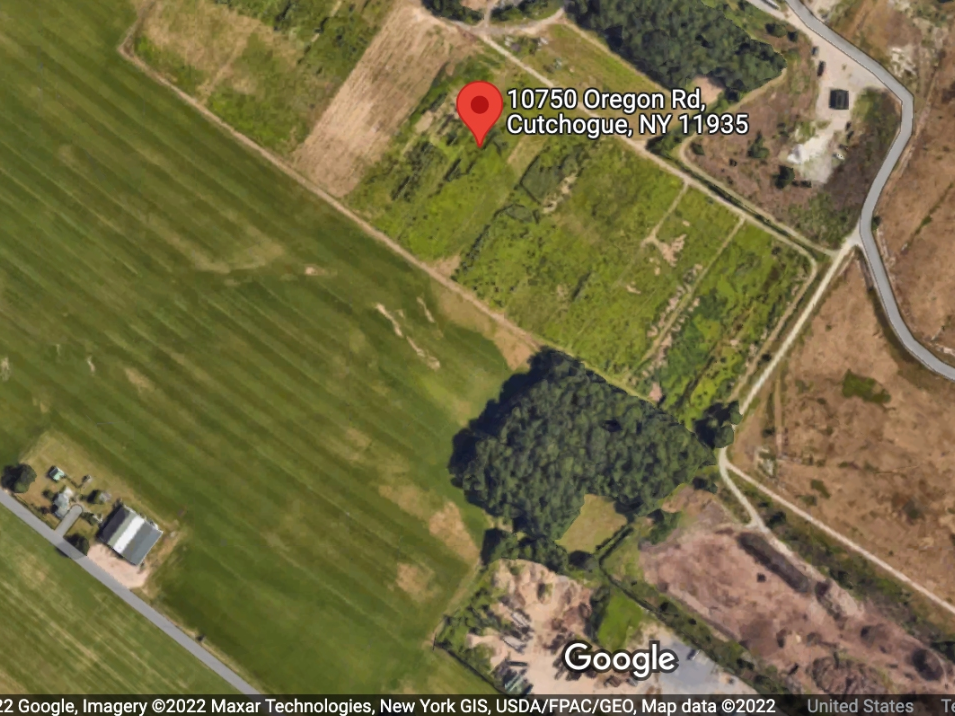
The public expressed grave concerns about the project, pitched by Key Capture Energy, at a zoning board of appeals hearing, and then, a planning board public hearing, and a Cutchogue Civic Association meeting. The plan calls for the construction of a 60-megawatt lithium-ion battery storage facility, located at 10750 Oregon Rd. in Cutchogue.
Residents cried out about safety concerns, as well as the impact on community character and visual vistas, and questioned whether the project would even benefit residents locally.
Find out what's happening in North Forkfor free with the latest updates from Patch.
The town board has discussed a planning process for battery energy storage systems and is considering a 12-month moratorium, Russell said. Battery energy storage systems, or BESS, facilities are a key component for the viability and promotion of renewable energy sources; however, the technology of these systems is still in its infancy, he wrote.
"It is imperative that the town undertake a thorough examination of these systems to identify any possible threats to public health, safety and welfare as well as evaluate the potential for environmental degradation," Russell said. "These issues are of great public concern and it is important that the potential for any risks is thoughtfully reviewed with in-depth analysis and that mitigation measures are identified to ensure our goals of the protection of our community and of our environment."
The findings should help craft codes that will determine criteria for future siting, site design, safety requirements and all other elements that might be necessary for approval to ensure that the town meets those goals. A 12-month moratorium would provide the time necessary to undertake such an analysis, Russell said.
Based on guidance issued by the state's Energy Research and Development Authority, or NYSERDA, Russell said, the first step is to write and draft a plan. Included in the authoriy's recommended process is the creation of a battery energy storage task force, which would include representatives from the community, businesses, the renewable energy industry, battery storage industry, environmental organizations and municipal officials.
The task force would create an action plan that would be adopted as an addition to the town’s comprehensive plan, and to serve as a guide for the integration of battery energy storage systems into the town code.
A thorough review should include a review of current industry safety protocol standards and success rate in application to new systems, as well as evaluation of remote monitoring and the possible need for an onsite response team, Russell said.
At public hearings, firefighters and other EMS workers have expressed concerns about the volunteers' ability to respond in the event of a catastrophe.
The review would address those concern raised over issues of public safety and whether safety can be guaranteed if the facility is damaged by fire, equipment failure, human error or natural disaster, Russell said.
"Questions such as limitations of specialized equipment and personal safety gear, training of fire department personnel, police department members and other first responders in the event of toxic release or chemical fires due to operational failure need to be addressed," he said.
Also included would be a review of the town's comprehensive plan and the consideration of supplemental integration of battery energy storage facility siting and safety guidance.
"The town’s land mass sits over a sole source aquifer. What is the half-life of lithium-ion used in the batteries if a spill occurs?" he asked. "What threats to water qualify do BESS facilities pose — and is there a path to minimize them?"
A review of Southold's emergency management plan would also ensue, as would a written emergency plan.
Siting considerations, including zoning, minimum lot areas, minimum front, side and rear yard setbacks, buffer requirements, maximum structure height and square footage, design standards, signage, lighting, clearing and vegetation, distance to occupied dwellings, work sites and other locations where people congregate such as parks, would also be addressed.
The town would aim to create standards for emergency access as well as proximity to areas of high ecological value.
"In addition, consideration must be given to the manner in which such permission should be considered by special permits for specific durations versus variance relief, which would be permanent and run with the land," Russell said.
The town would also seek to establish a fire marshal inspection policy, minimal safety requirements, maintenance and operational reporting requirements — and create a decommission plan and appropriate requirements such as performance bond or other suitable guarantees, he said.
The draft new code section would then be to be submitted to the New York State Department of State, the supervisor said.
"While BESS facilities will have an important role in the future for the viability of renewable energy on a large scale, like any new technology, human and environmental impacts much be evaluated prior to land use inclusion," Russell said. "Such code for inclusion requires certain steps be taken by the New York State Energy Research Development Authority. A 12-month moratorium will provide the time necessary to comply with that directive."
Get more local news delivered straight to your inbox. Sign up for free Patch newsletters and alerts.