Community Corner
HV River Towns Explore Waterfront Designs To Meet Climate Threat
Hudson, Kingston, Ossining, Piermont and Poughkeepsie have benefited from Cornell's Climate-adaptive Design Studio partnership with the DEC.


HUDSON VALLEY, NY — Villages, towns and cities on the Hudson River have a chance this fall to explore how to make their waterfronts more climate-resilient with help from Cornell University.
The Department of Landscape Architecture’s Climate-adaptive Design Studio is a collaboration with the New York State Department of Environmental Conservation’s Hudson River Estuary Program.
An example of the all-hands-on-deck approach required to meeting the climate challenge head-on, it supports New York State’s ongoing efforts to boost and improve community readiness for the threats posed by extreme weather events and sea-level rise on the tidal Hudson River, said DEC Commissioner Basil Seggos in an announcement about the opportunity.
Find out what's happening in Nyack-Piermontfor free with the latest updates from Patch.
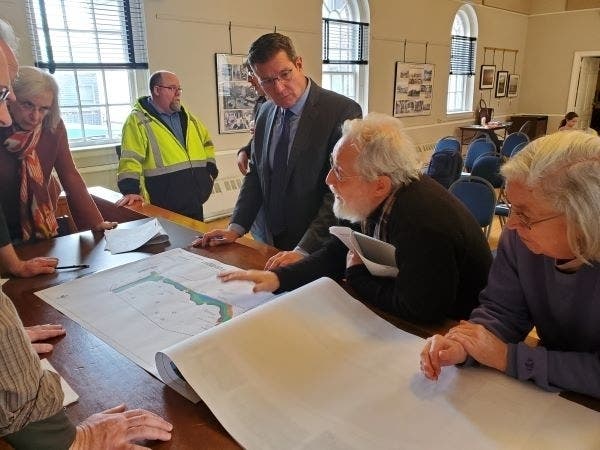
Student design teams meet with members of a participating community to develop an understanding of their unique waterfront opportunities and challenges, considering public access and economic development, as well as ecological and climate resilience.
Over four months, the students create waterfront designs that use nature-based solutions for stormwater management and shoreline stability, provide public access to waterfronts, improve resilience to current and future flood risk and encourage water-dependent use of shoreline property. Community stakeholders have opportunities to provide feedback as the designs are developed, and the host community is provided with the designs at the end of the semester.
Find out what's happening in Nyack-Piermontfor free with the latest updates from Patch.
Local communities that have availed themselves of the help include:
- Ossining, Hudson — the DEC awarded $250,000 grants in 2021 to each to advance the design and implementation of projects on their riverfronts inspired by their collaboration with Cornell.
- Poughkeepsie — nature-based solutions for stormwater and shoreline management
- Kingston — climate-adaptive dock and tiered beaches at Kingston Point to enhance native tidal wetlands and mitigate current flooding while integrating public access corridors and recreational opportunities. $125,000 contract awarded May 2019.
- Piermont — a living shoreline that incorporates vegetation and other natural elements, such as oysters or mussel beds, with harder shoreline structures to stabilize and protect the waterfront. $125,000 contract awarded May 2019.
Riverfront municipalities in the tidal portion of the Hudson are eligible to submit a letter of interest to host the Fall 2022 CaD Studio.
Applicants are asked to characterize risk to their waterfront, identify relevant policy and planning efforts already underway, and demonstrate support from a cross-section of waterfront community stakeholders for participation in the CaD Studio process. The host community must commit to engaging key stakeholders to interact with the student design teams through in-person and online meetings. The host community must also demonstrate willingness and ability to promote and advance CaD Studio concepts and principles after the end of the semester.
Interested municipalities can learn more about the Climate-adaptive Design Process here. An informational webinar about the CaD Studio opportunity will be held April 5. To register, click here.
"The design studio, one part of a long-term partnership between DEC, Cornell University and Hudson Valley communities, is the creative force driving conversation about inspiring and practical climate change adaptation opportunities," said Brian Rahm, Director of the New York State Water Resources Institute at Cornell.
Get more local news delivered straight to your inbox. Sign up for free Patch newsletters and alerts.