Home & Garden
Stink Bug Population Re-Emerging in the Hudson Valley
They overwintered in your homes, Nyack.


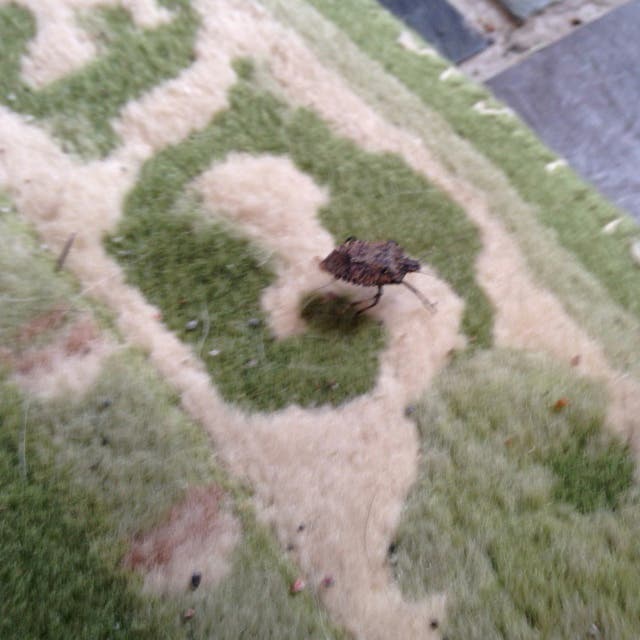
The weather is warming up, and stink bugs are jauntily venturing out of the attics, walls and crevices they were sheltering in during our frigid winter.
But stop! Before you flush that bug, snap a photo.
Scientists at the Cornell University laboratory in Highland, NY are asking for help tracking the stink bug’s spread across New York:
Find out what's happening in Nyack-Piermontfor free with the latest updates from Patch.
Use your IPhone to photograph and e-mail your sighting. This method is quick and easy! Take the best close-up photo you can and email it to bmsbproject@cornell.edu. The image will let us identify what species it is and the embedded GPS location in the IPhone photo will allow us to map your specimen’s location.
The Hudson Valley region, Metropolitan NY and Long Island are the leading edge of the population expansion, according to the Cornell scientists.
Find out what's happening in Nyack-Piermontfor free with the latest updates from Patch.
The little bugs are only about the size of pumpkin seeds, but they cause a big stink when crushed. Thank Asia for that.
The Brown Marmorated Stinkbug (Halyomorpha halys (Stål) (Hemiptera: Pentatomidae) is an invasive species that made its way from Asia to North America and was first officially documented in Allentown, PA in 2001 .
“Increasing population density has been observed within the entire Hudson Valley south of Albany and suburban Syracuse area, lower density in and around Buffalo, yet present in urban environs and agricultural regions including the western tree fruit and grape growing regions, finger lake grape and vegetable production areas and Hudson Valley tree fruit and grape growing region south to NYC,” said Peter Jentsch, Senior Extension Associate at Cornell’s Hudson Valley Laboratory.
In urban environments, the insect has been found to cause damage to homes when concentrated aggregations of the pest accumulate in plumbing and electrical fixtures.
Its greatest impact however is to agricultural crops, and that’s from intensive feeding late in the summer in southeastern NY.
In 2010 the insect was responsible for fruit injury estimated to exceed $26 million in the mid-Atlantic states; and more than 20 percent injury documented to apple in three counties of New York’s Hudson Valley in 2012.
Crops that mature in the fall, such as apple, late season peach, grape, sweet corn, pepper and tomato often experience the highest levels of feeding injury. The late season damage from BMSB results in unmarketable fruit—and some varieties of apple such as Red and Golden Delicious, Ruby Frost, Pink Lady apple and Jalapeno Pepper seem to get hit the hardest, Jentsch said.
And though the harsh weather we’ve been through will have hurt the stinkbug population that wintered outside, most of them aren’t doing that—they’re taking shelter just like you did, where you did: in your home.
So remember:
- Don’t squash the bugs, to avoid the stink.
- Shoot GPS-linked cell phone photos and share them with Cornell, to make a contribution to science.
And as for your own pest control:
A Virginia Tech team has proven that homemade, inexpensive stink bug traps crafted from simple household items outshine pricier models designed to kill the invasive, annoying bugs.
Researchers from the College of Agriculture and Life Sciences found that the best way to get rid of the little buggers: Just fill a foil roasting pan with water and dish soap and put a light over the pan to attract the bugs in a dark room.
The trap eliminated 14 times more stink bugs than store-bought traps that cost up to $50, the study found. The only price of the homemade model is the cost of a roasting pan, dish soap, and a light — all which homeowners may already own.
» News Alerts: Subscribe to a free email newsletter:
BEDFORD-KATONAH • BRONXVILLE-EASTCHESTER-TUCKAHOE •CHAPPAQUA-MOUNT KISCO • HARRISON • LARCHMONT-MAMARONECK• NANUET • NEW CITY • NEW ROCHELLE • NYACK-PIERMONT • OSSINING-CROTON-ON-HUDSON • PEARL RIVER • PEEKSKILL-CORTLANDT •PELHAM • PORT CHESTER • PLEASANTVILLE-BRIARCLIFF MANOR •RIVERTOWNS • RYE • SCARSDALE • SOUTHEAST-BREWSTER •TARRYTOWN-SLEEPY HOLLOW • WHITE PLAINS • YORKTOWN-SOMERS
Get more local news delivered straight to your inbox. Sign up for free Patch newsletters and alerts.