Community Corner
Stony Point: Surprise Revolutionary Night Attack
Led by General Anthony Wayne, patriot soldiers defeated British troops under the command of General Sir Henry Clinton.

The first several months of 1779 found General Sir Henry Clinton, commander of the British forces in America, developing a military campaign strategy at his New York City headquarters.
Clinton was making plans to battle General George Washington’s Continental Army that was encamped 30 miles way in Middlebrook (today’s Bound Brook), New Jersey. With reinforcements promised by his superiors in London, Clinton figured he could draw Washington away from his defensive position and into a decisive battle that would end the rebellion in America.
When reinforcements did not appear by late May, Clinton sent 6,000 troops 40 miles north along the Hudson River and captured the small American fortifications at Kings Ferry (present day Verplanck). This river crossing, with Verplanck’s Point on the east shore of the Hudson and the high peninsula of Stony Point on the west side, guarded the southern entrance to the Hudson Highlands. Farther north were a series of fortifications that included West Point. This area provided the American army with its most direct route for communications, along with the movement of supplies and troops, between New England and the rest of the colonies.
After Clinton’s movement was detected, Washington ordered Brigadier General Anthony Wayne to lead a surprise night attack at Stony Point. This was the stronger of the two Kings Ferry forts. Wayne commanded the Corps of Light Infantry, a select force that probed enemy lines, fought running skirmishes, gathered intelligence and defended the army from surprise attack.
The Battle for Stony Point
Wayne moved his troops for eight hours over narrow trails on July 15, 1779. He avoided detection by British scouts and halted his troops at nightfall within two miles of the British works.
The general organized two columns to skirt the north and south shores of the peninsula fort and a smaller third band in the center to storm the main fortress that stood 150 feet high. Complete secrecy, surprise and quick close combat were believed to be the ingredients of success, and this convinced Wayne to order his main forces to carry unloaded muskets fixed with bayonets. The smaller party in the center was given orders to fire rifles to distract the British.
Just past midnight, the north and south attacking columns forded a marsh that separated Stony Point from the mainland. They were spotted by British sentries who fired at them. Wayne’s men continued to move forward when the diversionary American party began to fire. This action diverted enemy attention since the British thought the guns were with the main attack force.
Twenty Americans cut through various obstructions and the two columns rushed up the hill and into the fortifications. Hand-to-hand fighting that included the use of the bayonets and the butt ends of rifles lasted 15 minutes until the British surrendered.
Fifteen Americans died. Twenty British soldiers fell and the rest became prisoners. Wayne was part of the southern column assault and received a head wound.
“Our officers and men behaved like men determined to be free,” reported the general after the battle.
Stony Point Outcome
Though Washington ordered the fort to be abandoned three days later, the Americans deprived the British of more than six hundred troops. Washington had a victory without fighting Clinton in a decisive larger battle. Clinton withdrew his troops from the Hudson Valley during October, turning his attention to the southern colonies where he eventually would lose his footing in America.
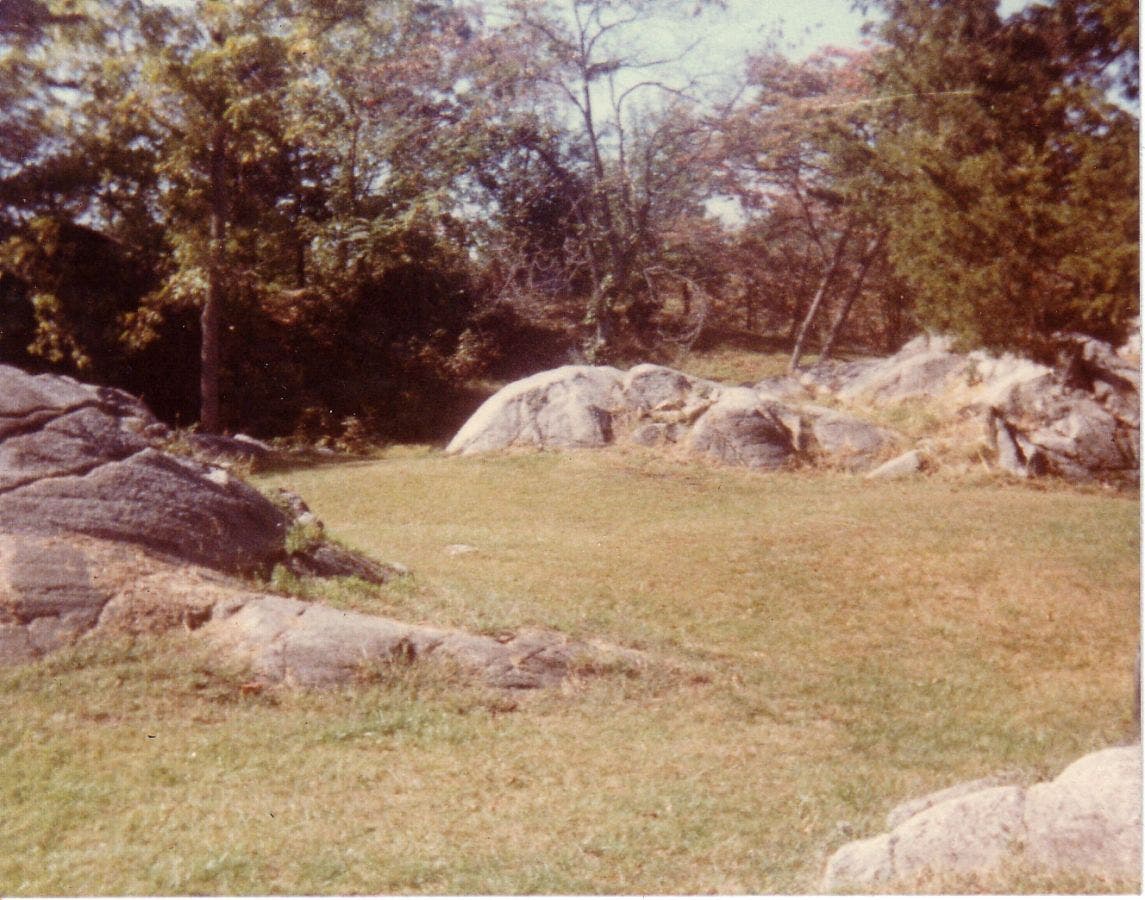
The Stony Point field of battle remained undisturbed until a small lighthouse overlooking the river was built during 1826. That lighthouse is preserved today with the Stony Point fortress as a New York State Historic Site. The park has several walking trails and the various fortifications clearly are marked with descriptive panels.