Health & Fitness
Park Slope Sees Lowest Coronavirus Antibody Test Rate In Brooklyn
Only 13.2 percent of people tested for antibodies in the 11215 ZIP code showed signs they were previously infected with the new coronavirus.


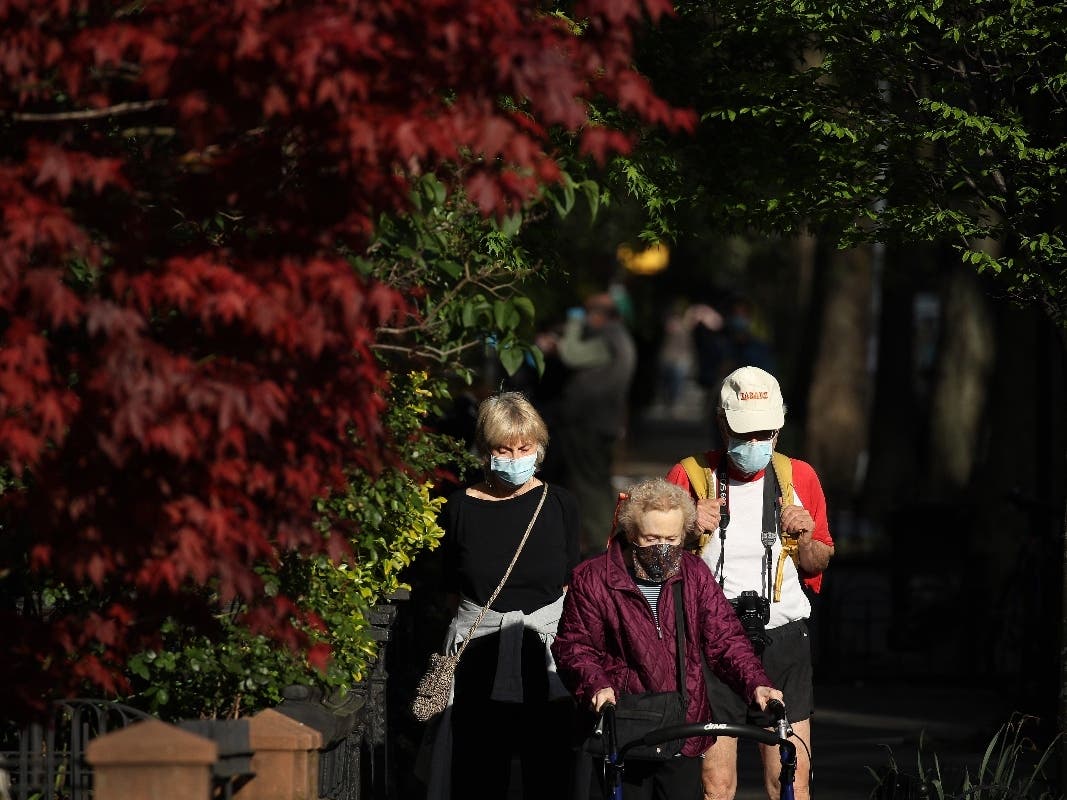
PARK SLOPE, BROOKLYN — New data on coronavirus antibody tests in New York City shows that Park Slope, like many affluent communities throughout the city, has so far been among the least hard-hit by the virus.
Only 13.2 percent of the roughly 16,400 people who got tested for coronavirus antibodies in Park Slope's 11215 ZIP code since the start of the pandemic tested positive, the lowest antibody test rate in the borough and one of the lowest in the city, according to data released by the Department of Health on Tuesday.
That rate is much lower than some of the hardest-hit areas, including a ZIP code in Queens where more than 50 people who had gotten tested were found to have antibodies.
Find out what's happening in Park Slopefor free with the latest updates from Patch.
Nearby Borough Park in Brooklyn had the second-highest rate in New York City, with 46.8 percent of antibody tests coming back positive.
The new data reaffirms a reality unveiled at the beginnings of the coronavirus crisis about the way the virus penetrates lower-income communities while leaving more affluent parts of the city with less affected.
Find out what's happening in Park Slopefor free with the latest updates from Patch.
The antibody tests, or serology tests, indicate whether a person may have been exposed to the new coronavirus by measuring their bloodstream for signs that their immune system produced proteins, called antibodies, to fight off the virus.
Many neighborhoods in Manhattan and nearby neighborhoods in Brooklyn, like Brooklyn Heights' 11201 ZIP code, saw similar rates as Park Slope. No ZIP code south of 96th Street in Manhattan showing a positive rate of more than 20 percent, according to the New York Times.
Park Slope's northern ZIP code — which covers the top few blocks of the neighborhood along with parts of Boerum Hill, Fort Greene and Prospect Heights — had slightly higher positive rate.
About 16.2 percent of people who got tested showed antibodies, according to the data.
Experts have warn that antibody data should be taken with a grain of salt.
Firstly, antibody test results aren't always accurate. Positive tests results could mean the person has antibodies from an infection with a virus in the same family as the new coronavirus, according to the U.S. Centers for Disease Control and Prevention. The chance of receiving a false negative can be as high as 30 percent, depending on when the test is conducted, according to a Harvard Medical School blog post.
The city's data also may not accurately reflect the prevalence of antibodies among all New York City residents, because people who have been ill with COVID-19 symptoms or were exposed to the virus may be likelier to seek out antibody testing.
"We will be the first jurisdiction in the nation to present our antibody data this way," de Blasio told reporters. "While there is still much to learn about the science of COVID-19 antibody testing, it is an important element to consider when understanding the epidemiology of COVID."
Get more local news delivered straight to your inbox. Sign up for free Patch newsletters and alerts.