Weather
NWS Adds Warning To Excessive Heat Watch
The NWS warns that extreme heat can cause illness and death among people who cannot stay cool.


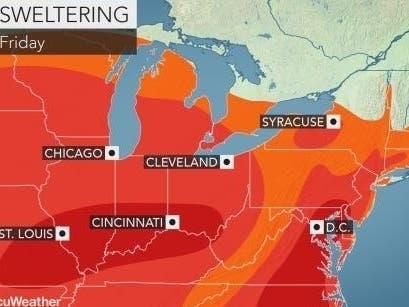
UPDATE — As of Thursday afternoon, the National Weather Service has added a heat advisory and excessive heat warning for the mid-Hudson Valley.
Thursday morning, the National Weather Service added an excessive heat watch for every county in the mid and lower Hudson Valley to the hazardous weather outlooks still in effect. For now, the heat watch is in effect Friday afternoon through Saturday at 10 p.m.
"By tomorrow the rain is pulled away and the oven gets turned on," said Alex Marra and Bill Potter of Hudson Valley Weather.
Find out what's happening in Peekskill-Cortlandtfor free with the latest updates from Patch.
Briefly, the next five days look like this:
- Thursday: Mostly cloudy, high of 80 degrees, lows in the low 70s.
- Friday: Hazy, high of 93; Heat Index values up to 103 in the afternoon. Lows in the mid-70s.
- Saturday: Hazy, high in the mid-90s to 100. Heat values to 109. Lows in the mid-70s.
- Sunday: Partly sunny, highs in the mid-90s. Heat values to 100.
- Monday: Highs in the mid-80s. Chance of rain 40%.
"Temperatures will be 10-15 degrees above average even for the middle of the summer," said Alex Sosnowski, AccuWeather senior meteorologist.
Find out what's happening in Peekskill-Cortlandtfor free with the latest updates from Patch.
The NWS warns that extreme heat can cause illness and death among people who cannot stay cool. The heat and humidity may cause heat stress during outdoor exertion or extended exposure.
An Excessive Heat Watch means that the combination of heat and humidity could create a dangerous situation in which heat illnesses are possible. Take extra precautions if you work or spend time outside. When possible, reschedule strenuous activities to early morning or evening. Know the signs and symptoms of heat exhaustion and heat stroke. Wear light weight and loose fitting clothing when possible, and drink plenty of water.
Seniors and those with chronic health problems or mental health conditions are at increased risk. Homes without air conditioning can be much hotter than outdoors.
Use air conditioning to stay cool at home or go to a place that has air conditioning. Check on vulnerable friends, family members and neighbors.
To reduce risk during outdoor work, the Occupational Safety and Health Administration recommends scheduling frequent rest breaks in shaded or air conditioned environments. Anyone overcome by heat should be moved to a cool and shaded location. Heat stroke is an emergency! In cases of heat stroke call 9 1 1.
SEE:
Get more local news delivered straight to your inbox. Sign up for free Patch newsletters and alerts.