Neighbor News
America at 250: Why July 4, 1776, Became the Birth of a Nation
The Mechanics of July 4: A Diagnostic Timeline of the American Founding

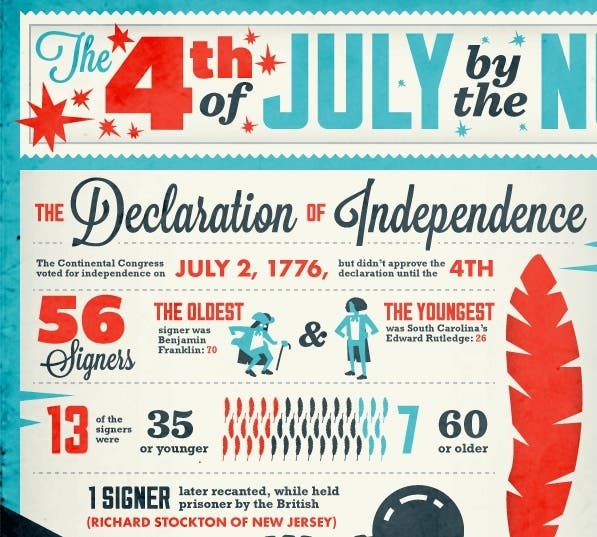

The United States did not become a nation in a single, spontaneous moment. Independence was an incremental administrative process that unfolded across three distinct dates in the summer of 1776:
1. July 2, 1776: The Continental Congress voted to sever corporate and political ties with the British Crown legally.
2. July 4, 1776: Congress approved the finalized, edited text of the Declaration of Independence.
Find out what's happening in Pelhamfor free with the latest updates from Patch.
3 . August 2, 1776: Most delegates began signing the formal parchment copy, underwriting the physical risk of the enterprise.
This timeline raises a fundamental governance question: If the legal break occurred on July 2 and the physical commitment came on August 2, why does July 4 command our national memory? The answer reveals how political identities are constructed. We do not celebrate the paperwork; we celebrate the framework.
Find out what's happening in Pelhamfor free with the latest updates from Patch.
The Ideological Operating System
July 2 was a political transaction: a vote to dissolve the formal relationship between the colonies and the British Crown. But a legal severance does not create a society.
July 4 matters because it is the moment the Continental Congress adopted the explanatory code of the conflict. By approving Jefferson's edited text, the delegates provided the philosophical architecture, the specific institutional grievances, and the universal principles that transformed a regional armed rebellion into a sovereign political identity.
In short:
1. July 2 is the legal break.
2 . July 4 is the ideological birth.
3. August 2 is the physical commitment.
The Declaration's text gave the war its international standing, internal legitimacy, and enduring purpose. July 4 is the symbolic birthday of the United States because it marks the precise moment the American project defined its parameters to the world.
The Chain Reaction: 1774 to 1791
Seen through this lens, July 4 is not an isolated holiday. It is the hinge point in a larger institutional chain reaction. The founding was not handed down perfectly on stone tablets; it was forged through a frantic, messy sequence of real-world crises:
──► [Sept–Oct 1774] Political Infrastructure
──► [Apr–May 1775] Wartime Governance
──► [July 4, 1776] Ideological Framework
──► [August 2, 1776] Underwritten Risk
──► [Mar–Oct 1781] Structural Testing & Victory
──► [Sept 1783 – Jan 1784] Legal Closure
──► [May–Sept 1787] Constitutional Reset
──► [June 1788] Legalization of the Blueprint
──► [Mar–Apr 1789] Living System & Operational Lag
──► [Dec 1791] Hardcoded Security Patches
September 5 – October 26, 1774: The First Continental Congress
1. The Trigger: Parliament passes the Coercive Acts to punish Boston.
2 . Why it Matters: Twelve colonies form a unified political front for the first time.
3. The Institutional Mechanic: A continental communication infrastructure emerges, enabling coordinated action once violence erupts.
April 19 – May 10, 1775: The Outbreak of War and Provisional Governance
1 . The Trigger: British troops attempt to seize colonial weapons stores at Lexington and Concord.
2. Why it Matters: The shooting war begins, forcing Congress to assemble and become a provisional national government.
3 . The Institutional Mechanic: Managing an army requires centralized command and control. Congress creates the Continental Army and appoints George Washington before a legal nation even exists.
July 2 – August 2, 1776: The Ideological Framework and Underwritten Risk
1. The Trigger: The Lee Resolution calls for independence, explicitly linking that step to the dual operational requirements of securing foreign alliances and drafting a plan of confederation.
2 . Why it Matters: July 4 establishes the ideological framework; August 2 underwrites the physical risk of treason.
3.The Institutional Mechanic: By putting their goals on paper and signing their names, the states shift the conflict from internal rebellion to an international war over sovereignty.
March 1 – October 19, 1781: The Articles of Confederation and Yorktown
1. The Trigger: The war effort requires a formal treaty of union; Franco-American coordination culminates at Yorktown.
2 . Why it Matters: Major combat ends, and America gains its first legal national framework.
3. The Institutional Mechanic: Designed to avoid central tyranny, the Articles are intentionally weak. Once the war ends, their defects become impossible to ignore.
September 3, 1783 – January 14, 1784: The Treaty of Paris and Legal Closure
1 . The Trigger: British political support for the war collapses after Yorktown.
2. Why it Matters: Great Britain formally recognizes American independence, forcing global powers to acknowledge the new nation's place in the international order.
3 . The Institutional Mechanic: With the foreign threat gone, the confederation's structural weaknesses—specifically a total lack of taxation power and commerce regulation—push the system toward insolvency.
May 25 – September 17, 1787: The Constitutional Convention
1.The Trigger: Interstate economic collapse, war debts, and uprisings like Shays' Rebellion expose the Articles as unworkable.
2. Why it Matters: Delegates discard the Articles and draft a new federal architecture built around the separation of powers.
3. The Institutional Mechanic: Signing the Constitution on September 17 launches a public battle over federal authority; it does not make the document law.
June 21, 1788: The Legalization of the Blueprint
1 . The Trigger: New Hampshire becomes the ninth state to ratify, meeting the Article VII threshold.
2.Why it Matters: The old operating system is replaced, and the new federal architecture becomes legally binding.
3. The Institutional Mechanic: To secure ratification in key states, Federalists promise a suite of amendments to limit federal power.
March 4 – April 30, 1789: The Living System and Operational Lag
1. The Trigger: A congressional quorum finally arrives in New York; Washington takes the oath on April 30.
2 . Why it Matters: The theoretical blueprint becomes a functioning administration.
3. The Institutional Mechanic: Although the government technically began on March 4, a massive operational lag immediately exposed the physical friction of the early republic. It took nearly two months to systematically assemble congressional quorums, officially count the electoral votes, notify Washington, and execute his cross-state transit to Federal Hall. Once active, Madison moved quickly to introduce the promised amendments to stabilize public trust.
December 15, 1791: The Hardcoded Security Patches
1. The Trigger: Virginia becomes the final state needed to ratify the amendments.
2 . Why it Matters: The Bill of Rights becomes part of the Constitution.
3. The Institutional Mechanic: Individual liberties and state protections are written directly into the federal architecture. The founding arc reaches equilibrium: a stronger central government checked by explicit constitutional boundaries.
The 250-Year Civic Audit
At 250, the lesson of this chain reaction is that a nation cannot survive on military force or legal text alone. It requires a shared, fiercely defended understanding of why the system exists.
Our institutions are not a permanent inheritance or a self-sustaining warranty guaranteed by the genius of the text. The American experiment survived because its leaders built systems under pressure, managed risk in deep uncertainty, and continuously updated the architecture to withstand real-world strain.
If we are to maintain the republic they designed, we must do more than admire the poetry of the ideals. We must commit ourselves to the heavy, unglamorous work of maintaining the machinery.
Series Anchor:
This piece is part of the series America at 250: Origins, Assumptions, and Obligations, a civic audit of the American experiment that examines our founding institutions not as historical artifacts but as a living system under stress.