Neighbor News
America at 250: Written into Being, Still Being Built
The Declaration gave America its founding sentence. The question now is whether our systems are worthy of the words.

When The New York Times launched its America at 250 project, critic A.O. Scott offered a striking way to think about the American founding. He described the Declaration of Independence as the document that "wrote the United States into being," calling it poetry, philosophy, polemic, and, most provocatively, a memo. It was committee writing under pressure, revised in haste, and aimed at a specific task: explaining why the thirteen colonies were severing their ties to the British Crown.
For anyone who studies institutions, that framing is more than literary. It is diagnostic. It reminds us that the United States does not commemorate a monarch, a dynasty, an ancient homeland, or even a battlefield victory as its national beginning. It commemorates a piece of text. More precisely, it commemorates a sentence.
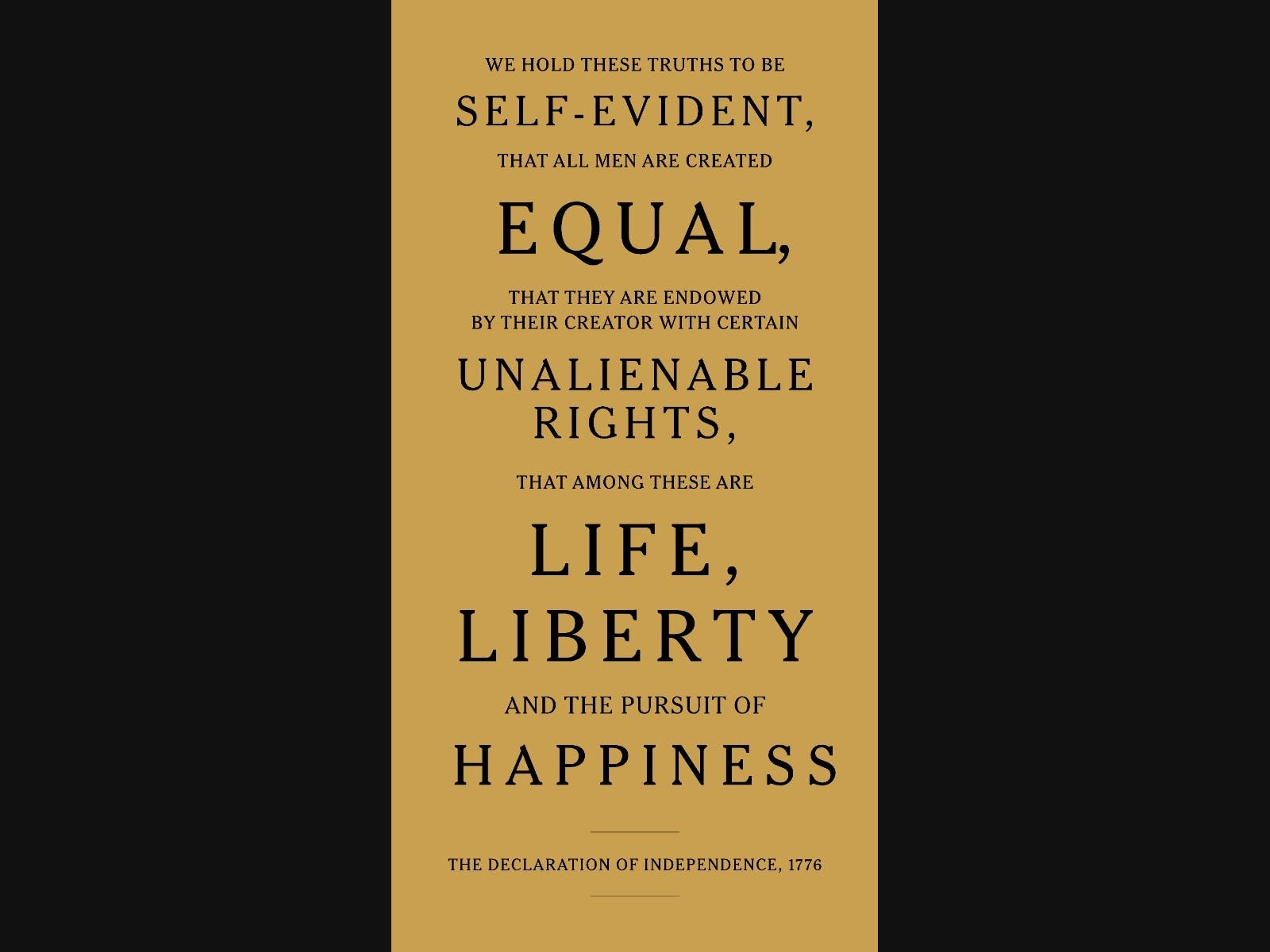
"We hold these truths to be self-evident…"
Find out what's happening in Pelhamfor free with the latest updates from Patch.
Those words are so familiar that they can become ceremonial. They are recited more often than they are examined. But familiarity should not blunt their force. The Declaration's most famous sentence gave the new nation its baseline vocabulary of equality, rights, liberty, and human dignity. It did not merely announce independence. It established the standard by which the country would be judged.
That is where the American story moves from language to obligation. The United States may have been written into being, but a sentence is not a system. A promise is not a policy. A principle is not an institution. The Declaration supplied the founding language. The Constitution built the governing machinery. The last 250 years have been a continuous stress test between the sentence and the system.
Find out what's happening in Pelhamfor free with the latest updates from Patch.
The founders wrote to solve an immediate problem. They needed to justify separation from Britain and persuade the world that the colonies had cause. Yet the language they chose exceeded the boundaries of their own moment. "All men are created equal" was written inside a society that protected slavery, excluded women from political power, displaced Native peoples, and limited full civic participation to a narrow portion of the population.
That contradiction is not a footnote to the founding. It is one of its central facts. The sentence had universal reach, but the system had narrow access. The words pointed beyond the world that produced them.
That is why the sentence endured. It could be used not only to celebrate the nation, but to challenge it. It became a mirror held up to the Republic. It became a measure of the distance between what America said and what America did.
In 1848, the women at Seneca Falls echoed the Declaration's language to argue that the American "we" had been drawn too narrowly. In 1852, Frederick Douglass used the Fourth of July to expose the contradiction of celebrating liberty in a slaveholding republic. In 1863, Abraham Lincoln returned to the Declaration at Gettysburg and made equality the central proposition of the Civil War. In 1963, Martin Luther King Jr. stood in Washington and described the founding documents as a promissory note that America had failed to honor for its Black citizens.
Each generation returned to the same sentence because the sentence still had power. But each return also exposed the same problem. The language remained larger than the system could handle. The promise remained ahead of the machinery built to deliver it.
That is the deeper meaning of America at 250. The anniversary cannot only be a celebration of the blueprint. It must also be an inspection of the building.
Two hundred fifty years later, the question is not whether the words still inspire. They do. We quote them, teach them, invoke them, and argue over them whenever the country's promise and performance fall out of alignment. The harder question is whether the systems built in their name still have the capacity to carry their weight.
That audit begins with representation. Who belongs inside the "We"? Every debate over citizenship, voting, political voice, and belonging is still a debate over the first word of the founding sentence. A republic cannot claim equality in theory while narrowing participation in practice.
It continues with rights. Rights are not self-executing. They require courts, laws, enforcement, access, and public trust. A right that cannot be protected in practice remains fragile in principle. Liberty is not only something a nation declares. It is something a system must administer.
And it ends with institutional capacity. Equality, opportunity, justice, and dignity do not deliver themselves. They depend on public systems capable of translating principles into lived reality. When those systems weaken, the words do not disappear. They become more demanding.
This is why the Declaration remains so powerful and so unforgiving. It does not allow the country to hide behind ceremony. It gives America a language of aspiration, but also a language of accountability. It tells us what we claimed to believe before we had built a nation capable of honoring the claim.
The Declaration gave America its founding sentence. The Constitution built the machinery. The rest of American history has been the unfinished struggle to make the system worthy of the words.
The Semiquincentennial, then, is not only a birthday party. It is a maintenance interval. It asks whether the country still has the civic competence, institutional capacity, and public will to maintain the heavy machinery of the language it inherited.
America was written into being in 1776. At 250, the question is whether we can keep building a country worthy of the sentence.