Neighbor News
Baseball’s new Automated Ball-Strike (ABS) Challenge System
MLB didn't automate the strike zone. It created a hybrid authority structure.

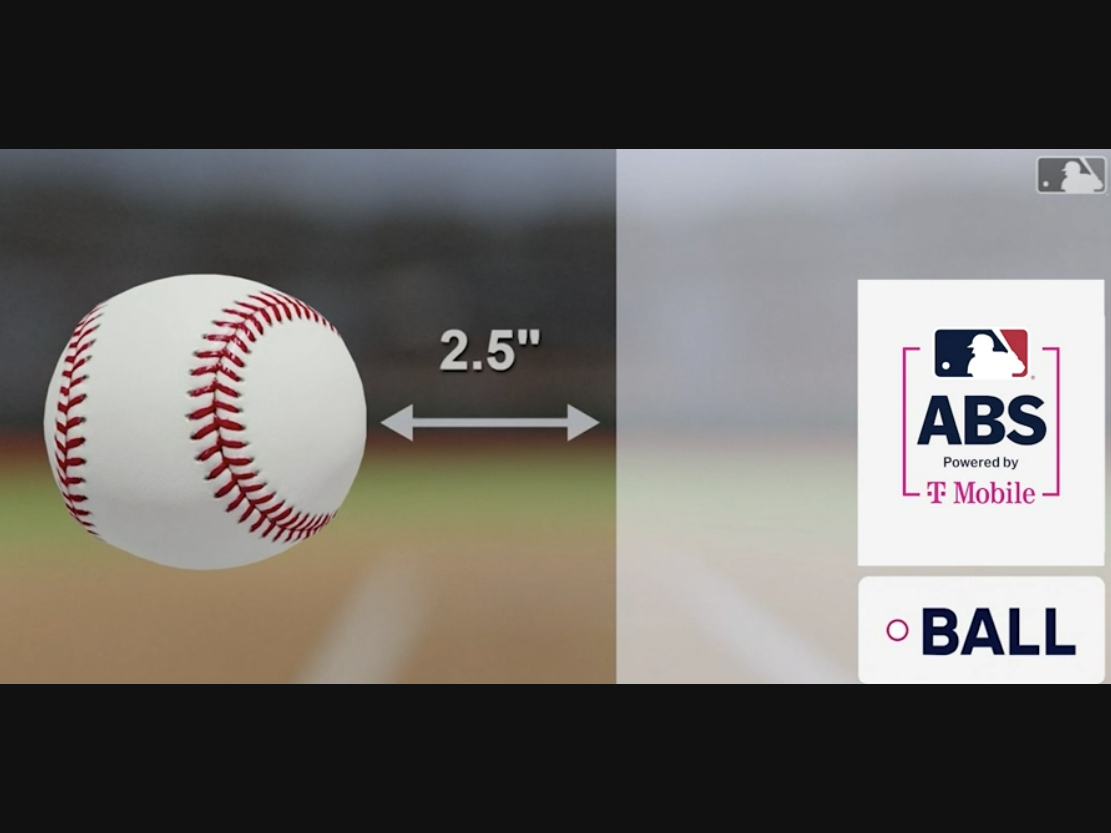

Baseball’s new Automated Ball-Strike (ABS) Challenge System rests on a simple hierarchy: the batter gets the first right to challenge a called strike, the catcher gets the next right to challenge a called ball, and the pitcher only challenges if the catcher doesn't. Each role comes with its own unmistakable gesture.
The batter taps the front or side of his helmet with his hand, a quick, emphatic signal that he wants the pitch reviewed. The catcher taps his own helmet with his glove or bare hand and then points toward the plate to make his challenge clear. And if both stay silent, the pitcher taps the top of his head with his glove, often followed by a point of his own. Whoever taps first wins the right to challenge. That single rule — and the distinct choreography that comes with it — explains almost everything fans will see on the field in 2026.
A pitcher paints the outside corner. The umpire calls a ball. The catcher hesitates for half a beat, taps his helmet, and points toward the plate. A few seconds later, the stadium screen lights up with a graphic tracing the pitch through the strike zone. The call is overturned. Strike one.
Find out what's happening in Pelhamfor free with the latest updates from Patch.
There's no argument, no manager storming out of the dugout—just a brief consultation with the machines before the game moves on.
Scenes like this have become common in Spring Training as Major League Baseball prepares to introduce the Automated Ball/Strike (ABS) Challenge System across the league in 2026. For a sport that has spent more than a century arguing about the strike zone, the change is surprisingly quiet. A tap of the helmet, a quick graphic, and the moment passes.
Find out what's happening in Pelhamfor free with the latest updates from Patch.
The ABS itself is simple. Umpires still call balls and strikes, but players can challenge a call in real time. Each team starts with two challenges and keeps one if they’re right. The review is nearly instantaneous: Hawk-Eye tracking technology renders the pitch on the scoreboard, confirming or overturning the call. The entire process takes only a few seconds.
What fans will notice first is the choreography. The helmet tap is becoming baseball’s newest signal, as recognizable as a catcher framing a pitch or a manager pointing to the bullpen. The scoreboard becomes a second umpire, displaying the pitch’s path with clinical precision. And the familiar ritual of arguing balls and strikes — the raised eyebrows, the dugout muttering, the occasional eruption — begins to fade.
But the real intrigue lies in the strategy the system introduces. Challenges are now a scarce resource, and teams will treat them that way. Each game begins with two invisible coins. Spend them early to protect a pitcher nibbling at the corners? Save them for a late-inning at-bat with runners on base? Use one to help a rookie catcher who's still learning the zone? These decisions will matter.
Catchers, in particular, may become the de facto challenge managers. They have the best view of the pitch, the quickest read on the umpire, and the most to gain or lose from a borderline call. Hitters, too, will face new calculations. With two strikes, a challenge becomes a lifeline — a chance to rescue an at-bat from a pitch that just grazed the edge of the zone. The result is a subtle but meaningful shift in how players think about the strike zone in real time.
Some fans will insist that the strike zone should remain entirely human, while others argue that full automation is overdue. But all of this strategy points to a deeper shift. MLB hasn’t replaced umpires with machines. It has done something more interesting: it has redesigned authority by creating a partnership between human judgment and technology. The umpire still makes the call, but the algorithm now stands ready to verify it — a hybrid model that mirrors how many modern institutions are learning to blend expertise with automation.
It’s a small change with a larger lesson. Institutions rarely leap from human judgment to full automation. They evolve through hybrids — systems where people remain central, but technology provides a check, a second opinion, or a corrective. We see it in medicine, where diagnostic tools support clinicians; in finance, where algorithms flag anomalies for human review; and in transportation, where pilots and autopilot systems share responsibility. Baseball is simply the latest arena to experiment with that balance.
The timing is fitting. As the World Baseball Classic reminds fans how global the sport has become, MLB is quietly testing how tradition and technology can coexist on the same field. The ABS doesn't eliminate the human element; it reframes it. Umpires still shape the rhythm of the game. Still, players now have a mechanism to challenge the edges of that authority without derailing the action.
There will be debates, of course. Purists will argue that the strike zone should remain a matter of human interpretation. Others will push for full automation, believing that precision should trump all. But the early evidence suggests that the hybrid model may be the most elegant compromise: fast, transparent, and strategically rich without overwhelming the sport’s natural flow.
For more than a century, arguing balls and strikes was baseball’s most reliable ritual. Managers stormed the field, catchers turned around to plead their case, and umpires stood firm behind the plate. In 2026, the argument may last only a few seconds — just long enough for a player to tap his helmet and ask the machines.