Neighbor News
🥌 Everything You Wanted to Know About Curling (But Were Afraid to Ask)🥌
Curling: The Most Interesting Governance Story at the Winter Olympics

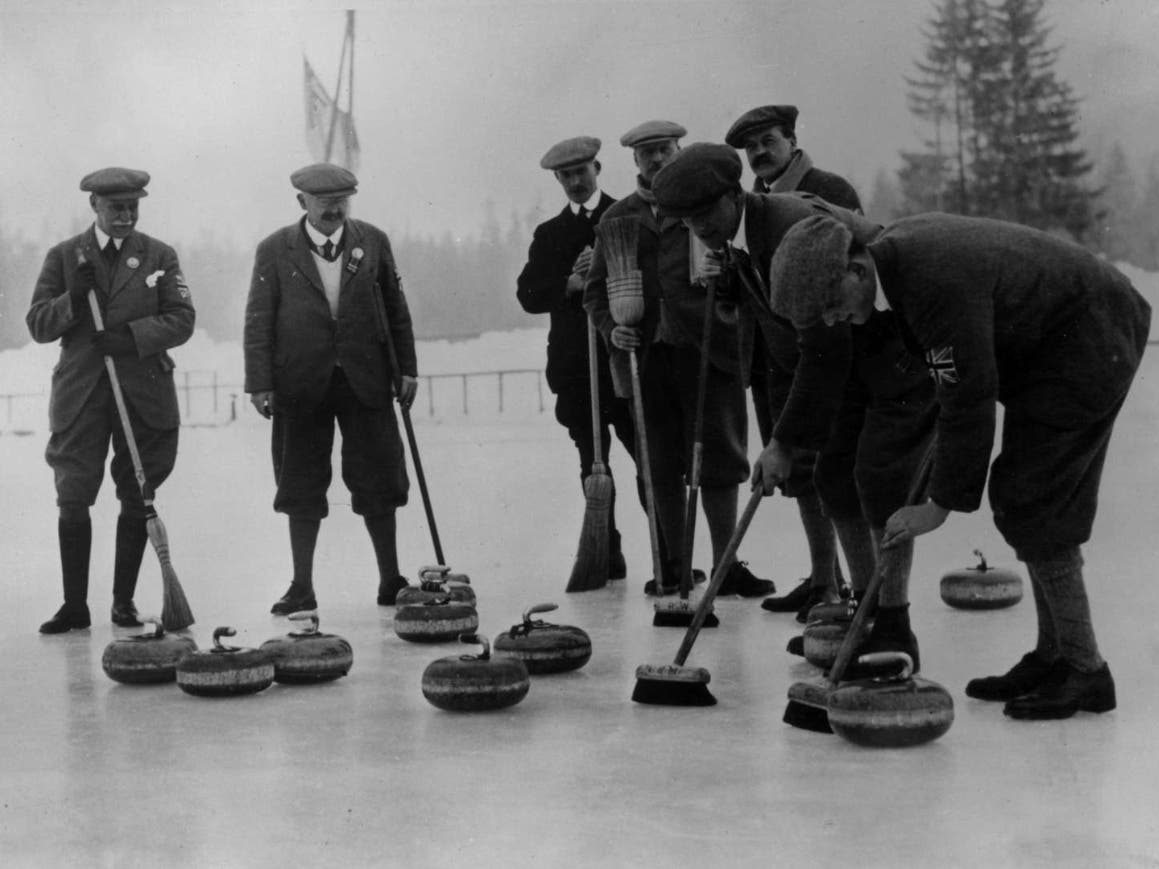

Every four years, Americans rediscover curling. We Google “in curling, what is the hammer?” We learn they’re called ends, not rounds. We pretend we understand why someone just yelled “HARD!” while sweeping furiously over what looks like a polished kitchen floor.
Then we move on.
This year was different.
Curling wasn’t just a quirky Olympic diversion. It became a live demonstration of what happens when a trust‑based system is pushed to its limits — and what it looks like when a sport resists the modern instinct to solve every problem with more surveillance.
Everything You Wanted to Know About Curling (But Were Afraid to Ask)
Find out what's happening in Pelhamfor free with the latest updates from Patch.
The basics are deceptively simple. Two teams slide 44‑pound granite stones toward the house, a target of concentric rings. Only stones touching the house can score. The stone closest to the button determines how many points a team earns in an end.
The team with the final stone has the hammer — the most critical advantage in the sport. Strategy revolves around it. A team might blank an end to retain it. It might clutter the middle with guards to force a mistake. It might peel stones away to keep the ice clean while protecting a lead.
Curling is often called “chess on ice.” But what makes it distinctive isn’t just strategy.
It’s governance.
Curling is largely self‑officiated. Skips agree on which stone is closest. They confirm the score. They sign the card.
There is no Video Assistant Referee. No Hawk‑Eye. No instant replay to re‑umpire a judgment call.
The sport runs on something rare in modern athletics: an honor system.
Then Came the Double‑Touch
Find out what's happening in Pelhamfor free with the latest updates from Patch.
At the Milano Cortina Games, that honor system collided with Olympic pressure.
During a men’s round‑robin match, Sweden’s Oskar Eriksson accused Canada’s Marc Kennedy of a “double‑touch” — a subtle second contact with the stone after release, beyond the hog line. Illegal. Hard to detect. Nearly impossible to adjudicate without video.
Kennedy denied it. Words were exchanged. Cameras captured the tension. Within hours, the clip was circulating globally.
What would usually have been resolved quietly between players was suddenly litigated in public. Officials increased monitoring and stationing umpires closer to deliveries. Then, after teams objected to the heightened scrutiny, the governing body scaled it back. Oversight became “by request.”
A sport built on self‑policing had to recalibrate in real time.
That’s governance under stress in three beats: accusation, escalation, and institutional adjustment.
And here’s the part that matters: most modern institutions would have reached immediately for more surveillance. Curling didn’t. That restraint is the real lesson.
The Hammer as Authority
If you want to understand curling — and maybe governance more broadly — watch the little hammer icon on the scoreboard.
The team with the hammer throws last. That final stone shapes everything: whether a team plays aggressively with center guards, forces the opponent to take a single point, or clears the Free Guard Zone with a strategic peel.
Authority in curling is structured, not chaotic.
It rotates. It’s defined. It disciplines risk.
Teams trailing without the hammer must manufacture complexity. Teams holding it often prefer clarity — keeping the middle open to control the final shot.
Advantage changes behavior because advantage is clearly allocated.
That clarity — not technology — is what keeps the system stable.
Oversight Without Overreach
The double‑touch controversy exposed the delicate balance inside any honor‑based system:
Too little oversight, and trust erodes. Too much oversight, and identity erodes.
Curling has long relied on mutual accountability. Players call their own infractions. They measure stones together using what is essentially a giant compass. Decisions are final once signed.
When Olympic pressure intensified, the system didn’t collapse. It adjusted. Monitoring increased. Then it was moderated. Tradition was tested but not discarded.
In an era where institutions default to sensors, replay, and algorithmic adjudication, curling chose calibration over escalation. That choice deserves attention.
More Than a Curiosity
Ironically, the controversy may expand curling’s audience. For decades, the sport has tried to break free from the “once every four years” label. Suddenly, it was trending. Personality was visible. Stakes felt real. Fans who had never heard of a blank end or a hog line were debating officiating philosophy.
Exposure creates entry points. Complexity sustains interest.
And once you understand why a team might blank an end to retain the hammer — sacrificing a point now for leverage later — you realize curling is anything but slow.
Curling didn’t lose its identity under scrutiny. It revealed it. It showed that a principled, trust‑based system can absorb pressure, recalibrate, and remain recognizably itself.
Not every problem needs VAR. Not every dispute requires more surveillance. Sometimes a system is strongest precisely because it begins with trust.
The most interesting subplot of these Winter Games wasn’t downhill or airborne. It was at the hog line.
And it reminded us of something larger: the systems — and the competitors within them — that we trust most aren’t the ones that avoid stress. They’re the ones who stay principled when stress arrives.