Neighbor News
The Geography of Affordability: Tokyo vs NYC
What Tokyo understands about transit, housing, and growth — and New York forgot )-:

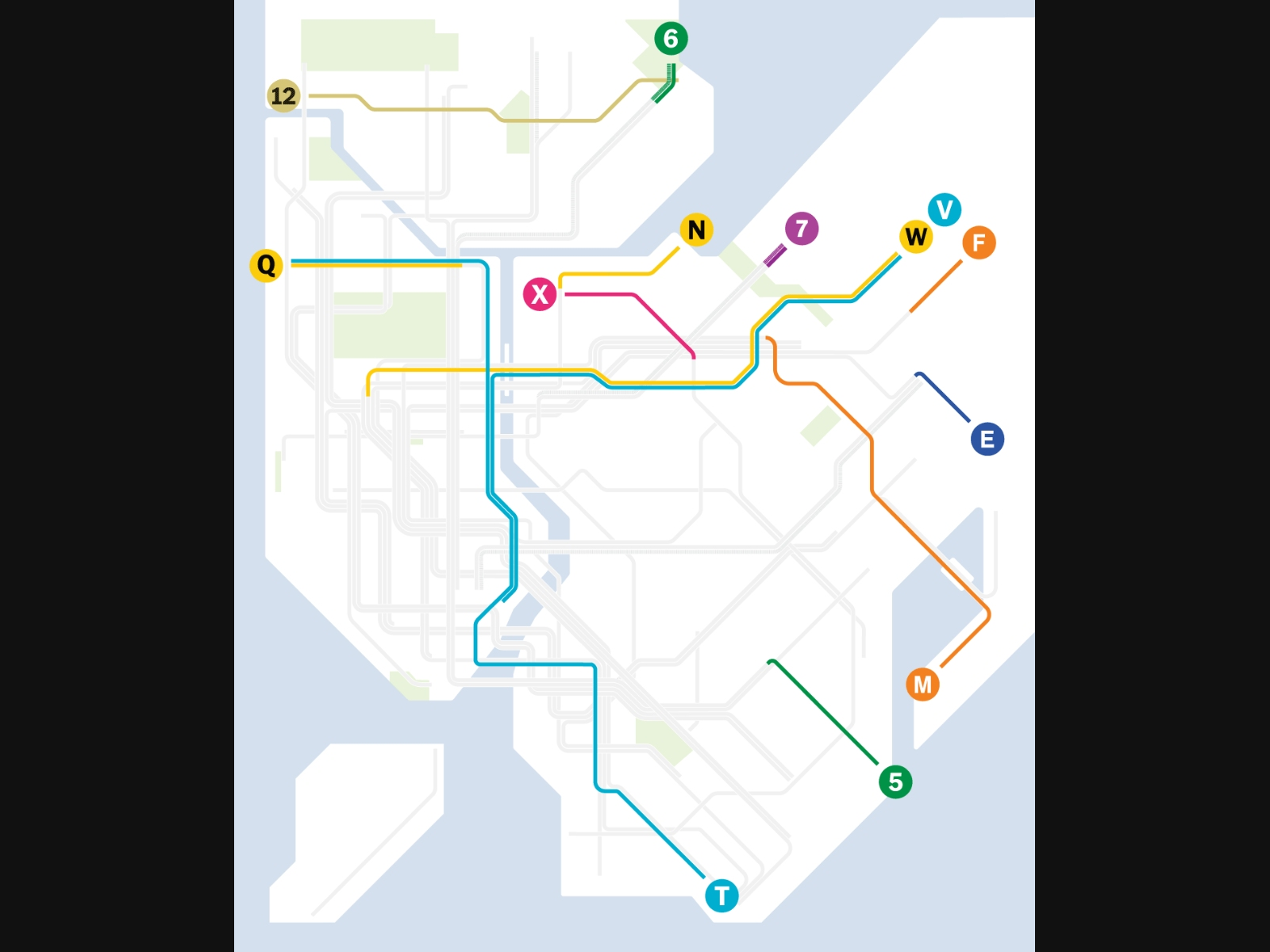

For decades, New York City has treated its housing crisis as a problem of prices and subsidies. But cities that have kept housing affordable at scale have done something different: they expanded the geography where people can realistically live. Tokyo — the world's largest metropolitan area — did not remain affordable by limiting demand or freezing neighborhoods in place. It did so by pairing sustained transit expansion with continuous housing growth, allowing opportunity to spread rather than concentrate.
This distinction matters. New York's affordability debate often centers on how to help residents cope with scarcity — through rent relief, fare subsidies, or targeted programs. Those tools can ease immediate pressure, but they do not address the structural cause of high housing costs: too many people competing for too little accessible land. Tokyo confronted that reality directly by building outward and upward, deliberately and continuously, around transit.
In Tokyo, rapid rail expansion and housing development are not treated as separate policy domains. New lines extend into previously peripheral areas, and housing is allowed—and expected—to follow stations' function as economic centers, not just boarding points. Over time, this approach expanded the region's effective housing supply fast enough to absorb demand, even as the metropolitan population grew to nearly 38 million people. Affordability, in this model, is preserved not by restricting growth but by managing it at scale.
Find out what's happening in Pelhamfor free with the latest updates from Patch.
The tradeoffs are tangible and visible. Homes are smaller. Redevelopment is constant. Preservation yields to renewal more often than American cities are accustomed to. But the result is a metropolitan region where middle- and lower-income households can still live near jobs, schools, and services without relying on cars or facing punishing commutes.
New York once understood this logic. Much of the city's most recognizable housing stock exists because earlier generations aligned transit expansion with residential growth. The apartment corridors lining Central Park West, Eastern Parkway, and the Grand Concourse were not accidents of architecture or market timing; they were the direct outcome of subway lines pushing outward and housing following close behind. Density was not feared — it was planned.
Find out what's happening in Pelhamfor free with the latest updates from Patch.
That alignment began to break down in the mid-20th century, when New York pivoted away from transit-led growth toward an auto-centered vision of access. Under Robert Moses, the city invested heavily in highways that cut through dense neighborhoods. At the same time, subway expansion slowed to a near standstill. These projects moved cars efficiently, but they did not create new, transit-accessible places for people to live. Entire communities were displaced without a corresponding expansion of housing opportunity elsewhere, and large portions of the outer boroughs grew in population without gaining rapid transit to match.
Tokyo made the opposite choice. Faced with postwar rebuilding and rapid urbanization, it expanded rail lines rather than roadways, allowing housing and employment to grow outward in tandem with transit. The result was not simply less congestion, but a fundamentally different housing trajectory — one in which access expanded faster than scarcity.
This is the context in which a recent proposal from the NYU Marron Institute of Urban Management deserves attention. The institute's report, A Better Billion, asks a simple but clarifying question: if New York can find roughly $1 billion per year to subsidize transit operations, what would happen if a comparable sum were treated as long-term capital investment instead? Their answer is a 40-year program to extend the subway system by 41 miles, add 64 stations, and — critically — enable the construction of more than 160,000 new housing units within walking distance of those stations, even without significant zoning changes.
The specifics of any such plan are debatable, and the challenges are substantial. New York's subway system requires ongoing repair. Construction costs are high. Federal funding is uncertain. These constraints are real and should not be minimized. But the broader framing is difficult to ignore. Capital investment in transit does more than move people; it reshapes land markets for generations. Fare policy, by contrast, operates within existing boundaries. It can make today's commute cheaper, but it does little to make tomorrow's rent affordable.
That distinction sits at the heart of the current debate over Mayor Zohran Mamdani's proposal to make city buses free. The plan is rooted in real concerns: bus riders are disproportionately low-income, buses are slow, and fare enforcement creates friction that undermines safety and dignity. Pilot programs have shown that eliminating fares can boost ridership, and targeted improvements such as all-door boarding and dedicated lanes are overdue. But even at the low end of current estimates — roughly $800 million to $1 billion per year — fare-free buses would require sustained operating subsidies, face legal and fiscal headwinds, and leave the city's underlying housing geography unchanged.
The question, then, is not whether buses matter — they do — but what kind of affordability New York is trying to buy. Operating subsidies make movement within today's city cheaper. Capital investment in transit expands the city itself, reshaping where people can live for decades to come.
Tokyo's experience does not offer a blueprint to be copied wholesale. Political institutions differ. Land-use norms differ. But the underlying lesson is transferable: affordability follows access, and access follows transit. Cities that want to remain livable must be willing to grow — not just economically, but spatially.
New York faces a choice similar to the one Tokyo made decades ago. It can continue to ration access to opportunity within a fixed footprint, or it can expand that footprint deliberately by extending rapid transit and allowing housing to follow. The city once chose growth, and it worked. The question now is not whether New York can afford to think at that scale — but whether it can afford not to.