Neighbor News
Louisiana v. Callais
Spy vs. Spy at the Supreme Court: Two Readings of One Voting Rights Decision

When Congress passed the Voting Rights Act of 1965, it was responding to a reality that was visible, measurable, and undeniable. Black voters in large parts of the country were systematically prevented from participating in elections through law, intimidation, and design. The statute that followed was built to do more than prohibit discrimination in theory. It was meant to make unequal political participation visible in practice and correct it.
Sixty years later, the Supreme Court has not rejected that history. In Louisiana v. Callais, it has reframed how that history is translated into law. The shift is not rhetorical. It is structural. The Court has moved the center of gravity from outcomes to intent, from what can be observed to what must be proven in Court.
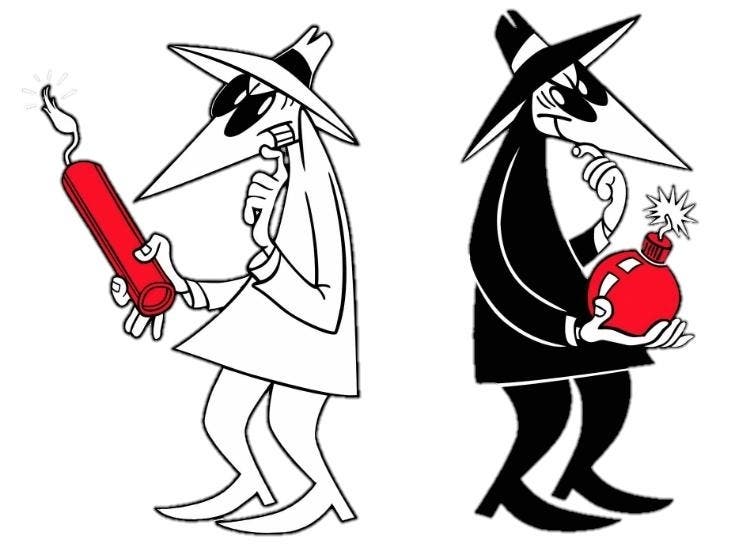
Open The New York Times and The Wall Street Journal on the same morning, and the result feels familiar. Two accounts describe the same decision and arrive at different conclusions about what it means. The dynamic recalls Spy vs. Spy, not because one side is right and the other wrong, but because each is trained to see a different part of the same event.
Find out what's happening in Pelhamfor free with the latest updates from Patch.
Start with the mechanism. The Court did not eliminate Section 2 of the Voting Rights Act. It reinterpreted it. For decades, courts evaluated claims of vote dilution using a framework that focused on results. If a minority community was large, cohesive, and consistently outvoted under a districting plan, that pattern could constitute a violation. The law served to detect and address structural exclusion, even when intent was not always clear.
The Court has now narrowed that pathway. It held that Section 2 must align with the Constitution's prohibition on intentional discrimination. Plaintiffs must show a strong inference that a state drew its districts to disadvantage voters because of race. They must also separate race from politics, even when the two are closely correlated. A district map that produces unequal outcomes is no longer enough. The question is whether those outcomes can be separated from the state's political goals. If politics can explain the result, the claim will likely fail, even when the effect is the same.
Find out what's happening in Pelhamfor free with the latest updates from Patch.
This is where the divergence in coverage begins. One reading emphasizes the legal standard. Under this view, the Court is restoring a constitutional baseline in which race cannot be used as a primary tool of governance except in narrow circumstances. The Voting Rights Act remains intact, but its use is confined to cases that resemble its original purpose. The risk is not the loss of rights but the overextension of a statute into areas where it was never meant to operate.
Another reading emphasizes enforceability. The Voting Rights Act was designed to address forms of discrimination that were not always explicit. By raising the burden of proof to something closer to the standard of intent, the Court has made those forms of discrimination harder to challenge. The risk is not theoretical overreach but practical erosion. A right that cannot be enforced in Court is a right that exists on paper but not in practice.
Both interpretations are grounded in the same opinion. The Court itself frames the law as guaranteeing equal opportunity and not equal outcomes. That distinction sounds clean, but it carries real consequences. Opportunity is defined relative to the baseline created by a state's districting choices, including political goals that courts are not permitted to second-guess. If those choices produce districts in which minority voters consistently lose, the law now asks a narrower question. Did the state intend that result because of race, or did it pursue a political advantage that happens to produce the same outcome?
Justice Elena Kagan, writing in dissent, warned that this shift risks making Section 2 far more difficult to use in practice. The majority, led by Samuel Alito, sees the same change as a necessary alignment between statute and Constitution. The disagreement is not over what the Court said. It is over what kind of harm the law should be able to recognize.
The implications are immediate. States now have clearer incentives to revisit their maps, and litigation will not disappear but will change form. Plaintiffs will need to disentangle race from politics in ways that are analytically demanding and often uncertain. The number of majority-minority districts may decline, not because they are prohibited, but because they are harder to require under the new standard.
The deeper question is not about one election cycle. It is about what the law is designed to see. The original statute looked for patterns that revealed exclusion even when intent was hidden. The new framework asks for clearer evidence of purpose, even when patterns persist. That is not a simple tightening of standards. It is a redefinition of what counts as proof and, in turn, what kinds of claims can succeed.
In Spy vs. Spy, both characters respond to the same situation, but each pursues a different objective. The symmetry is the point. In the coverage of this decision, the symmetry is real, but the stakes are not comic. Two institutions are looking at the same ruling and identifying different risks because they are anchored in different definitions of fairness.
The Court did not end the debate over voting rights. It clarified which version of that debate the law will recognize, and which version it will leave unresolved.