Neighbor News
Tom Wolfe’s Sociological Lens and the Value of Sociology in Education
Tom Wolfe and Me Making One More Case for Keeping Sociology in Our Education System


When I first encountered sociology as an undergraduate, it was as if a curtain had been lifted, revealing the intricate dance of social forces that shape our lives. This wasn't just a subject to study; it was a wide-angle lens through which the world’s complexities suddenly began to make more sense. Over time, my love for sociology has only deepened, and one of the unexpected influences on this journey has been my casual reading of Tom Wolfe's work. Wolfe, a journalist and novelist, brought the principles of sociology to life in a way that resonated with me far beyond the classroom, combining sharp social observation with literary flair.
Tom Wolfe's exploration of social dynamics, particularly his focus on the concept of status, serves as a powerful reminder of the relevance and importance of sociology. His work not only deepened my understanding of the discipline but also reinforced why sociology should remain a core component of education, as it offers essential insights into the complexities of human behavior and social structures. David Brooks highlights this in his New York Times essay, The Secret to Tom Wolfe’s Irresistible Snap, Crackle, and Pop, where he underscores Wolfe's ability to bring these social insights to life with vibrant, engaging prose.
Wolfe's ability to translate sociological concepts into compelling narratives first drew me to his work. In the article "Status! Yes!": Tom Wolfe as a Sociological Thinker by Joel Best argued that Wolfe's journalism presents a coherent vision of contemporary society, emphasizing the concept of status. This idea, often overlooked in modern sociological discourse, is central to understanding how individuals navigate social hierarchies and form identities within different "stratus spheres." Wolfe's sharp eye for detail and ability to dissect the nuances of social interactions made his work an engaging exploration of status competition in everyday life.
Find out what's happening in Pelhamfor free with the latest updates from Patch.
Wolfe's fascination with social status was deeply rooted in his academic background and investigative journalism skills. As a student at Washington and Lee University, where he graduated cum laude with a B.A. in English, Wolfe began to explore the intersections of literature, culture, and society. His experiences there, including his work on the literary magazine Shenandoah and his exploration of anti-intellectualism in his undergraduate thesis, set the stage for his later work. His Ph.D. studies in American Studies at Yale University, coupled with his early journalism career at The Washington Post and The New York Herald Tribune, honed his ability to capture the complexities of social dynamics—a skill that would define his literary career.
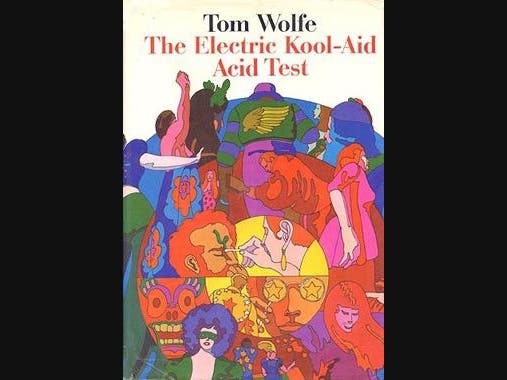
What makes Wolfe's work particularly special to me is how he bridged the gap between academic analysis and popular culture. By incorporating sociological insights into his narratives, Wolfe effectively turned sociology into art. His work demonstrates that sociology isn't just about theoretical frameworks; it's about understanding the lived realities of people, something vital for anyone navigating our complex social world. From chronicling American subcultures in The Electric Kool-Aid Acid Test to dissecting the social fabric of New York City in The Bonfire of the Vanities, Wolfe's commitment to exploring social conventions and status structures was evident throughout his career. His unique style—often described as "verbal pyrotechnics" or "shotgun baroque"—captured the frenetic energy of his subjects while making complex social issues accessible to a broad audience.
Find out what's happening in Pelhamfor free with the latest updates from Patch.
Of course, some might argue that Wolfe was more of a literary figure than a true sociologist and that his work, while insightful, doesn't replace the need for formal sociological study. While it's true that Wolfe's writing is more journalistic than academic, the sociological depth in his work is undeniable. His ability to make complex social concepts accessible and engaging is precisely what makes his contributions so valuable, particularly for those who might not otherwise engage with sociology. Wolfe's style—marked by his signature white suits and his playful use of language—made him a larger-than-life figure who never shied away from challenging the status quo.
In celebrating Tom Wolfe's contributions to sociology through his writing, I'm reminded of why I fell in love with this discipline in the first place. Sociology offers a way to understand the underlying forces that shape our society, and Wolfe's work vividly illustrates its relevance. As I argued in Florida's Misstep: Dropping Sociology from Core Curriculum, keeping sociology in the core curriculum is crucial, not just for academic reasons, but because it equips students with the tools to navigate and understand the complexities of our world. Just as Wolfe's work has enriched my understanding, we must ensure that students are encouraged to engage with sociology in their educational journeys, preserving the integrity of our educational system and empowering them with the insight and empathy needed to thrive in a complex social world.