Neighbor News
Under Redevelopment Consideration: The Picture House Pelham a 501(c)(3) Nonprofit Organization
The Pelham Picture House: Redevelopment & Understanding the Legal Obligations Governing a 501(c)(3) Cultural Institution

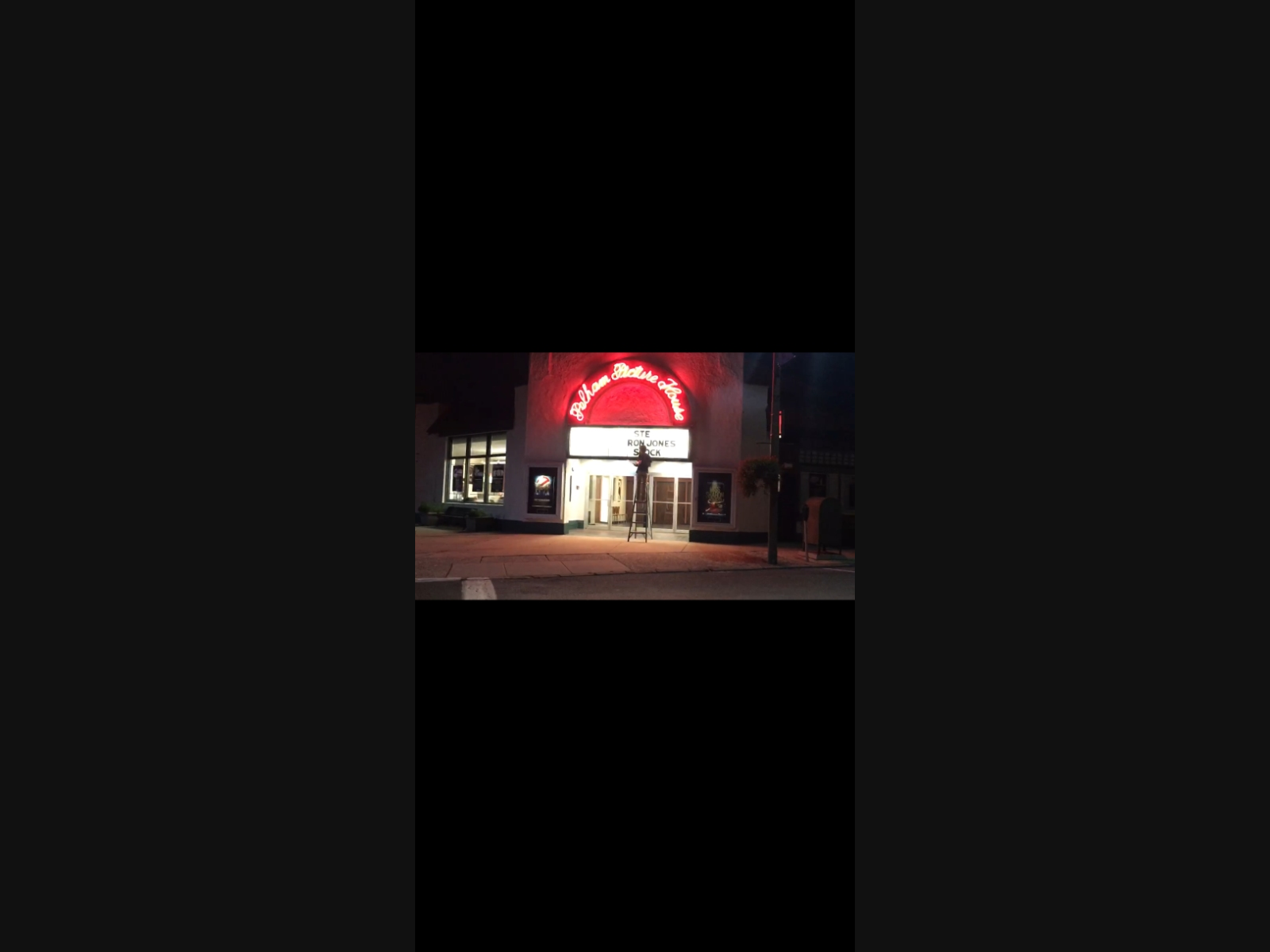

When I first heard that The Picture House Pelham (a 501 (c)(3) nonprofit organization and part of The Picture House Regional Film Center) was being discussed as part of a potential redevelopment project, my reaction was the same as many of my fellow Pelham residents: a jolt of disbelief. The Picture House is one of Pelham's valued cultural anchors.
But once the initial shock wore off, I fell back to my nonprofit management background.
Viewed through the lens of nonprofit governance, fiduciary duty, and state oversight, the conversation changes. It becomes less about rumor and more about structure. The Picture House is not simply a building. It is a charitable asset owned by a nonprofit whose mission is:
Find out what's happening in Pelhamfor free with the latest updates from Patch.
"To create a shared community experience for diverse audiences through film, education programming, and unique cultural offerings."
That mission is not branding. It is the legal standard against which every major decision must be measured. Everything that follows — redevelopment planning, zoning authority, even public anxiety — is constrained by that mission.
Find out what's happening in Pelhamfor free with the latest updates from Patch.
What Actually Changed
Only one parcel has sold: the long-abandoned gas station at 163 Wolfs Lane, purchased in December for $2.1 million. The two operating gas stations remain open. That sale to a developer familiar to Pelham made the concept of redevelopment next door only a possibility, not an inevitability.
At the February 11, 2026, public meeting, the Village approved a Memorandum of Understanding (MOU) with a developer to explore corridor-wide concepts. The mayor emphasized that "there is no project." Residents questioned transparency. The two gas station owners expressed frustration about communication. The tension reflected something real: uncertainty about what is exploratory and what is predetermined.
In subsequent public remarks, Mayor Mullen clarified that the MOU is procedural and exploratory, that the Village does not own any of the parcels, and that the purpose of the Request For Qualifications (RFQ) process was to select a qualified partner — not to approve a plan. He also noted that developers were encouraged to engage with the Picture House and that submissions would be released publicly after legally required redactions.
The Village’s RFQ presentation further emphasized that the goal is to avoid piecemeal development and to consider multi-lot scenarios that could support parking, pedestrian safety, and long-term corridor planning. The corridor itself has been identified for potential revitalization in planning documents dating back to 2008, underscoring that this process is part of a long-standing effort rather than a sudden shift.
A Request for Proposal (RFQ) or MOU is not a demolition permit, a redevelopment approval, a transfer of ownership, or a binding construction agreement. It is a planning tool. But planning feels different when a century-old cultural institution sits inside the study area.
It is also worth noting that the Picture House itself has publicly explored ways to modernize its facilities and expand programming. For a nonprofit, planning for long-term sustainability is part of fiduciary responsibility — not evidence of an impending transaction.
Mission as a Legal Constraint
The Picture House Regional Film Center is a 501(c)(3) nonprofit. Under New York law, the board owes three fiduciary duties:
- Duty of Care
- Duty of Loyalty
- Duty of Obedience
The Duty of Obedience requires the board to ensure that every major decision aligns with the organization's charitable mission. The board must reasonably determine that any significant transaction advances the organization's charitable mission and long-term sustainability.
This is not a preference. It is a legal obligation.
The Role of New York State
Nonprofits in New York operate under the supervision of the Attorney General's Charities Bureau. If a nonprofit proposes to sell "substantially all" of its assets — and for many mission-driven institutions, the building qualifies — the transaction may require notice to the Attorney General, review for fairness, and in some cases, court approval.
The Attorney General evaluates whether the nonprofit is receiving fair market value, whether the transaction is consistent with the mission, and whether the proceeds remain dedicated to charitable purposes.
Even if the building were sold, the proceeds cannot be used for private profit. They remain locked into charitable use. This oversight exists precisely to prevent charitable institutions from drifting away from their mission or being stripped of core assets without accountability.
What the Village of Pelham (Village) Can — and Cannot — Do
The Village controls zoning, site plans, building permits, and redevelopment tools. It can shape the conditions under which redevelopment occurs.
The Village cannot compel the nonprofit to sell, direct its internal governance, or treat the Picture House as a standard commercial parcel. Any structural change involving the theater requires nonprofit consent — and nonprofit consent triggers fiduciary scrutiny and, potentially, state oversight.
Technically, municipalities possess eminent domain authority under New York law. But eminent domain is a formal statutory process requiring public purpose findings, compensation, and procedural safeguards. It is not a casual redevelopment tool.
National Register of Historic Places: Recognition, Not Armor
The Picture House is listed on the National Register of Historic Places. That designation recognizes cultural significance and opens access to preservation incentives. It does not, by itself, prevent demolition in a privately financed project approved at the local level.
Proper structural protection would require a local landmark ordinance, a preservation easement, or zoning constraints. Pelham does not currently have a landmark ordinance. That absence explains some of the unease — but it does not erase nonprofit guardrails.
The Meaning of "Master Plan"
Residents hear "master plan" and fear replacement.
Village officials hear "master plan" and fear piecemeal development.
Both concerns are understandable.
But the governing question is this: In any redevelopment scenario, is the Picture House's mission being treated as a non-negotiable constraint?
If the mission remains central, redevelopment must demonstrably strengthen the institution's ability to serve the community. If the mission becomes secondary, the theater risks becoming little more than a footprint in a larger financial model.
That is the decision Pelham is approaching.
Clarity Before Commitment
Thank you to Greg Farrell and the Pelham Examiner for covering the February 11 meeting. Their reporting illustrated how quickly political and, in this case, redevelopment conversations can escalate into distrust when structural guardrails are not clearly explained.
This moment does not require panic. It requires precision:
- What the Village has actually approved
- What the nonprofit board is legally permitted to do
- What state oversight requires
The Picture House is not automatically protected. But it is not casually transferable either. It is a mission-driven cultural institution governed by fiduciary law and subject to state supervision.
Before drawings are rendered or concepts advanced, Pelham deserves a clear public answer: the Picture House's mission comes first.