Neighbor News
Village of Pelham, Wolfs Lane: Why a “Master Plan” Makes Sense — Even With Different Property Owners
Village of Pelham, Wolfs Lane: If four different entities own four adjacent properties on Wolfs Lane, how can a "master plan" even work?

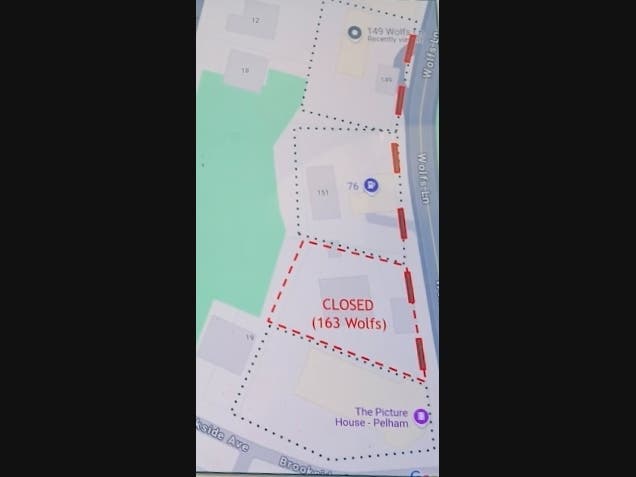

If four nearby properties are owned by four different entities, how can a “master plan” for the area even work? The key is understanding what a master plan actually does.
A Village of Pelham master plan for these properties on Wolfs Lane is not an ownership document. It does not transfer property, force sales, or require parcels to be combined. Instead, it establishes a planning framework — design standards, height limits, parking strategies, pedestrian access, and zoning parameters — that would guide any future development if property changes hands over time.
Municipalities often plan for areas long before any property changes hands, because planning is about shaping future possibilities, not predicting specific transactions.
Find out what's happening in Pelhamfor free with the latest updates from Patch.
In fact, master plans are frequently used precisely because ownership is fragmented. Without coordination, redevelopment can happen piecemeal: inconsistent setbacks, mismatched building heights, fractured parking layouts, and disjointed streetscapes. A master plan aims to prevent that kind of uncoordinated growth and preserve long-term corridor coherence.
Could parcels ever come under one entity? Possibly — but only through voluntary transactions. A developer might purchase properties over time. Owners could form a joint venture. Long-term ground leases are another option. Eminent domain exists under New York’s Eminent Domain Procedure Law (EDPL), but it is legally complex, politically sensitive, and rarely used in small municipalities for mixed-use redevelopment.
Find out what's happening in Pelhamfor free with the latest updates from Patch.
The Picture House adds an additional layer. Because it is a 501(c)(3) nonprofit and a charitable asset, any redevelopment scenario involving it must satisfy nonprofit fiduciary law — a constraint that does not apply to the other parcels.
So a master plan does not mean consolidation is imminent.
Planning is preparation — not predetermination.
1. A master plan does not require unified ownership.
This is the first misconception to clear up.
A Village master plan is not an ownership document.
It is a planning framework.
A master plan can:
- Set design standards
- Define circulation and access
- Coordinate parking solutions
- Establish height and mass envelopes
- Outline phased development
- Identify public-realm improvements
- Create zoning overlays or incentives
It does not require the Village to own property.
It does not require parcels to be assembled.
It does not force any owner to participate.
A master plan governs the regulatory conditions under which future development would be evaluated. It shapes what is possible — not who owns what.
2. Why a master plan still makes sense with four owners
Without a framework, fragmented ownership can lead to:
- Uncoordinated development
- Inconsistent setbacks
- Mismatched heights
- Fragmented parking solutions
- Unsafe or excessive driveway cuts
- Limited economies of scale
- A fractured public realm
As discussed in the Village’s RFQ presentation, one concern is that piecemeal redevelopment can temporarily worsen corridor coherence before it improves it.
A master plan is an attempt to prevent uncoordinated development that could undermine long-term corridor coherence.
It is forward-looking coordination — not consolidation.
3. How parcels could come under one entity (if they ever did)
There are only four realistic legal pathways — and none are simple.
A) Voluntary sale (parcel by parcel)
The most common scenario.
A developer acquires parcels over time — sometimes years, sometimes decades.
B) Joint venture among existing owners
Less common, but possible.
Owners contribute parcels into a shared development entity in exchange for equity. This requires aligned incentives, legal coordination, and sophisticated structuring.
C) Long-term ground leases
Owners retain title but lease development rights (often 50–99 years). The developer builds and operates under a lease.
This structure is typical in university and institutional districts.
D) Eminent domain
Municipalities possess eminent domain authority under New York’s Eminent Domain Procedure Law (EDPL).
That process requires:
- A formal public purpose determination
- A public hearing or review process
- Just compensation
- Statutory procedural safeguards
- Potential litigation
It is legally complex, politically sensitive, and rarely used in small municipalities for mixed-use redevelopment. Nothing in the current process signals imminent use of this authority.
4. The Picture House complicates unification — legally
Even if three parcels were unified through private transactions, the Picture House is:
- A charitable asset
- Owned by a 501(c)(3) nonprofit
- Governed by fiduciary duty
- Subject to oversight by the New York Attorney General
It is not equivalent to private fee-simple commercial property.
If the nonprofit board ever considered a significant transaction, it would have to:
- Act in good faith
- Exercise due care
- Determine that the transaction advances the charitable mission and long-term sustainability.
Under the business judgment rule, courts defer to nonprofit boards’ decisions when made in good faith, with due care, and in furtherance of the mission. That is structured discretion — not unrestricted flexibility.
If a transaction involved “substantially all” assets, Attorney General review may also be required.
For this reason, the Picture House is subject to a distinct legal framework because it is a charitable asset.
That distinction materially affects any discussion of parcel unification.
5. Does a master plan still make sense?
Yes — but as a planning instrument, not a prediction.
A master plan can:
- Create a coherent regulatory framework
- Signal municipal priorities
- Guide phased redevelopment
- Coordinate parking and access
- Improve pedestrian safety
- Provide optionality if parcels change hands
It does not mean:
- Parcels will unify
- A single developer will control the corridor
- The Picture House will be relocated or replaced
- A project is imminent
A master plan is preparation.
Not predetermination.
6. The structural answer
A master plan makes sense even when ownership is fragmented because it governs the rules of engagement — not the ownership structure.
Parcel unification, if it ever occurs, would be voluntary, incremental, and uncertain.
The Picture House’s nonprofit status introduces an additional layer of legal constraint that distinguishes it from surrounding parcels.
Mission remains the immovable constraint.
Ownership is the variable.
Planning is the Village’s attempt to manage uncertainty.