Neighbor News
What Nationality Is a Product?
America at 250: When the Border Runs Through the Factory

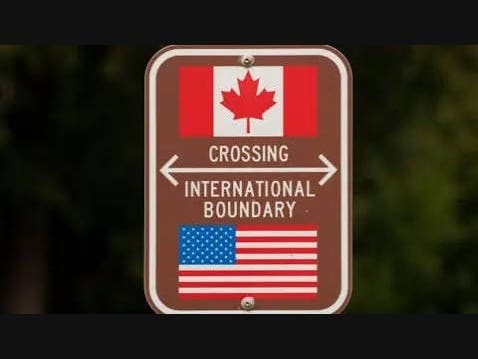
The growing tariff dispute between the United States and Canada raises a simple question: What nationality is a product? For decades, businesses built production systems that crossed the border. Now, governments are asking them to reorganize along national lines. The result is an economic experiment whose consequences will extend far beyond the customs post.
I began thinking about the growing trade dispute between the United States and Canada because of a basic question: Who really pays a tariff? The answer is much more complicated than the question. On September 8, Canada imposed new retaliatory tariffs on American goods at rates of 15, 25, and 50 percent, covering C$27.6 billion in imports. These tariffs responded to new American tariffs on Canadian goods and added another round to a dispute that has already affected industries like automobiles, steel, lumber, and aerospace.
It is easy to see this as a contest between two countries. The United States taxes Canadian goods, and Canada taxes American goods. Each side hopes to cause enough economic pain that the other will change its approach. But that way of looking at things has a problem because:
Find out what's happening in Pelhamfor free with the latest updates from Patch.
What really makes a product American? And what makes one Canadian?
A Tariff Without a Name Tag
Find out what's happening in Pelhamfor free with the latest updates from Patch.
A tariff is charged when an imported product crosses a border. Customs officials know exactly who is legally responsible for paying it, generally the importer. What they cannot tell us is who will ultimately bear the economic cost. The importer might take on some of the extra cost. The retailer might accept a smaller profit. The consumer might pay more. Or the foreign producer might lower its price to keep customers. How this cost is shared depends partly on what economists call elasticity, which here means something simple: Who has the easiest alternative?
If customers can easily switch to another product, a company may struggle to raise prices. But if a manufacturer needs a special part that only a few suppliers offer, switching is much harder. This difference matters most when the imported product is not just something on a store shelf, but a part another business needs to make something else.
Take a Canadian beekeeper who buys pine from Montana to make frames for his hives. A Canadian tariff on that lumber is officially a tariff on an American import, but the extra cost can end up in the cost of making Canadian honey. The border shows where the tax is collected, but it does not always show where the real economic burden ends up.
What Nationality Is an Airplane?
Bombardier makes this issue even bigger. The company is based in Montreal and is clearly Canadian. But Bombardier also employs about 3,500 people in the United States and works with around 2,800 American suppliers. Its U.S. operations include making wings in Texas, flight-control parts in California, and flight testing in Kansas.
So what nationality is a Bombardier aircraft?
From a business standpoint, the answer might be Canadian. Economically, though, it is more complicated. Bombardier's production links Canadian assembly with American workers, factories, engines, parts, and suppliers. Actions aimed at the Canadian company can therefore affect economic activity in both countries.
Cars make the distinction even harder.
For years, North American trade policy encouraged carmakers to set up production across the United States, Canada, and Mexico. Parts can cross borders at different stages before a finished car reaches a dealership. Michigan offers a good example of how difficult that integration can be to unwind. Through July of this year, 39 percent of the state's goods exports went to Canada, and its auto industry remains closely connected to Canadian factories across the border.
This setup did not happen by accident. Businesses followed the rules governments set. They built factories, picked suppliers, invested money, and set up transportation networks based on the idea that production could cross borders in North America. Changing the rules does not instantly change the factories.
The Cost of Finding Someone Else
A tariff can push a company to look for a new supplier. That is partly the goal. But switching suppliers is not free. A manufacturer might need to find new suppliers, negotiate deals, test parts, change how things are made, get approvals, and adjust shipping. The new product might cost more, work differently, or not be available in sufficient quantities. Canada's own tariff policy interestingly recognizes this problem.
The government maintains a remission process through which companies can ask for exceptional tariff relief. Among the circumstances officials consider is whether an input can be sourced in Canada or reasonably obtained from somewhere other than the United States. That makes the remission process almost a real-world experiment in finding substitutes. A tariff gives companies a reason to stop buying American inputs. If a company seeks remission, it may need to show why it cannot reasonably do that.
The question quickly shifts from theory to the factory floor: Is there actually another supplier?
The Value of Waiting
Another cost is harder to notice. Businesses invest based partly on what they expect in the future. A factory, a machine, or a new production line might operate for decades. The choice to build one depends not just on today's costs, but also on what business leaders think the rules will be. When the rules are unclear, waiting can be valuable.
A company thinking about a major investment might wait until it knows whether a tariff will stay, go away, or be followed by another one. Economists call this the option value of waiting. The company is not necessarily giving up on the investment. It is keeping the choice open until it has more information. That can be a perfectly reasonable decision for an individual company.
But if hundreds or thousands of businesses make the same choice, another question emerges: What happens when uncertainty itself starts to affect where companies invest, whom they hire, and which suppliers they trust?
When a Tariff Becomes a Ban
The experiment is already changing. Hours after Canada's new tariffs took effect, the United States announced that certain Canadian products would soon face something stronger than a tariff. Beginning September 29, some Canadian goods will be prohibited from entering the American market. That changes the economics.
With a tariff, a business can decide whether to pay the additional cost, absorb some of it, pass it along, or find another supplier. With an import ban, some of those choices disappear.
Earlier, the question was: Is there actually another supplier? For some affected businesses, it may soon become: There has to be another supplier. Now what? A tariff tests whether a business will switch suppliers at a new price. A ban can require the business to find another source altogether. That makes substitution more than an economic concept. We can begin watching what businesses actually do:
·Do new domestic suppliers emerge?
·Do companies turn to Europe, Asia, or other markets?
·Do prices change?
·Does production move?
·Do companies postpone investment while they wait to see whether the rules change again?
Those questions are no longer simply theoretical.
Putting the Border Back Into Production
A historical irony underlies all of this. Just weeks before the latest tariffs, Canadian negotiators talked about a "Fortress North America." The idea would have kept trade barriers between Canada and the United States very low or even nonexistent, while coordinating barriers against goods coming from elsewhere. Instead, barriers are now going up inside the fortress.
For decades, trade agreements and business choices helped create a more connected North American economy. The border still mattered politically, but for many companies it became less of a barrier to production.
Prime Minister Mark Carney has now described reducing Canada's reliance on the United States as part of the country's economic strategy. He argues that four decades of deeper integration left Canada too dependent on a single trading partner and says the country will move faster to develop other markets. He has acknowledged that the transition will carry short-term costs, but argues that continued dependence carries its own risks.
That adds an important complication. The costs of reorganizing trade are not necessarily unintended consequences. Some may be costs policymakers are willing to accept in exchange for greater economic independence.
That does not answer whether the strategy will work. It gives us more things to observe:
·If a Canadian manufacturer now has an incentive to replace an American supplier, does a Canadian supplier emerge?
·Does the company buy elsewhere?
·Does the replacement cost more?
·Does the company continue buying American and pay the tariff?
·Or does it seek remission because no reasonable alternative exists?
On the American side, businesses affected by import prohibitions will face their own versions of those questions.
Businesses might adapt quickly. New suppliers could appear. Companies might discover alternatives they had not previously considered. Producers might absorb some additional costs, while consumers change what they buy. Or production networks built over decades might prove much harder and costlier to reorganize. We do not know yet. That uncertainty is part of what makes this moment interesting to watch.
The larger question (yes, there are still more questions!) is no longer simply who ends up paying a tariff. It is what happens to prices, investment, suppliers, and production when governments draw a stricter national line through an economy that businesses have spent decades building across borders.
The tariffs might be collected at customs posts along the U.S.–Canada border. Spanning a total of 5,525 miles—including the boundary separating Alaska from the Yukon and British Columbia—it holds the distinction of being the longest international border in the world.
That iconic, razor-straight section on the map is the 49th parallel, established by the Treaty of 1818 and the Oregon Treaty of 1846. Running roughly 1,270 miles from the Lake of the Woods in Minnesota all the way west to the Pacific Ocean, it represents the longest single straight-line border segment on Earth.
Farther east, the boundary leaves latitude behind to trace natural waterways, threading through the Rainy River, the Great Lakes, and the St. Lawrence River before winding past the forests and mountains of Vermont, New Hampshire, and Maine to the Atlantic. In total, this single line connects 13 American states and eight Canadian provinces and territories, carving through shared ecosystems, twin towns, and cross-border industrial corridors where goods, parts, and machinery cross back and forth every day.
Governments can draw an extraordinarily straight line on a map. Economic relationships aren't nearly so straight. The real experiment is finding out what happens when we put those borders back into the production process.