Neighbor News
Why Gas Prices Spiked 40% Even Though America Barely Imports Middle Eastern Oil - 8%?
Global prices move fast. Physical supply adjusts slowly. The difference exposes a vulnerability most Americans do not know they have.

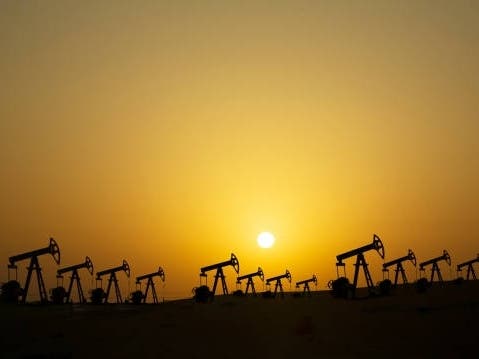

America barely imports Middle Eastern oil, so why did gas prices jump 40 percent? The answer is not dependence. It is architecture. The United States has achieved something remarkable. It now produces enough energy to be a net exporter. This shift would have been difficult to imagine a generation ago. Yet when conflict flared in the Middle East, prices at the pump shot from under $3.00 to more than $4.00 a gallon in a matter of days. The lesson is not that energy independence was oversold. The lesson is that physical independence and price independence are two different things, and the country has achieved only one of them.
The numbers make the contradiction clear. According to the U.S. Energy Information Administration, crude imports from the Middle East Gulf accounted for just 8% of U.S. crude imports in 2025, the lowest share since the 1970s. More than 80% of imports now come from the Western Hemisphere, led by Canada at a record 60%. On its face, that number should insulate American consumers from a shock in the Middle East. If the United States relies on just 8%, prices should not move much when the region destabilizes. That logic seems intuitive, but it misses how oil markets actually work.
The 8% figure explains why the United States is not facing a shortage. It does not explain why prices rose. Prices respond to global conditions, not national import shares. When a major supply route is threatened, the global supply curve shifts even if the United States is not directly dependent on it. Every buyer pays the new global price because oil trades in a single global market. The result is a price shock without a supply crisis, which is exactly what Americans experienced.
Find out what's happening in Pelhamfor free with the latest updates from Patch.
Oil is priced globally. Even if a country does not rely heavily on a particular region for its supply, it still pays a price determined by global benchmarks such as Brent, Dubai, and West Texas Intermediate. When the Strait of Hormuz closes or is credibly threatened, traders quickly reprice risk. Futures markets adjust, shipping costs rise, and the global supply curve shifts left. Every buyer pays the new price regardless of where their oil comes from. Gasoline demand does not fall quickly when prices rise because people still commute, transport goods, and heat their homes. The adjustment, therefore, happens through price rather than quantity. A 20% disruption in global supply can produce a 40% spike at the pump, which is not dysfunction but a feature of how the market operates.
The shock does not land equally, and this is where the story becomes more important. The United States does not operate as a single energy market. It operates as a collection of regional energy islands, each with distinct supply chains, infrastructure, and vulnerabilities. Most of the country sits within a continental system connected by pipelines that draw from Canada, the Gulf Coast, and domestic production centers. When global conditions shift, these regions can substitute across suppliers with relative ease.
Find out what's happening in Pelhamfor free with the latest updates from Patch.
California operates under different constraints. The state imports roughly 75% of its crude oil, and about one-third of those imports come directly from the Middle East. It also relies heavily on refined products from South Korea, India, and Taiwan, whose refinery systems depend on crude that flows through the Persian Gulf. Nearly half of all Middle Eastern crude entering the United States flows to the West Coast. California has no pipeline connection to the continental crude network, and shipping oil by tanker from the Gulf Coast often costs more than importing from abroad. West Coast refineries are optimized for medium sour crude grades supplied by the Middle East. At the same time, domestic production is largely light and sweet. Switching between these inputs requires capital investment and operational changes that cannot be made quickly. When global supply tightens, most of the country pays more, while California pays more and faces a tighter supply.
The cease-fire may have calmed futures markets, but the underlying dynamics have not changed. Prices tend to rise quickly in response to risk and fall slowly as conditions normalize. Refiners and distributors do not immediately pass through lower costs, and supply chains take time to adjust as shipping backlogs clear and inventories rebalance. Consumers continue to feel the effects of a disruption even after the immediate risk begins to ease.
The problem is not scarcity. The problem is the connection. Physical independence was a genuine achievement, but price independence requires something the country has not yet built. It requires infrastructure that connects regional energy islands into a more integrated system. That includes pipeline capacity linking the West Coast to continental supply, strategic petroleum reserve deployments targeted to regional constraints rather than national averages, and incentives that increase refinery flexibility across crude grades. None of these steps is simple, but without them, a conflict thousands of miles away will continue to shape the cost of a commute in Ohio and a heating bill in Maine. American consumers will remain exposed to a form of volatility they cannot control and cannot escape.